
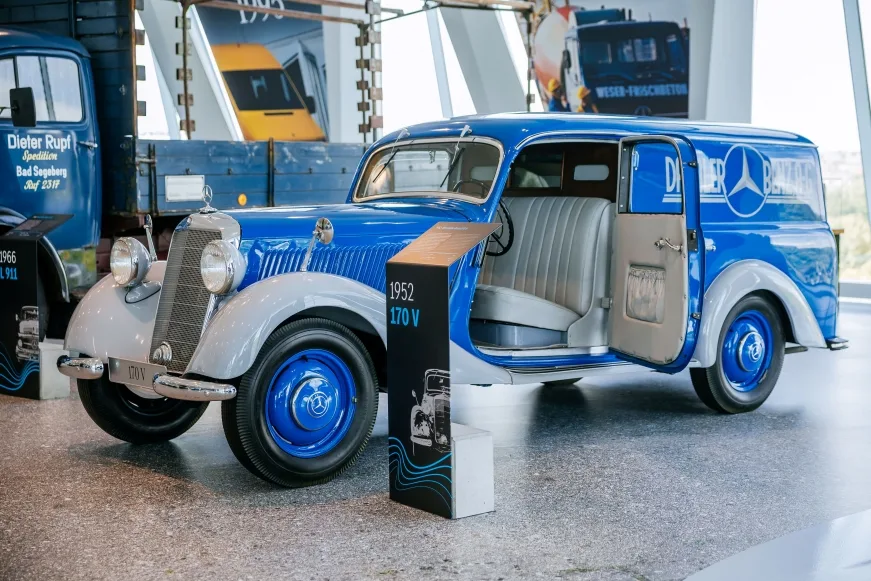
The latest installment of the Mercedes-Benz Museum’s “Close-up” series spotlights a 1952 Mercedes-Benz 170 V panel van (W 136) built as a customer service vehicle, now part of the museum’s new special exhibition “130 Years of Commercial Vehicles,” opening April 4, 2027 with seven exhibits spanning van and truck history back to 1896.
The van’s distinctive “Mercedes blue” paintwork immediately identified it in the 1950s as a Mercedes-Benz service vehicle — the same color later used on the 1955 “Blue Wonder” racing car transporter — and this particular example entered service in Switzerland in 1952.
Built to Carry Tools, Not Passengers
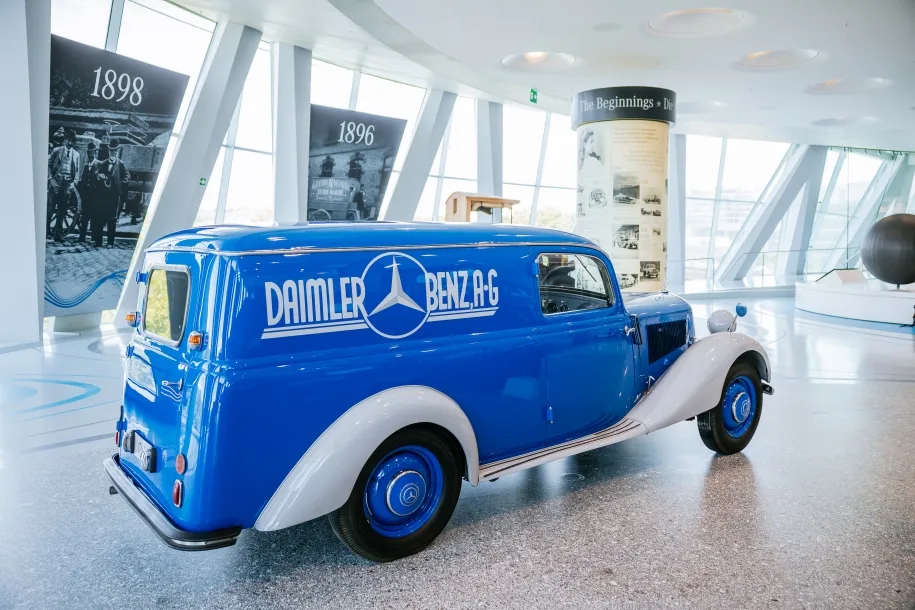
The van’s rear-opening body combined a visible wooden framework with sheet metal cladding, with wooden arches connected by five slats running to the cab wall on each side, leaving room beneath the carpeted load floor for extra equipment and the spare wheel.
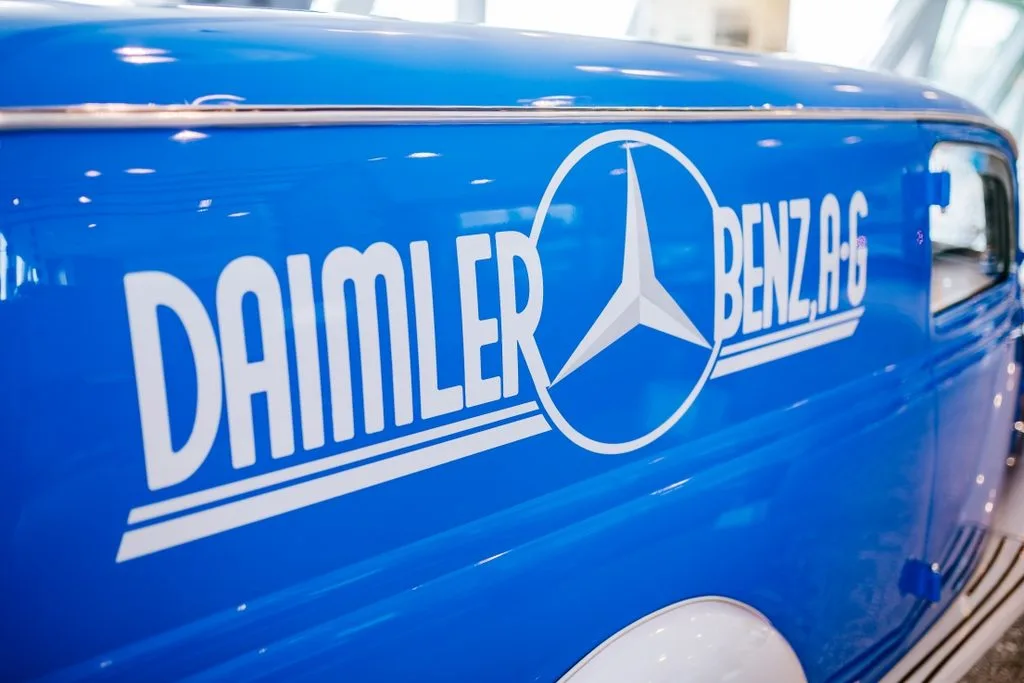
A silver badge above the driver’s-door wing, reading “Sindelfinger Karosserie. Daimler-Benz A.G.” alongside the Mercedes star, referenced the brand’s tradition of factory-built bodies dating back to the 1930s.
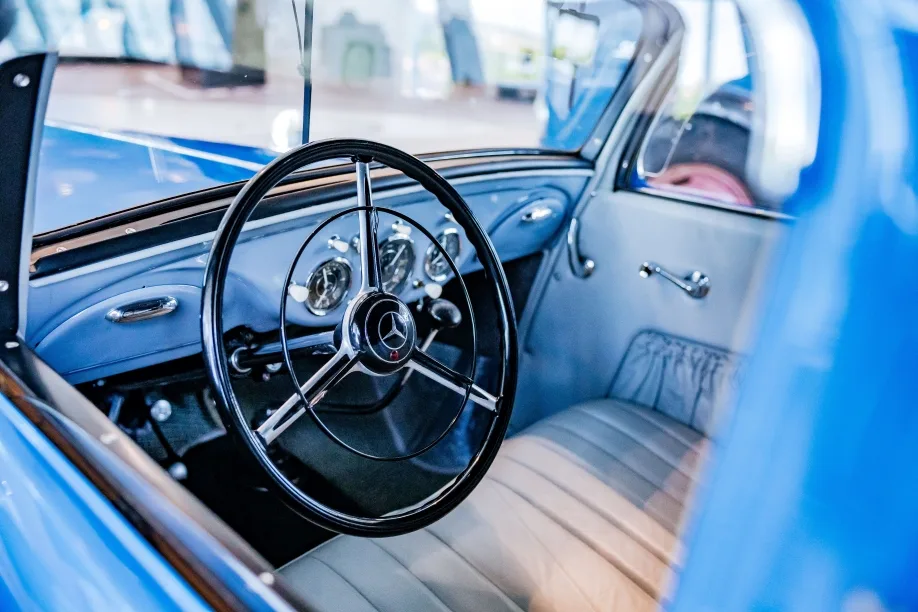
Inside, the cab fitted a light grey imitation-leather bench seat and matching trim on the transmission tunnel, fabric floor mats cut precisely to the footwell, and a light grey dashboard with the speedometer and odometer centered in front of the driver, fuel and oil pressure gauges to the left, and a clock to the right — all finished with ivory-colored control buttons.
The steering wheel’s horn ring doubled as the turn-signal control, paired with classic flashing indicators at the front and more modern turn signal lights at the rear.
A Direct Link to Postwar Reconstruction
The 170 V panel van descends directly from the vehicles that restarted Mercedes-Benz’s series production after World War II, beginning in May 1946 with simple but urgently needed pickups, panel vans and ambulances, all based on the 170 V — a model originally launched in 1936 that had already proven itself as one of the brand’s most important prewar vehicles. Saloon car production didn’t resume until 1947.
Conditions improved from 1948 onward following West Germany’s currency reform and the Marshall Plan, and Mercedes-Benz responded by adding the 170 D to its lineup in 1949, powered by a 29 kW (40 hp) 1.7-liter OM 636 diesel engine well suited to the tradesmen and craftsmen driving West Germany’s “economic miracle” in the early 1950s.
An Especially Rare Find
In 1952, both the 170 V and 170 D were built as panel vans with Sindelfingen bodywork, but production numbers diverged sharply — more than 500 diesel units were built compared with just 35 of the more powerful petrol version, which produced 33 kW (45 hp) at 3,600 rpm and reached a 116 km/h top speed.
That makes the petrol 170 V featured in the new exhibition a genuine rarity. Throughout the 1950s, Mercedes-Benz used several W 136-based models as customer service vehicles, including estate cars bodied by outside manufacturers like Lueg, some of which towed a purpose-built trailer carrying a complete tool kit.