
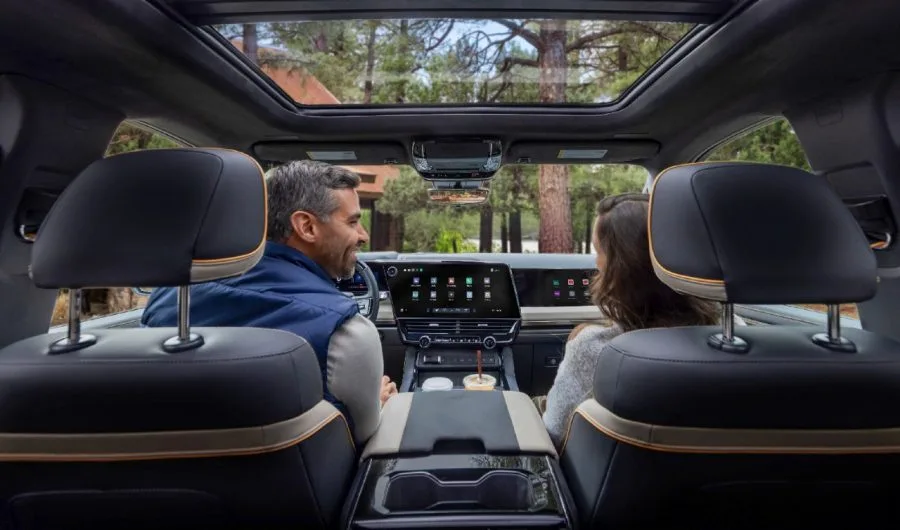
General Motors has introduced a new in-vehicle user interface debuting on the 2027 Chevrolet Silverado and 2027 GMC Sierra, GM’s highest-volume vehicles, ahead of a wider rollout across the rest of the portfolio.
Built as a single scalable foundation that works across electric, gas and diesel powertrains, the interface was developed directly from customer feedback and unifies software, hardware and design to prioritize fast access and clear information over complex menus.
High-contrast displays sharpen navigation, vehicle status and entertainment visuals, while a redesigned home screen defaults to a split view pairing a large interactive map with data like trailering metrics, fuel efficiency or media, so drivers can check details without losing sight of navigation.
The digital driver display adapts to context — showing different layouts for trailering, off-roading or Super Cruise use — and a new 3D driving visualization lets drivers see what the vehicle’s sensors detect in real time, including surrounding traffic, lane markings and road objects, adding confidence while Super Cruise is active.
Designed to Minimize Distraction
GM streamlined driver-assistance activation so Adaptive Cruise Control and Super Cruise can be engaged with a single button press, and the quick-access view can be customized around whichever apps and controls a driver uses most, with climate, audio and camera views staying in familiar locations and physical controls still available for those who prefer them.
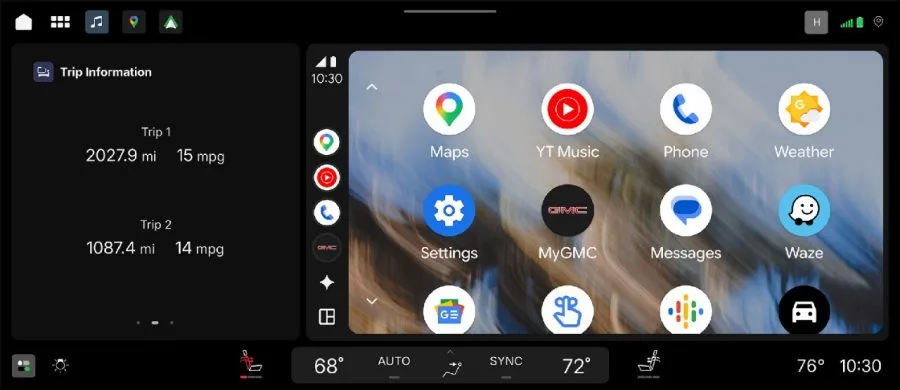
Incoming calls and messages are designed to stay out of the way rather than take over the screen — once a call is accepted, a small timer remains visible at the top of the display so drivers can keep using navigation or other features, tapping it only if they need the full phone app.
The system also folds Android Auto and Apple CarPlay directly into GM’s native interface, displaying phone content in a large card window alongside built-in features like trailering data and vehicle status, so drivers can move freely between their phone’s ecosystem and GM’s own truck-specific tools.
Software Built Around Real Truck Work
GM designed much of the new interface around the day-to-day demands of truck ownership. The brand remains the only automaker offering hands-free trailering through Super Cruise, and the interface automatically adapts once a trailer is connected, adding dedicated trailering visuals to the instrument cluster and a trailering card on the center screen to track key towing metrics and how the truck and trailer move together.
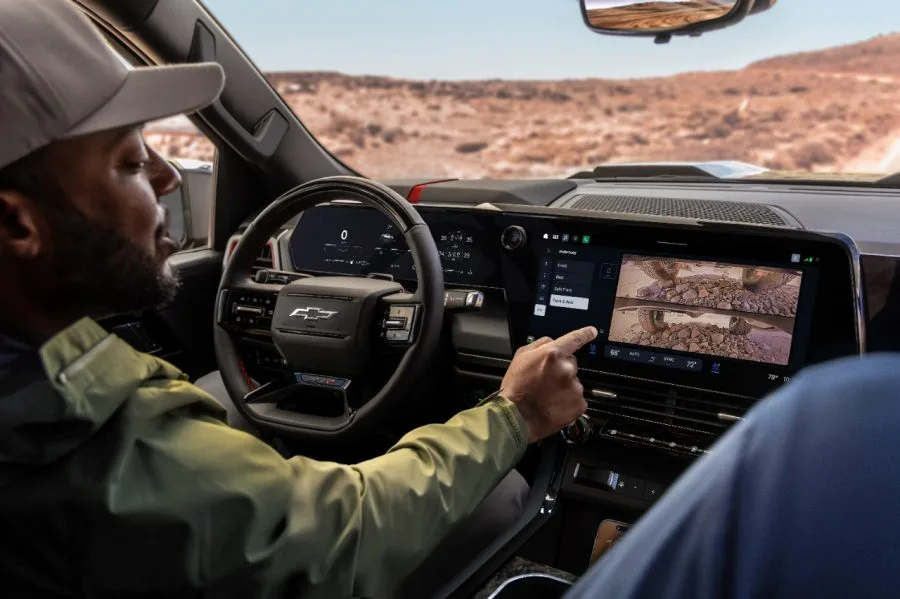
A dedicated Hitch View camera helps drivers line up a trailer without needing a spotter, underbody camera views assist with navigating obstacles in rough terrain, and off-road performance data is available directly on the center screen.
A mobile app integration also lets drivers run a full trailer light check — brake lights, turn signals, reverse lights and running lights — straight from their phone, removing the need to walk back and forth between the cab and trailer during pre-trip inspections.
Built-In Apps and a Platform That Keeps Evolving
Beyond core vehicle functions, the system includes Google Gemini, Google Maps and access to hundreds of Google Play apps, alongside a suite of OnStar-powered native apps built specifically for truck owners.
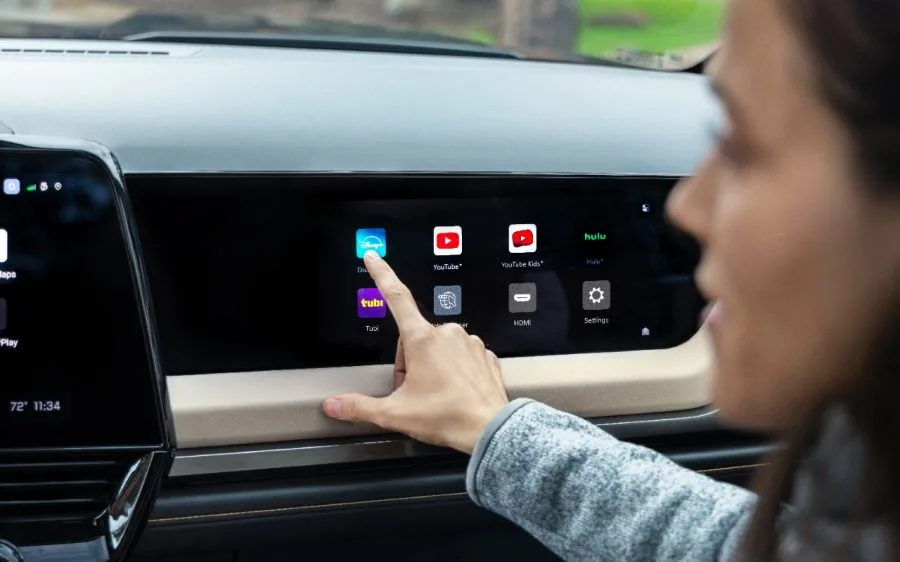
A front-passenger screen adds a growing lineup of streaming and entertainment options, visible only to the passenger while the vehicle is moving thanks to polarized screen technology.
Because the interface runs on a software-defined architecture, GM frames the day-one experience as just a starting point, with continuous over-the-air updates expected to add new features and refine the system throughout ownership.