
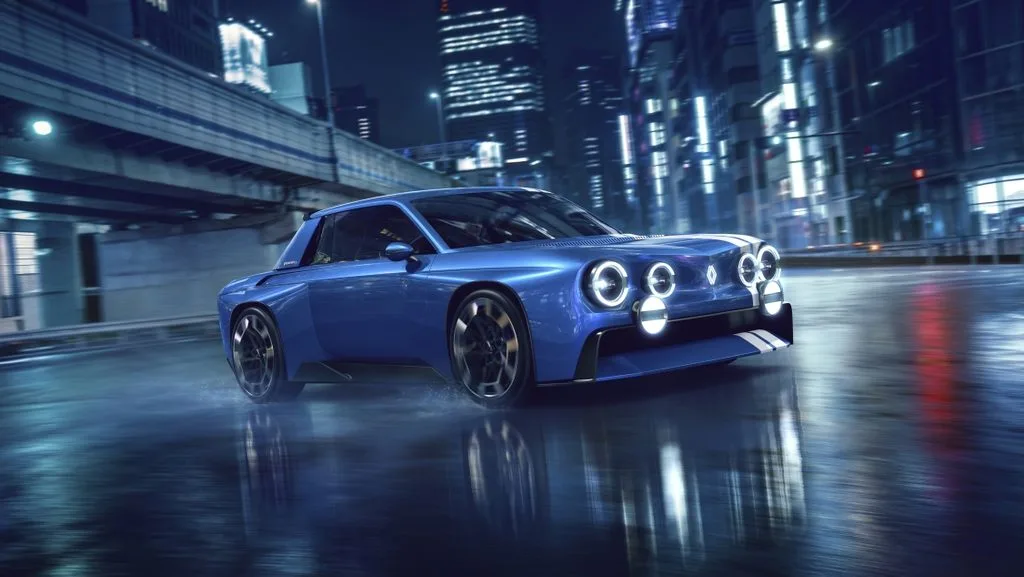
Renault has unveiled the 8 Gordini Concept, a two-seat electric coupé that reinterprets one of the brand’s most storied performance models with a motorsport-inspired design.
It’s the latest in a five-year run of heritage one-offs from Renault, following the Ora Ïto-designed R17 electric restomod and the Pierre Gonalons-collaborated Renault 5 Diamant art car, all built ahead of the planned Renault Collections museum opening in Flins in roughly fifteen months.
With a low, wide body, aggressive stance and a 270 hp electric motor, the concept leans into rally-car proportions and what Renault calls a “café racer” design sensibility.
It debuts at the Renault Carwalk on September 24 before heading to the Renault stand at the Paris Motor Show, running October 12-18, 2026. Alexandre Malval, Renault’s VP of Design, said the goal was to spark genuine passion for the car rather than simple nostalgia, connecting the icons of Renault’s past with where the brand is headed.
The Original “Gorde”
The original Renault 8 Gordini launched in 1964 with a 95 hp rear-mounted engine and rear-wheel drive, delivering real racing capability that demanded serious driving skill — a car Renault credits as a training ground for a generation of drivers, including Jean Ragnotti.
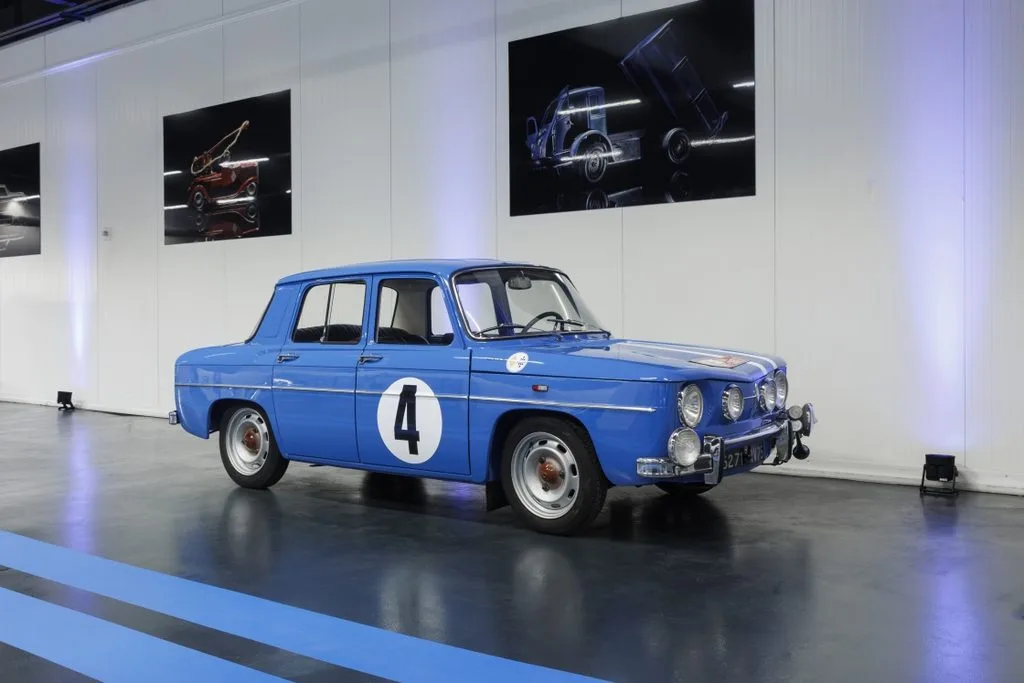
By badging a sporty version of a production car under the Gordini name, Renault made genuine performance affordable roughly a decade before the GTI trend took hold, and the car’s double white stripe became one of its most recognizable details.
A Design Born From Internal Competition
Unlike the Ora Ïto-collaborated R17, the 8 Gordini Concept was designed entirely in-house. Renault Design ran an internal competition that drew more than 300 spontaneous sketch submissions spanning retro, futuristic and GT-inspired directions, eventually narrowing to two proposals built as 2:5 scale models before being merged into a single final design.
Compact Proportions With Rally-Car Presence
The concept measures 4.12 meters long, 1.88 meters wide and 1.27 meters tall, riding on 19-inch front and 20-inch rear wheels for a planted, rally-inspired stance. Unlike the four-door original, the concept is a two-door coupé with an aggressive, V-shaped front end and six headlights.
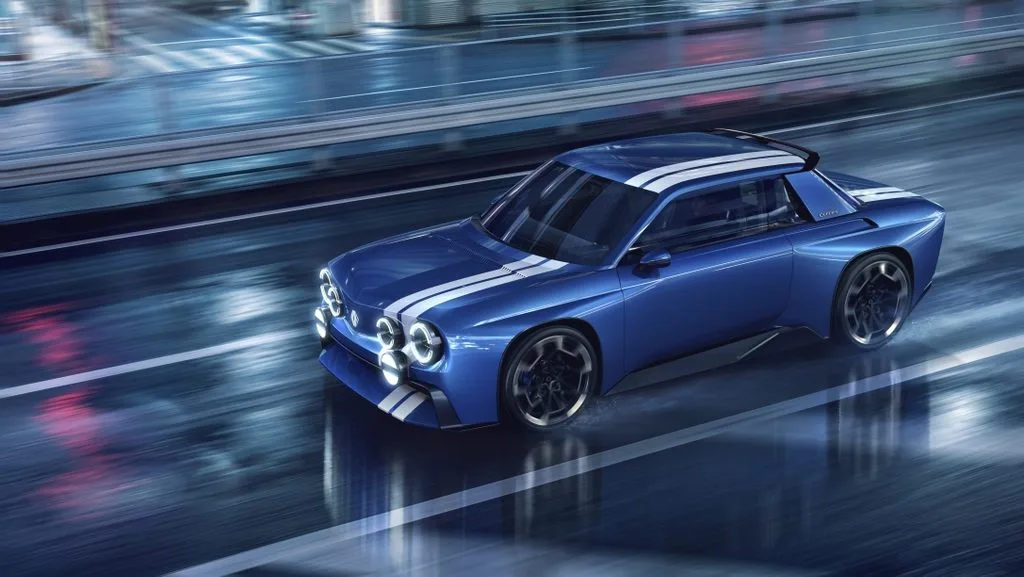
Its wide, muscular rear hints at the original’s rear-mounted engine and rear-wheel-drive layout, even though power now comes from a 270 hp electric motor, with a subtle rear rake absent from the 1964 car underscoring the concept’s sportier intent.
Malval said the team deliberately broke from the original’s near-symmetrical front-to-rear styling, using a wider track, flowing cabin lines and larger rear wheels to create a visual sense of momentum tied to the original car’s rear-drive character.
Stripped-Back “Café Racer” Styling
The design borrows from the custom-motorcycle café racer trend — already used on the Renault 5 Turbo 3E — which strips away unnecessary elements to let materials and mechanical shapes speak for themselves.
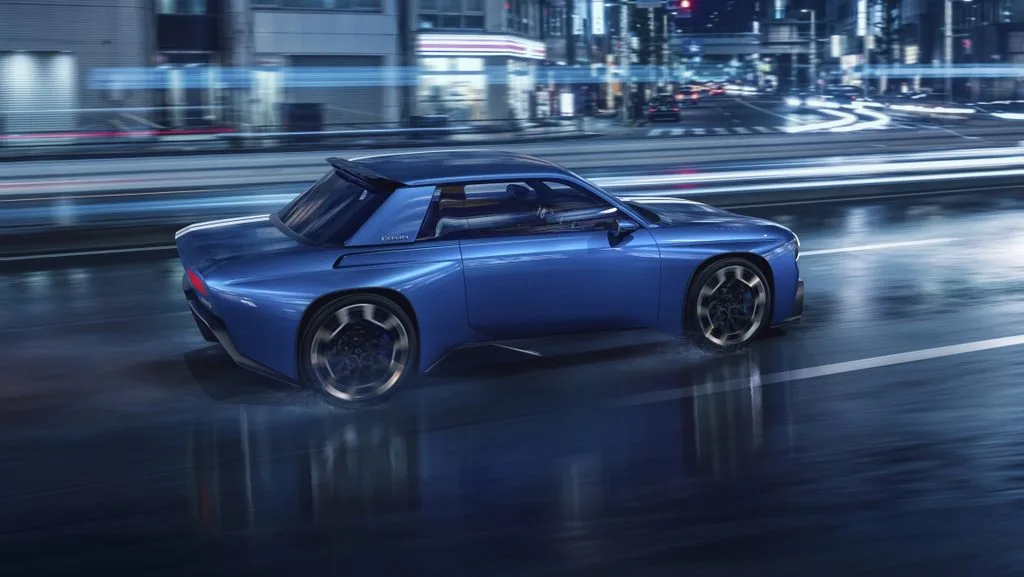
On the 8 Gordini Concept, that meant integrating the original’s chrome side molding directly into the bodywork as a sculpted feature line and removing shut lines wherever possible, including a one-piece front hood that lifts off entirely, similar to a race car.
Details That Nod to the Original
Despite looking little like its 1964 namesake, the concept carries several reworked references to it: reworked Gordini lettering echoing the original badge’s striations, a new eight-segment “8” emblem, and an interior crest referencing the original’s diamond logo.
A recessed waistline embossing borrowed from the original now functions practically, directing airflow to a new vent, while the rectangular wheel-arch shape returns for a more muscular profile.
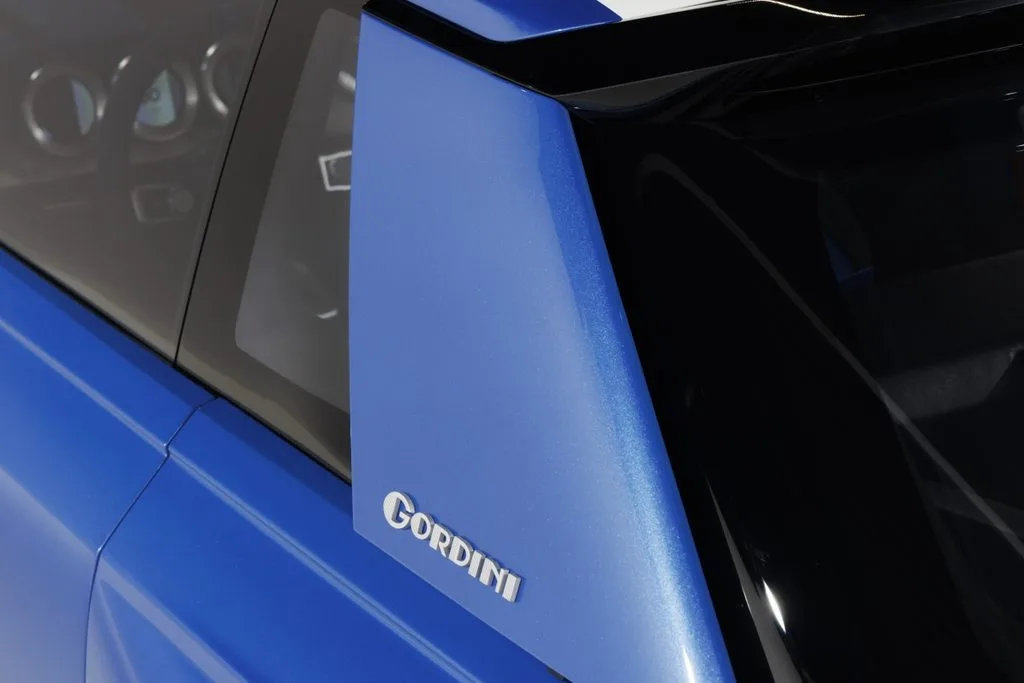
The grille-less front end integrates the rally version’s extra lighting into a six-round-headlamp signature, and shell-shaped wing mirrors, a full-width lower windscreen grille, and a rear ventilation grille all carry over from the original. Malval said the six 3D headlights sit set into the bodywork at the front while the rear lights sit nearly flush and barely visible when off, while exterior designer Kévin Goncalves noted the squared wheel arches, inherited from the original, emphasize the rear wing’s muscular lines.
Colour and materials designer Thomas Altet said the paint draws on Bleu de France, the original Gordini’s signature shade, built through a three-layer finish combining mother-of-pearl with a blue-tinted binder that reveals the historic blue tone along the body’s edges under light.
The Double Stripe as a Structural Element
Where the original’s double white stripe was purely decorative, the concept treats it as a structural design element, aligning it with the windscreen-base grille and the illuminated graphic inside the rear lights, and extending it into the cabin across the top of the dashboard, where its color shifts from white to blue. Goncalves described the stripes as coordinating elements of the design rather than surface decoration.
A Minimalist, Driving-Focused Cabin
Inside, a horizontal brushed-aluminum dashboard strip replaces plastic across controls and large surfaces, contrasted against Alcantara-trimmed sections, with round digital dials — styled after the original’s dials — appearing to float above the dashboard for a high-tech look reinforced by indirect ambient lighting.
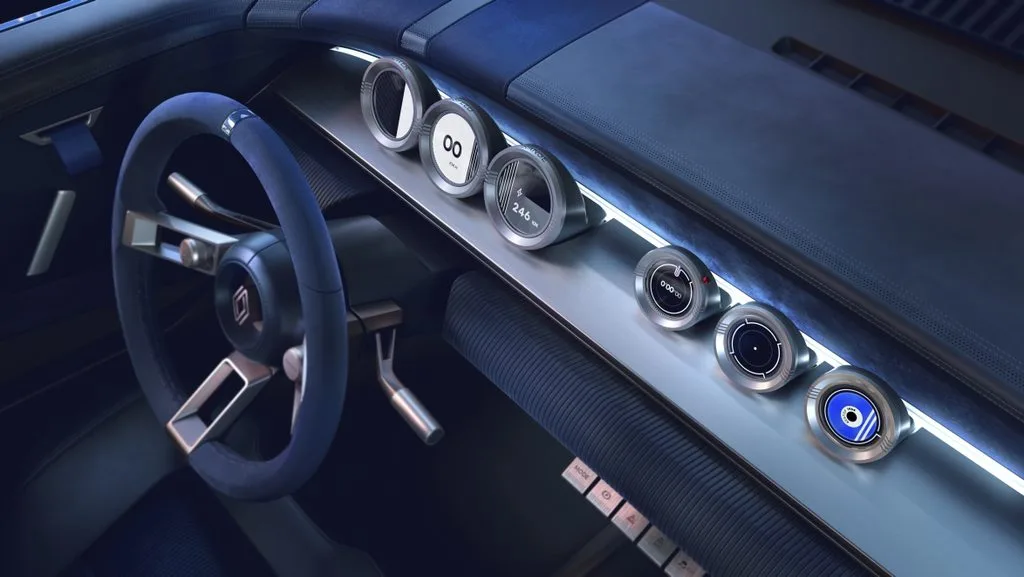
The layout leaves little to distract from driving, with a red-dotted stopwatch button as the one standout detail, while Alcantara-trimmed door panels carry stitching reminiscent of racetrack curbing and bucket seats use blue corduroy centers against black surrounds as a nod to the original’s flat, headrest-free seats.
Interior design director Stéphane Maiore said the team reworked the original dashboard’s circular-dial layout into a horizontally mounted strip of aligned round screens, aiming for something that feels both modern and connected to the past, with the cabin sitting beneath a wraparound beltline for an unobstructed driver view. Interior designer Robin Biondi said the team deliberately limited the number of cabin components, with each piece serving both structural and trim purposes.