
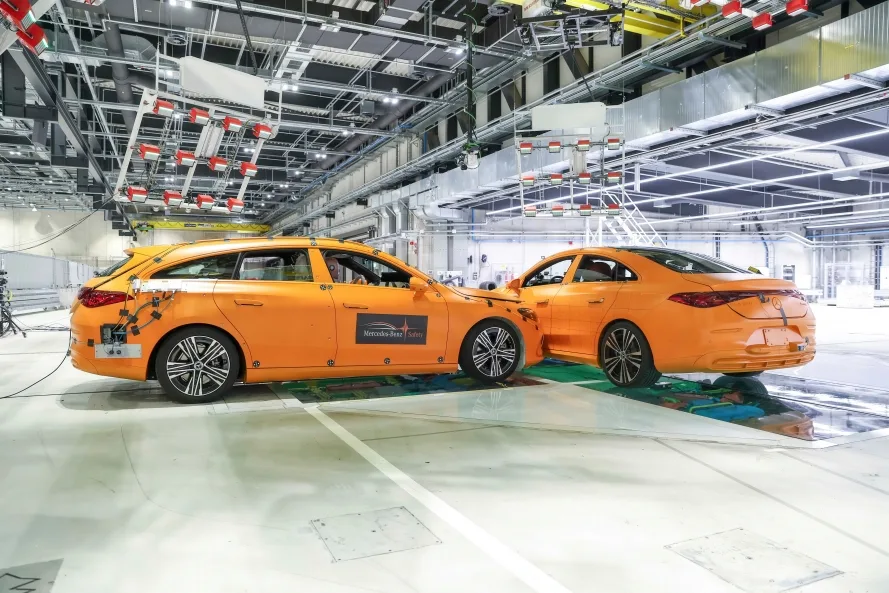
Mercedes-Benz has staged what it describes as the world’s first live high-speed side-impact crash test using two production vehicles. A CLA Shooting Brake with an electrified combustion engine was driven, without prior braking, into the driver’s side of an all-electric CLA, with both cars travelling at 56 km/h.
Each vehicle weighs more than two tonnes. The company says the speed sits at the upper end of real-world junction collisions and above typical city-centre speeds.
Because a car has far less room to absorb energy at the side than at the front, the company considers this among the most critical scenarios for occupants and the structure. The electric CLA was hit in the very areas that matter most: the passenger cell and the high-voltage battery in the underbody.
What the Results Showed
The passenger compartments of both cars stayed intact. All eight dummies, representing four adults and four children, recorded readings below the relevant biomechanical limits, which Mercedes says indicates a low risk of serious or life-threatening injury.
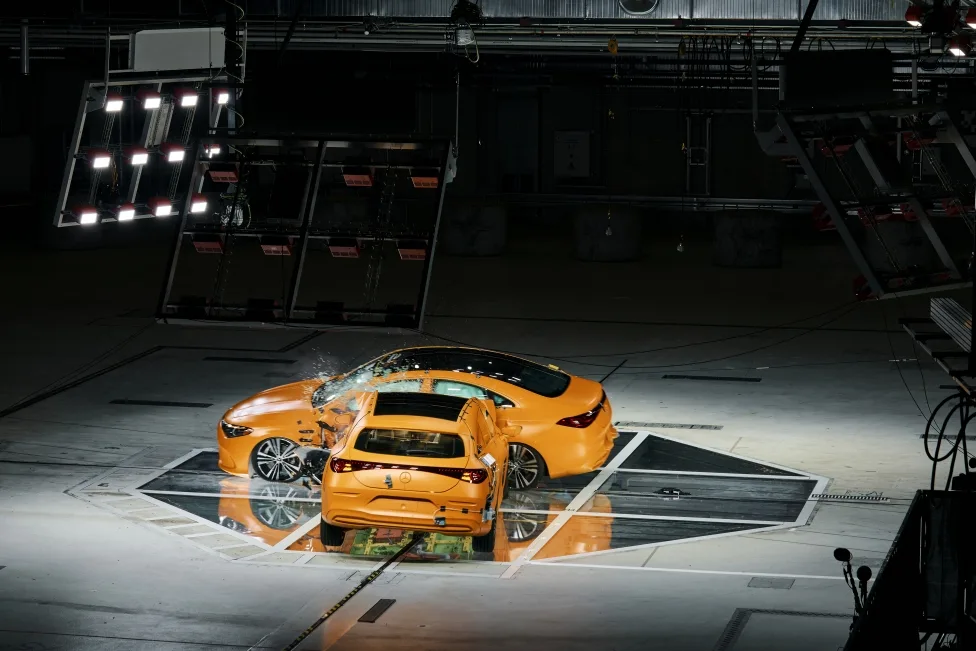
The data, drawn from up to 150 measurement points per dummy, showed the safety systems working as intended. The high-voltage battery also remained undamaged.
Jörg Burzer, the board member for development and purchasing, said the company’s ambition is to build the safest vehicles in the world and that the test is a clear demonstration of that goal. He also noted that the company develops its systems around real-world traffic scenarios.
Why the Test Goes Further Than Regulations
No law or safety rating calls for a side-impact test with two moving production vehicles. Standard tests use fixed barriers or impact vehicles under set conditions.
Mercedes-Benz chose a scenario drawn from real accident data, and notes that roughly a quarter of injury-causing accidents are side impacts. Paul Dick, director of vehicle safety, described the approach as “Real-Life Safety,” which translates insights from real accidents into development requirements.
Real Accident Data and Simulation
Mercedes-Benz has investigated and reconstructed real accidents since 1969, analysing about 6,000 cases with research teams in Germany, China and India. Those findings feed into body structures, restraint systems and internal requirements.
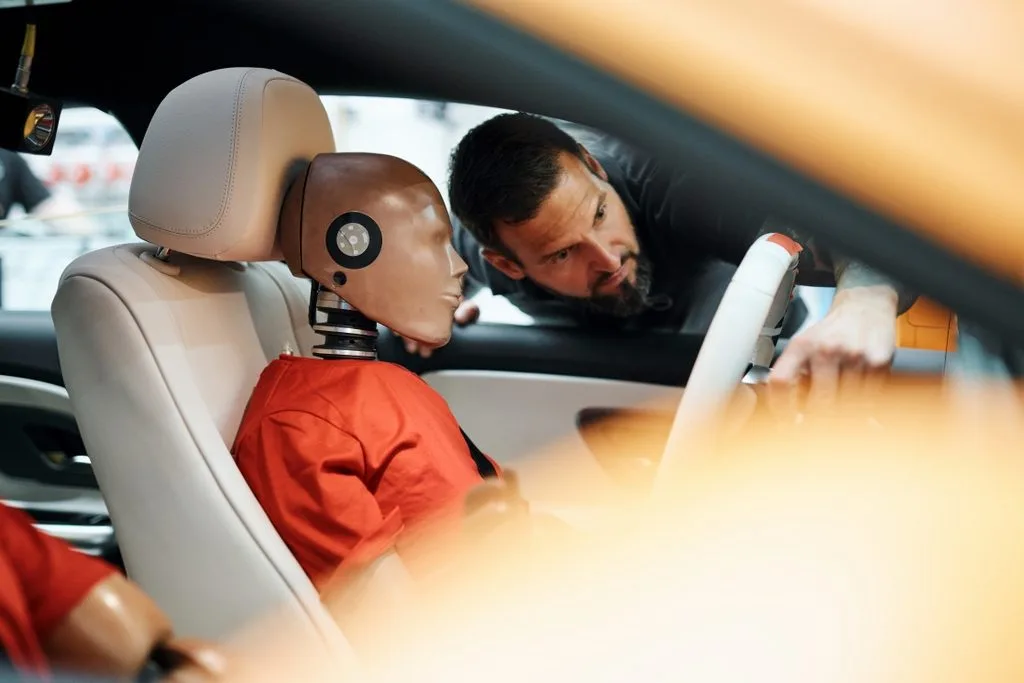
Before any physical test, each new model goes through around 15,000 crash simulations, with artificial intelligence helping to refine predictions. A new model typically undergoes around 150 physical crash tests.
Rescue Intelligence Arrives in 2027
Mercedes-Benz has also unveiled Mercedes-Benz Rescue Intelligence, a system scheduled for gradual rollout from 2027. It links vehicles involved in a crash directly to emergency services, so crews can see occupant numbers, airbag and seatbelt status, open doors, battery temperature and high-voltage system condition while still en route.
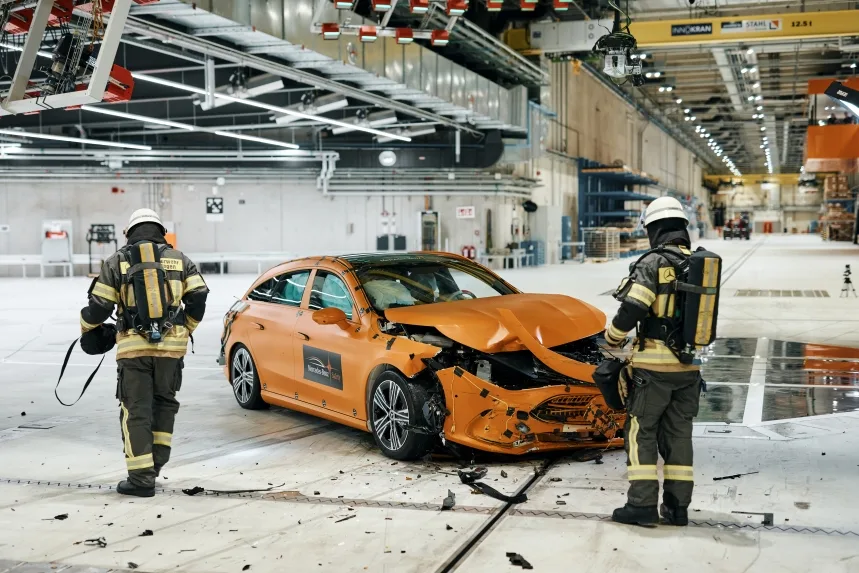
Depending on availability and the situation, the information lets crews choose equipment earlier, which the company says matters because every second counts after an accident.