
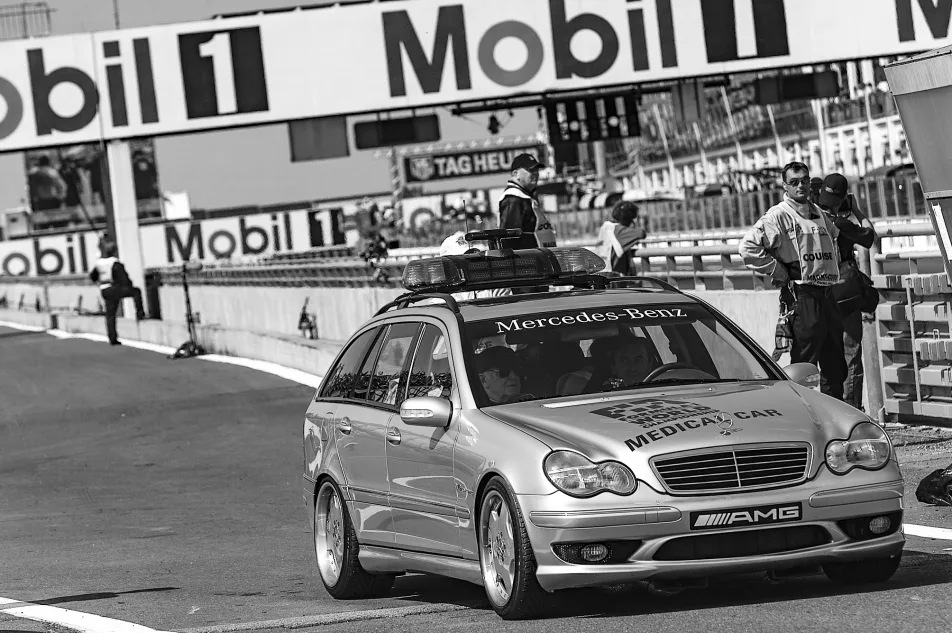
The Mercedes-Benz Museum‘s “Close-up” series continues to dig into the backstories behind its exhibits, and this installment turns to something you won’t find on a podium: the Mercedes-Benz C 32 AMG Official FIA F1 Medical Car, on display in Collection Room 3, the Gallery of Helpers.
With its bold decals, roof-mounted warning beacons and unmistakable presence, this is clearly no standard C 32 AMG estate. It’s the actual FIA Medical Car used in Formula 1 from 2001 to 2003, part of a support-vehicle partnership Mercedes-AMG has now maintained for 30 years, dating back to 1996.
The Crew Behind the Wheel
The names of the original crew are still stencilled on the side windows: racing driver Jacques Tropenat behind the wheel, neurosurgeon and then-FIA Safety and Medical Delegate Sid Watkins beside him, and anaesthetist Gary Hartstein in the rear. The seat behind the driver was typically reserved for a local emergency doctor from whichever circuit the car was racing at, given their familiarity with that track’s rescue logistics.
First on the Scene, Every Race
The Medical Car plays a role that rarely gets attention but matters enormously: getting emergency personnel to an accident site as fast as possible for initial assessment and stabilization. That puts it at the very start of the FIA’s rescue chain — a distinctly different job from the Official FIA F1 Safety Car, which Mercedes-AMG also supplies, and which exists purely to neutralize a race when the Race Director calls for it.

To do that job well, the car has to be stable and predictable at speed, which is why it’s always driven by a professional. The driver sits in a snug bucket seat secured with a four-point harness, while the front passenger gets a slightly roomier AMG sports seat — still supportive enough for hard driving, with all occupants strapped in via four-point harnesses.
Medical Gear Built Into the Layout
The onboard physicians keep essential equipment within arm’s reach, sometimes tucked into their racing overalls or a small bag at their feet. Bulkier gear for resuscitation, monitoring and fire response rides in a variable load container in the estate’s boot, alongside fire extinguishers — all of it meant to deliver first aid before ambulances or recovery vehicles arrive.
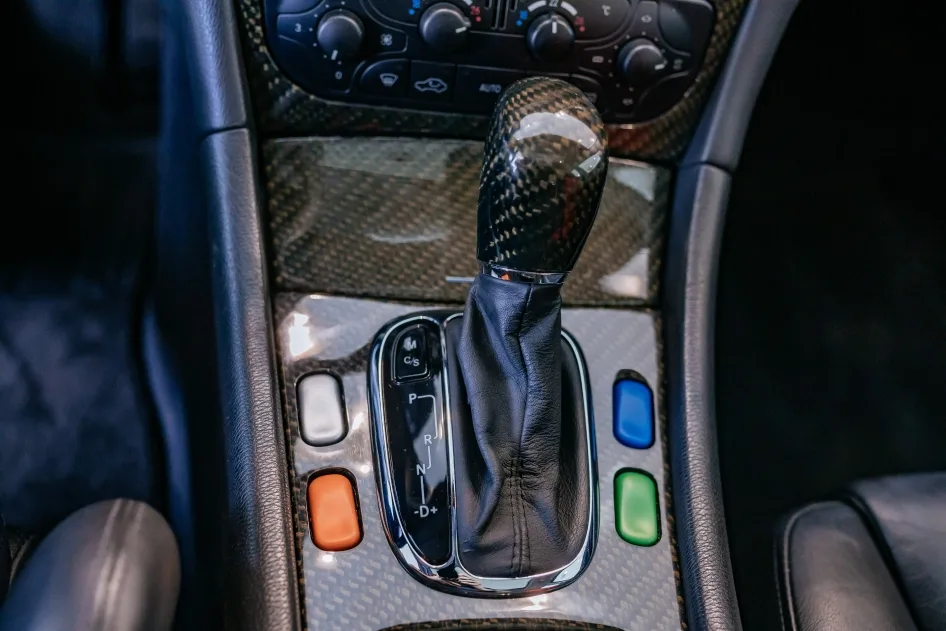
Smaller details round out the car’s purpose-built nature: warning-beacon switches sit in the centre console, and the wheels wear Michelin Pilot Sport tyres in an “Extraload” reinforced version built for higher load capacity. Beyond that, the cabin — carbon-fibre trim, soft leather — matches a standard C 32 AMG, with one exception: the front passenger footwell carpet carries an embroidered tribute to “S. Watkins,” honoring the man who, as President of the FIA Institute for Motor Sport Safety, helped shape the Medical Car concept and spent 26 years initiating life-saving interventions after serious F1 crashes.
On Standby From the First Lap

Race starts carry the highest risk of incidents, which is why the Medical Car follows the field directly through the opening lap. For the rest of the race, it waits in the pit lane next to the Safety Car, ready to head to the track the moment Race Control gives the signal.
An AMG Engine Built for the Job
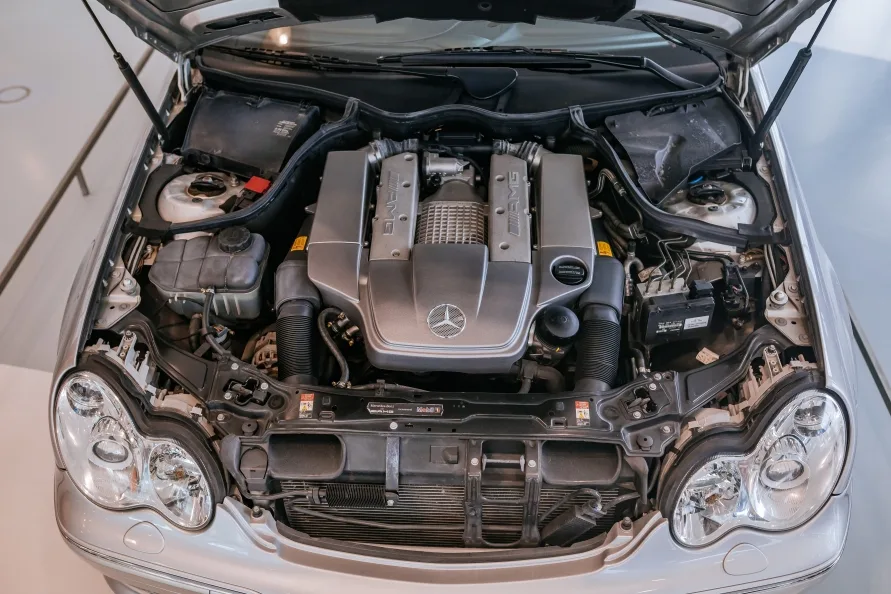
Handling that role required real performance: the C 32 AMG estate paired generous interior space with genuinely agile handling, powered by a supercharged 3.2-litre M 112 E 32 ML AMG engine producing 260 kW (354 hp) and 450 Nm of torque — enough to make it the most powerful C-Class of its era, with a top speed of 280 km/h. It was also rare even at the time, with just 1,556 units built between 2001 and 2004 before the V8-powered C 55 AMG took over.
Mercedes-AMG has supplied F1’s Official Safety Cars and Medical Cars since 1996, but the C 32 AMG holds a particular place in that history — a reminder of the period when safety became a genuine specialty within top-tier racing, and dedicated emergency vehicles became a fixture of race weekends rather than an afterthought.