
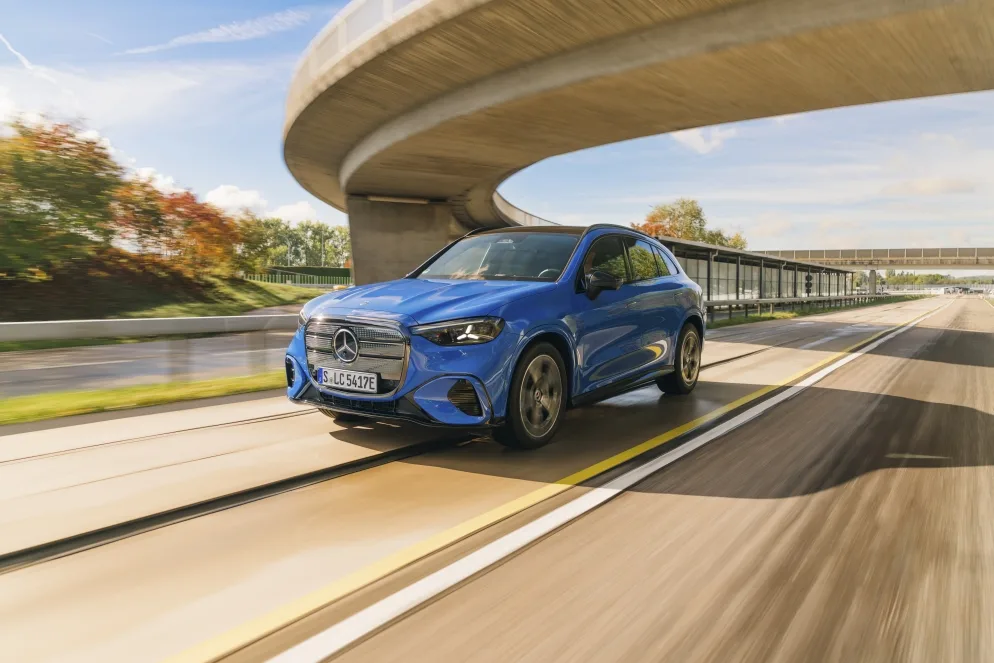
Mercedes-Benz plans to launch more than 40 new models in under three years, with the portfolio complete by the end of 2027. The brand offers fully electric and hybrid powertrains to match customer needs worldwide.
Its approach combines data-driven development, digital simulation, bench testing and more than 140 years of engineering experience. Modular powertrains, batteries, architectures and software scale across many models, while the Mercedes-Benz Operating System integrates core vehicle functions regardless of powertrain.
Jörg Bartels, Vice President of Powertrain Development, said the powertrain shapes a car’s character more than any other technology. He said the company aims to turn technical excellence into an intuitive driving experience and an emotional bond between driver and car.
From Simulation to Test Bench
Development starts with real customer behaviour, including driving cycles, acceleration, pedal inputs, towing and hill starts. Engineers test power, torque, gear ratios and control strategies virtually before producing any component.
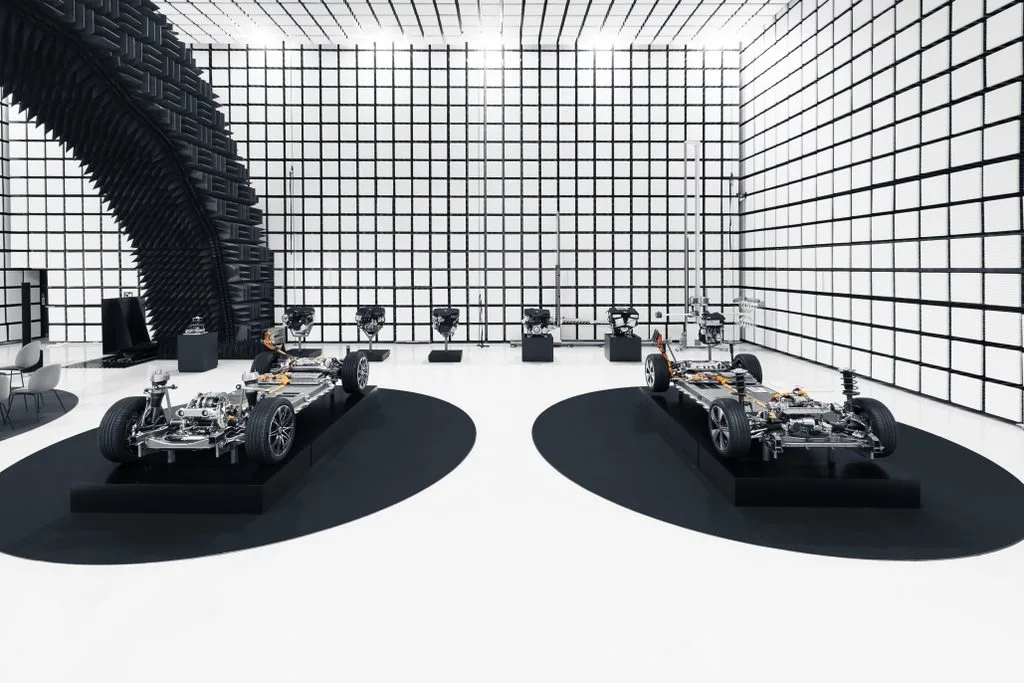
The simulated behaviour is then validated on the test bench under real load and temperature, and only afterward in the vehicle. Suspension, brakes and steering are developed as one integrated system, so every model keeps the same blend of comfort, safety, composure, sportiness and precision.
Modular Combustion and Electric Architectures
The FAME (Family of Modular Engines) petrol and diesel hybrids use ISG 2.0 to cut fuel consumption while raising output across vehicles from the GLA to the S-Class. Electric models use a modular architecture derived from the VISION EQXX programme. It already serves the CLA, CLA Shooting Brake, GLB, GLA, GLC and C-Class, and the company is scaling its 800-volt system to the E-Class and S-Class.
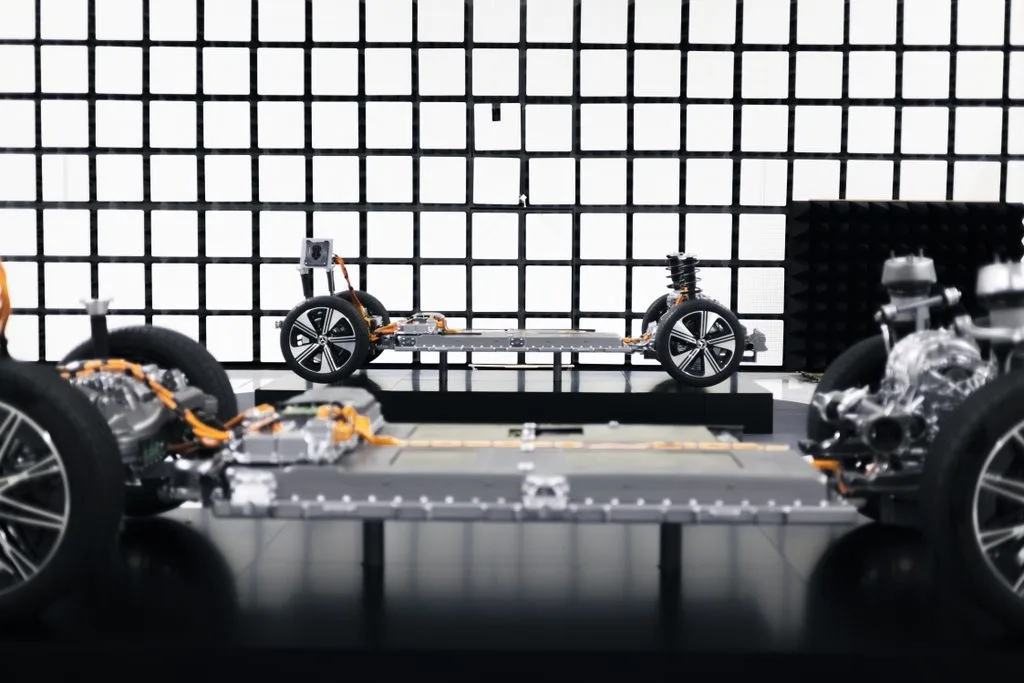
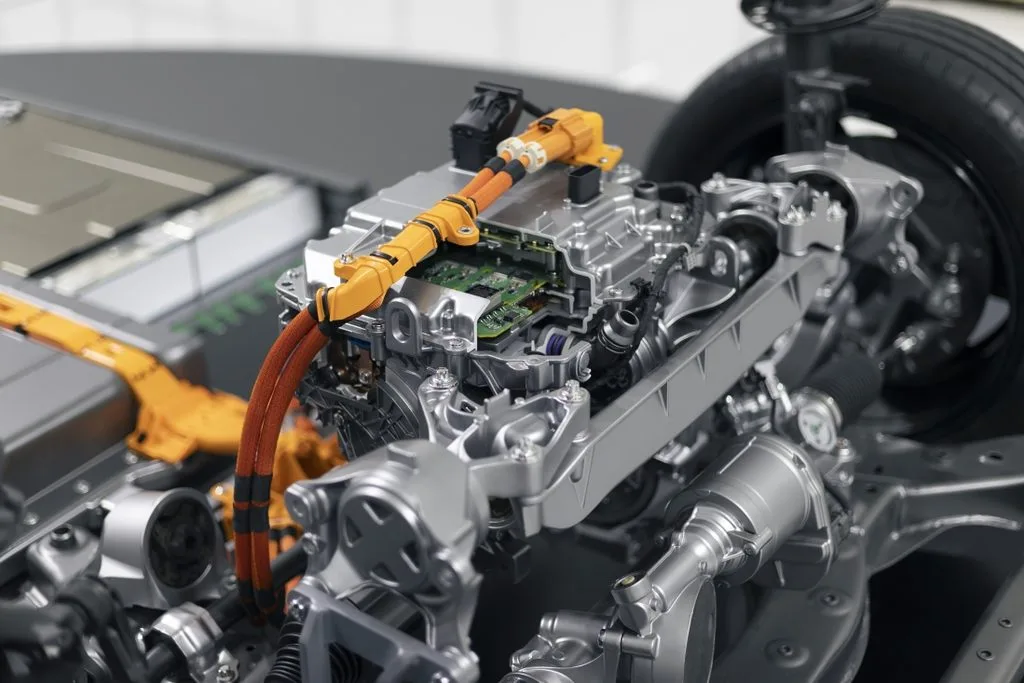
The in-house electric drive unit 2.0 runs at 800 volts from the outset, a first for the entry-level segment according to Mercedes-Benz. It uses silicon carbide in the inverter and a two-speed gearbox with a dog clutch, which the company says balances maximum torque, top speed and energy use in real-world driving. Its compact design leaves room for the rear cabin layout.
Cell Chemistry and Solid-State Progress
Mercedes-Benz defines battery requirements, develops the systems and integrates them into vehicles. A combination of lithium manganese oxide and nickel manganese cobalt oxide uses more manganese and less cobalt and nickel.
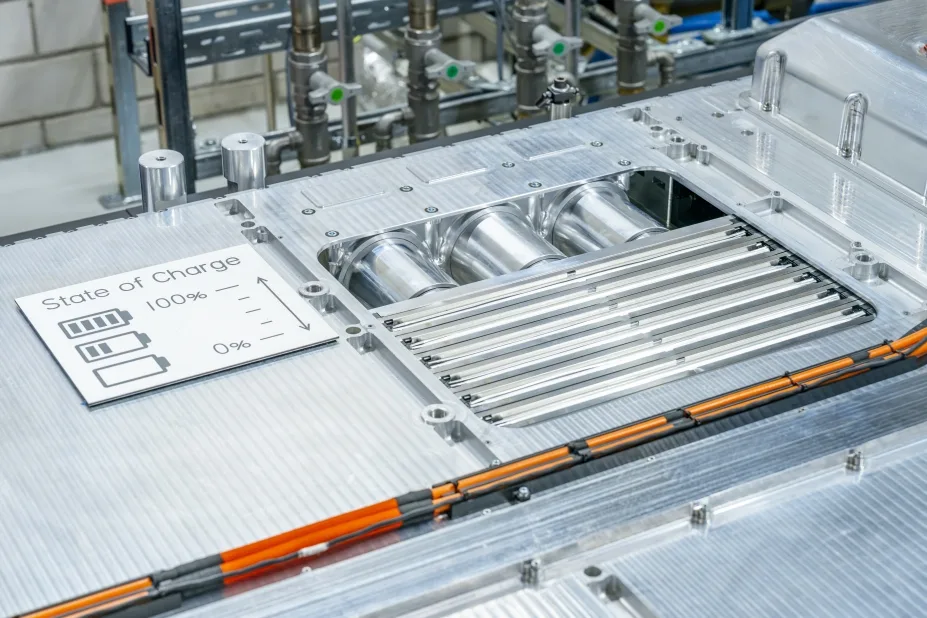
The company is also working on lithium nickel manganese oxide (LNMO), a cobalt-free chemistry that operates at up to five volts. It cites range advantages of up to 30 percent over LFP at comparable weight and packaging.
With Factorial Energy, Mercedes-Benz has tested a lithium-metal solid-state battery in an EQS, which covered 1,205 kilometres from Stuttgart to Malmö without recharging. Work with ProLogium focuses on testing Gen4 cells for performance, safety and thermal behaviour, to assess their potential for series production.
Formula 1 Know-How in Series Engines
Mercedes-Benz works closely with Mercedes-AMG High Performance Powertrains in Brixworth, England, which builds Formula 1 powertrains for the Mercedes-AMG PETRONAS F1 Team. The collaboration focuses on exchanging expertise and development methods.
The new M 252 LS, a 1.5-litre petrol four-cylinder with 170 kW plus 23 kW, uses an electric exhaust turbocharger derived from Formula 1 technology. The company says it is the most powerful four-cylinder in the compact class. In the GLB 2501, it accelerates about a tenth of a second faster than the M 260 in the GLB 2502 while producing around 17 percent less CO2.