
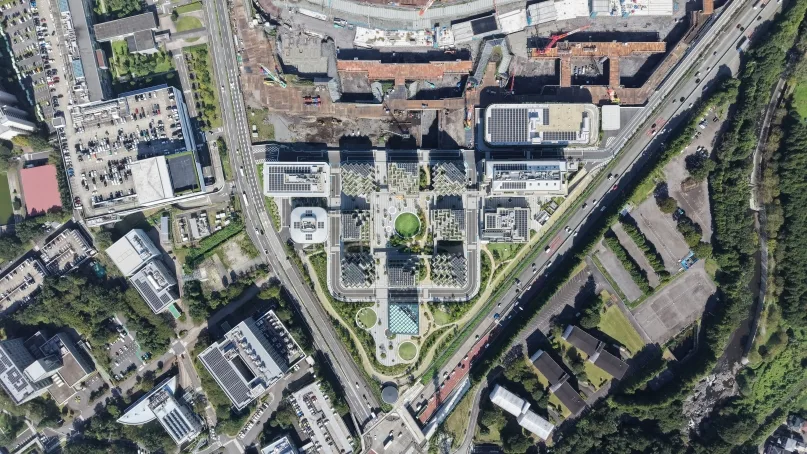
Toyota Woven City, developed jointly by Toyota Motor Corporation and Woven by Toyota, marked the first anniversary of its official launch with roughly 30 proof-of-concept projects now underway.
The project functions as a living laboratory built around “Kakezan” — combining diverse expertise across industries to create new value — and centers those trials on around 160 residents across roughly 80 households, known as Weavers, drawn from Susono City, where Woven City is located, and surrounding municipalities.
Companies participating as Inventors run these trials, gather feedback directly from Weavers, and refine their products through ongoing Kaizen improvement cycles, a process now actively shaping new products and services rather than just testing existing ones.
From Household Robots to Smart Vehicle Systems
Several projects illustrate how that cycle works in practice. The Woven City Integrated ANZEN safety system, developed by Woven by Toyota, is being tested on-site, and under a new partnership with Shizuoka Prefecture, the company plans to expand that testing within the current fiscal year by installing devices in prefectural government vehicles to gather additional data.
The AI Robot Association has introduced household robots that help with tasks like tidying and carrying items, reaching 11 households and more than 1,000 completed tasks as of late September. UCC Japan, which runs the Ueshima Coffee Lounge on-site, has developed a way to visualize more than 300 behavioral data points from participants and plans to next study how different coffee types affect concentration.
A More Capable AI Vision System
Woven by Toyota plans to release AI Vision Engine 2.0, a major update to the system currently powering both the Integrated ANZEN System and UCC Japan’s trial, by the end of 2026. The upgrade expands the system’s ability to describe real-world events in natural language, reason about why those events occurred, and detect specific behaviors from people and mobility technology in visual data.
While the current version already holds a world-leading score on one vision-language benchmark, the 2.0 version has posted leading results on more than ten benchmarks, including several focused specifically on reasoning.
Seven New Companies Join as Inventors
Woven City’s Inventor community has grown to 31 companies with the addition of seven new members. Four came through the Toyota Woven City Challenge — Hack the Mobility accelerator program: Aerial Base, focused on drone-based delivery using dedicated logistics boxes; Aillis, developing AI-powered medical devices aimed at bringing what it calls “2030 healthcare” nationwide; JOYCLE, testing on-site waste-to-resource conversion through its JOYCLE BOX system without the need for transport or incineration; and NationX (formerly finalist PUBLIC Technologies), building an AI-driven decision-making platform that integrates resident and facility data to guide city-wide decisions.
Three additional companies joined separately: Chubu Electric Power Miraiz, working on accessible demand-response electricity services; Daihatsu, testing a mobility and energy platform built around automotive-powered microgrids; and Hitachi Construction Machinery, exploring future construction site concepts for real-world use.
Phase 2 Construction and a Wider Welcome
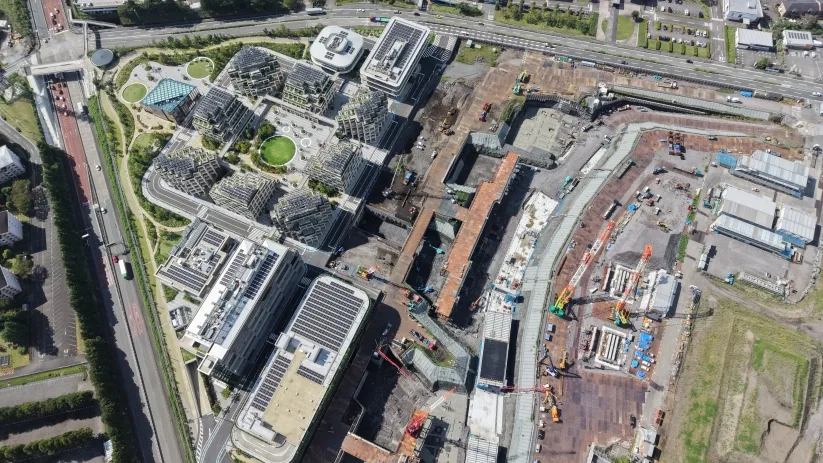
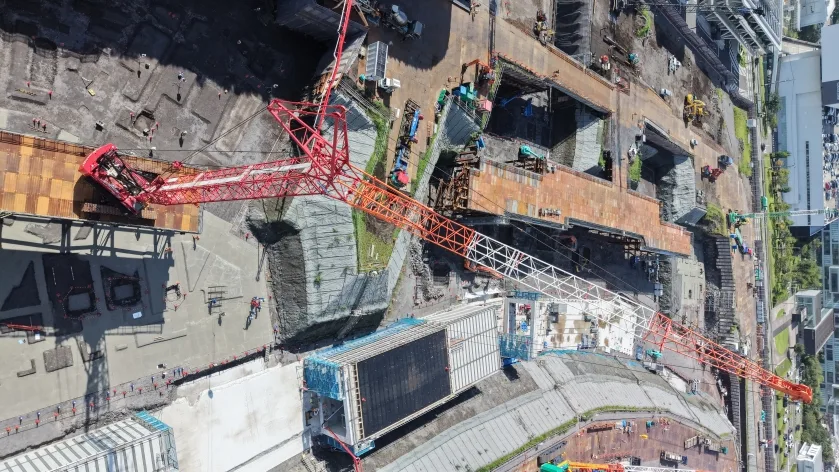
Construction on Woven City’s Phase 2 began in September after site preparation wrapped up, with the roughly 52,000-square-meter expansion scheduled for completion by the end of November 2028 and designed to house about 600 residents, up from Phase 1’s roughly 300 — part of a plan to eventually accommodate around 2,000 people across the full site.
Starting October 1, Woven City is opening visitor reservations to the general public across Japan through its visitor website, expanding a program that began in September with visits limited to Shizuoka Prefecture residents.
That regional rollout followed strong interest in the project itself: an August recruitment drive for Shizuoka Prefecture residents drew more than 1,000 applications, with about 25 households expected to move in around March 2027.