
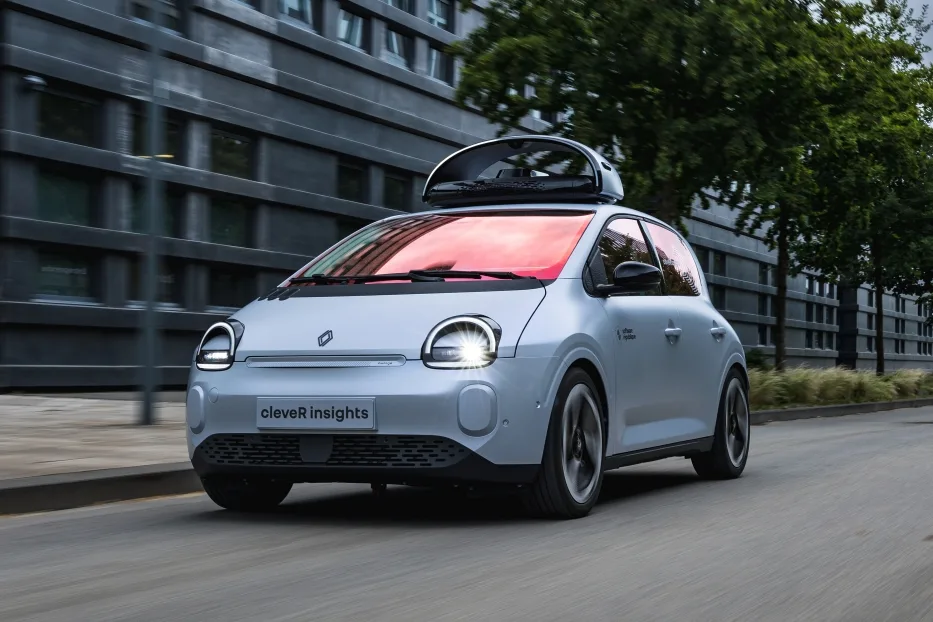
Software République has unveiled cleveR insights, a new approach to territorial intelligence built to support public decision-making — and Renault is putting its Twingo E-Tech electric at the center of the system.
Conceived as a full ecosystem for collecting, simulating and analyzing local data, cleveR insights aims to turn scattered information into knowledge that communities can actually act on, with mobility playing a key role through mobile observation points that continuously sharpen understanding of an area.
Why a Compact EV Makes Sense for the Job
To bring this to life, Renault turned to the Twingo E-Tech electric, transforming the compact into a cutting-edge mobile platform. At just 3.79 meters long, the all-electric hatchback is well suited to city driving, able to move through any part of an urban environment quietly, easily and without emissions — ideal for continuous, low-key data gathering.
A high-tech arch mounted on the roof houses cameras and multiple sensors tracking pollution, noise, drought conditions, road damage and more, effectively turning the car into a real-time mobile monitoring station.
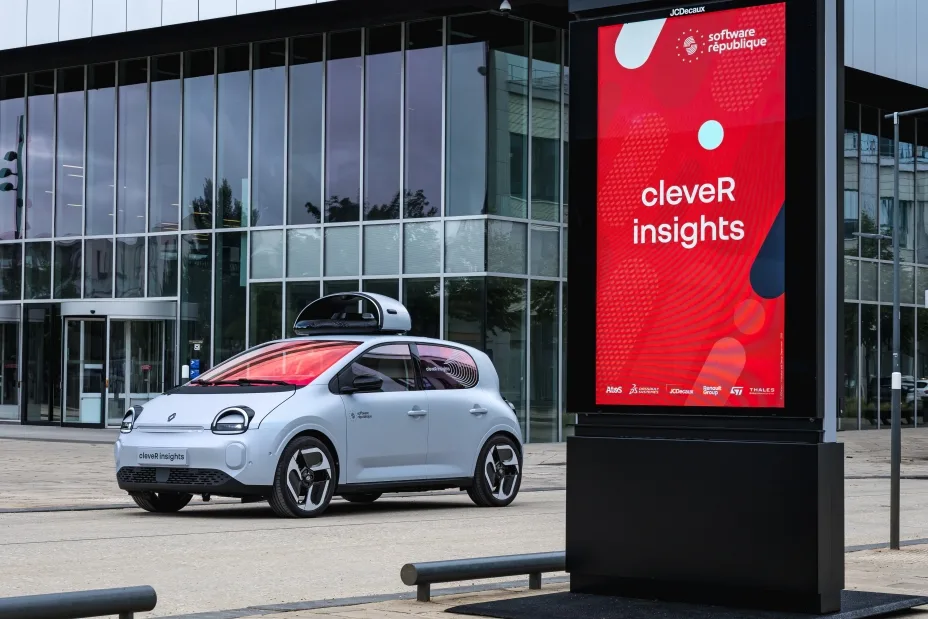
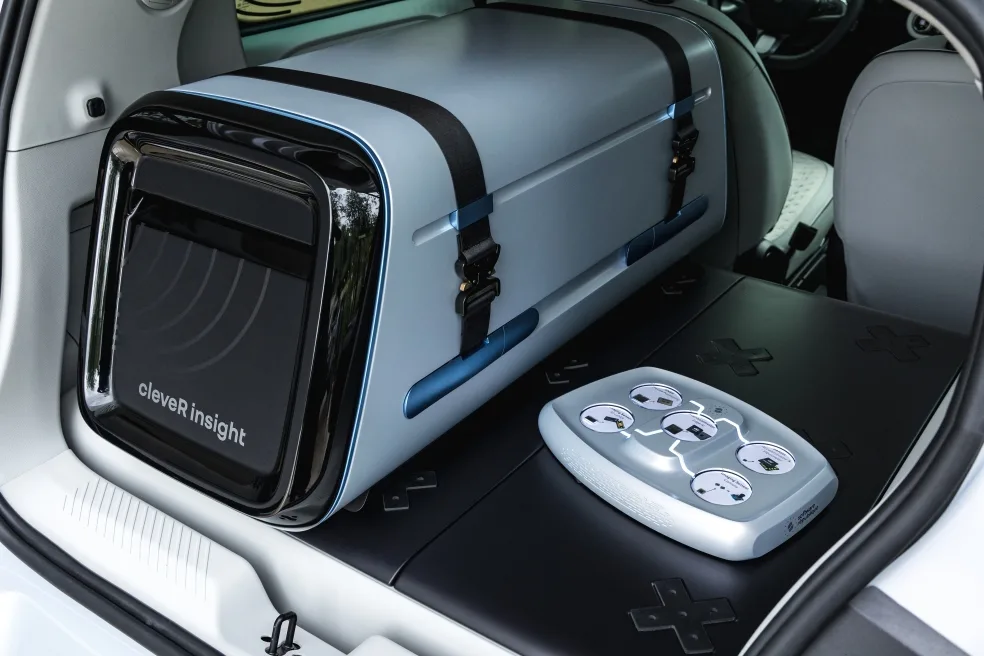
The system can also pair with Apache, a technology unit co-developed with Bruitparif that analyzes rolling noise to map how road surfaces sound in real-world conditions — adding another layer of environmental data that fits squarely into cleveR insights’ approach of blending fixed and mobile sources.
Crucially, this isn’t a pure concept exercise: it’s built on a homologated production vehicle, which means it can be deployed in the field for a range of use cases without major modifications, and scaled easily into existing fleets run by municipalities, operators or businesses. The car also gets a modular load area designed to carry whatever additional equipment a given mission requires, from measurement campaigns to field diagnostics.
Design That Signals Its High-Tech Purpose
Visually, cleveR insights carries a distinct identity that’s both futuristic and expressive. The rooftop arch echoes the rounded, half-moon shape of the Twingo’s daytime running lights, with an encapsulated light line around it that keeps the vehicle instantly tied to the production model.
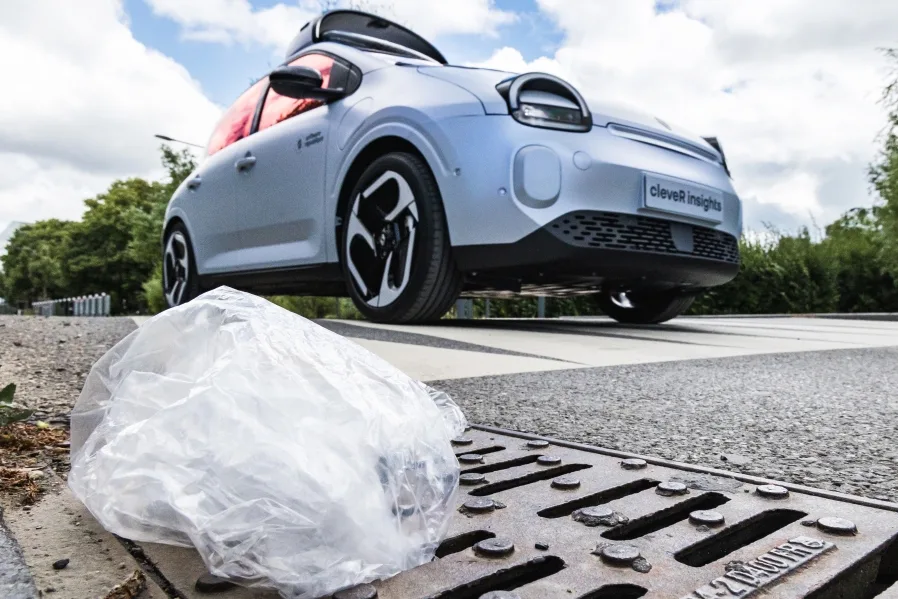
Finished in a “white silver” shade — a frosted white with a hint of grey and a satin finish — the arch shifts between warm coppery tones and cooler bluish pearlescent hues depending on the light, an effect meant to evoke the flow of information the vehicle is capturing as it moves through the city. The windows carry the same idea further, with subtle reflections and a wave-shaped rear design symbolizing the exchange of data between vehicle and city.
Inside, the cabin keeps things bright and functional, using technical materials, light grey fabrics with silvery or orange-tinted threads, and embossed patterns drawn from the standard Twingo, finished off with blue accents for a clean, business-ready feel.
A Case for Rethinking What a Car Can Do
With cleveR insights, Renault is making the case that a vehicle can serve as more than transportation — it can become a genuine tool for understanding a local environment.
The Twingo E-Tech electric fits the role well: compact and maneuverable in tight urban streets, electric by design, easily converted into a lightweight high-tech platform, and affordable enough to deploy at scale.
By putting mobility at the heart of data collection, Renault and Software République are positioning this kind of system as a step toward more agile, detailed and proactive management of urban areas — a benefit, they argue, for both communities and the public bodies that serve them.