
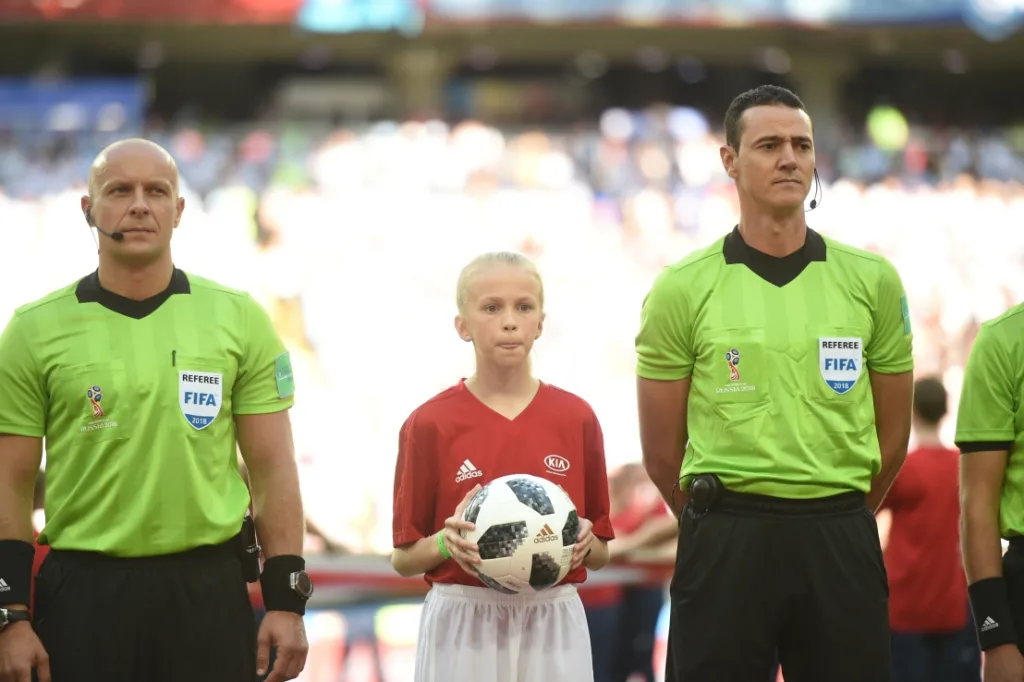
Hyundai Motor’s 27-year partnership with FIFA has grown well beyond a traditional sponsorship deal, evolving from automotive branding into a broader platform spanning fan engagement, mobility technology and robotics demonstrations across successive World Cup tournaments.
When a Robot Stole the Show
Amid the on-field drama of the FIFA World Cup 2026, one of the tournament’s most talked-about moments came from a humanoid robot. During halftime of a Round of 16 match at New York/New Jersey Stadium, Boston Dynamics’ Atlas emerged from the player tunnel, ran through a series of goal celebrations, and delivered the ceremonial match ball to the referee.
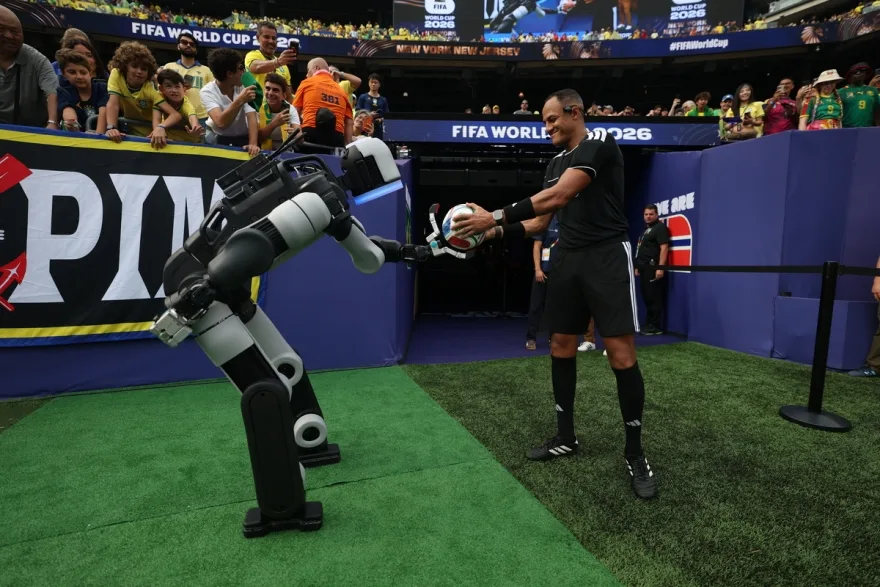
The stunt quickly became one of Hyundai’s most recognizable World Cup moments. A behind-the-scenes documentary, “The Training Ground,” which followed Atlas’ preparation, drew more than 16 million views on YouTube.
Boston Dynamics’ Spot robot also featured during the tournament, autonomously monitoring facilities including the International Broadcast Center in Dallas — together illustrating how far Hyundai Motor Group’s robotics ambitions have come.
Nearly Three Decades on Football’s Biggest Stage
Hyundai has been a FIFA Partner, the sponsorship structure’s top tier, since 1999 — making it the longest-tenured sponsor in the automotive sector and one of FIFA’s longest-running commercial relationships overall. The company secured its rights that year following the launch of FIFA’s automotive sponsorship category, in a deal covering 13 FIFA competitions.
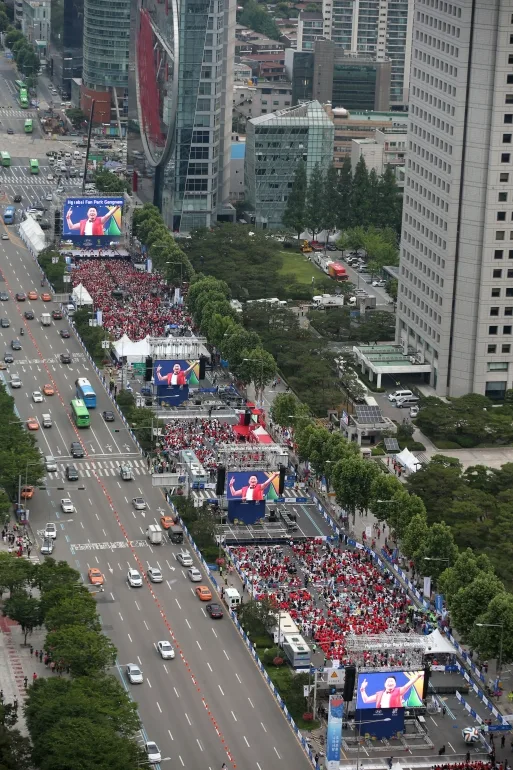
Hyundai debuted as an official FIFA partner at the 1999 FIFA Women’s World Cup in the United States. By the 2006 FIFA World Cup Germany, the brand was averaging 15 minutes of global exposure per match across all 64 games, underscoring how the tournament helped establish Hyundai among the world’s leading automotive brands.
A Growing Fleet Across Two Decades
FIFA tournaments have repeatedly served as a showcase for Hyundai’s mobility technology, from hydrogen fuel cell vehicles and buses at the 2006 World Cup in Germany to 226 battery-electric and hybrid vehicles deployed at FIFA World Cup Qatar 2022 — one of the largest electrified fleets in tournament history.
For FIFA World Cup 2026, Hyundai supplied 994 passenger vehicles and 506 buses across the United States, Canada and Mexico, marking the largest official fleet ever deployed at a World Cup.
Building Fan Connections Beyond the Pitch
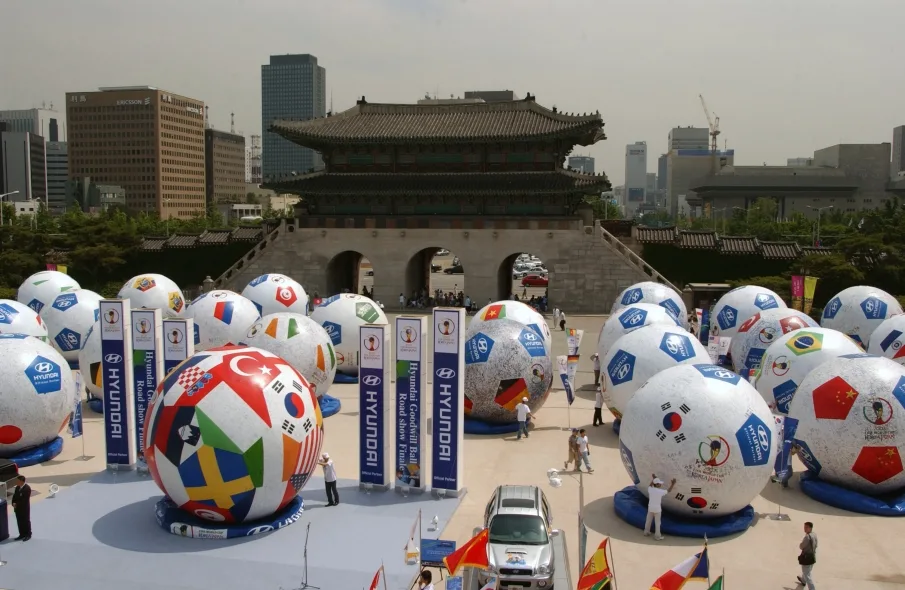
Hyundai’s fan engagement efforts date back to the Goodwill Ball Road Tour ahead of the 2002 World Cup in Korea/Japan, which sent 32 giant footballs traveling across participating countries for fans to leave messages of support. At the 2010 World Cup in South Africa, that idea expanded into the One Million Dream Balls for Africa initiative, pledging a million footballs to underprivileged children through UN-affiliated organizations and NGOs.
First launched in 2006, Hyundai Goal of the Tournament has become one of the company’s signature programs, letting fans vote for the tournament’s best goal — Benjamin Pavard’s strike against Argentina at the 2018 World Cup in Russia drew more than three million votes.
Be There With Hyundai further deepened the fan-player connection by inviting supporters to contribute messages displayed on Official National Team Buses; for FIFA World Cup 2026, the program evolved into a global children’s artwork initiative.
Bringing Football History to Life
Hyundai’s collaboration with the FIFA Museum began at the 2018 World Cup in Russia, where The History Makers exhibition drew more than 94,000 visitors, followed by an exhibition at FIFA World Cup Qatar 2022 that welcomed over 140,000.
For FIFA World Cup 2026, Hyundai introduced Legacies of Champions at Rockefeller Center in New York, an exhibition celebrating football history while incorporating Atlas and Spot to highlight the company’s robotics and mobility vision.
From Goal of the Century to Next Starts Now
At FIFA World Cup Qatar 2022, Hyundai launched Goal of the Century, a campaign promoting collective action toward sustainability. Four years later, the company expanded that vision through Next Starts Now, its platform for FIFA World Cup 2026 connecting communities through football while inspiring the next generation of players, fans and innovators.
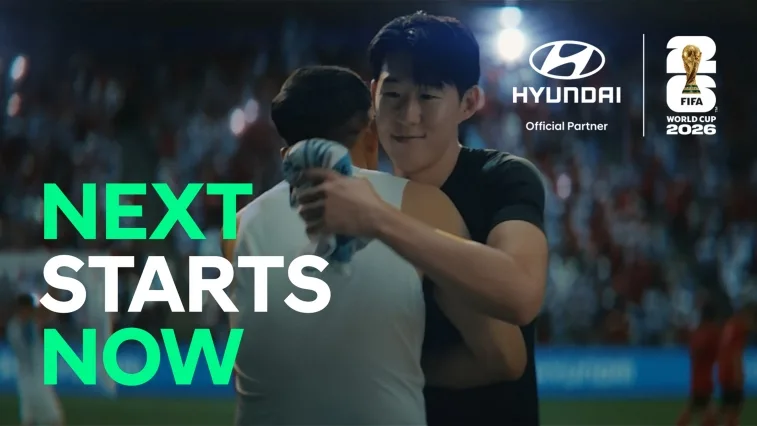
A central piece of that platform was School of Football, a five-part series following Atlas’ journey from curious observer to football-skilled robot, showcasing technologies like retargeting, reinforcement learning and whole-body control that culminated in Atlas successfully executing a “Ghost Rabona.”
The series set the stage for Atlas’ tournament appearance, reflecting Hyundai’s broader vision for human-centered innovation and future mobility.
Looking Toward 2030 and Beyond
Having extended its FIFA partnership through 2030, Hyundai is already looking ahead to the next World Cup, which will mark both the tournament’s centennial and more than three decades of collaboration between the company and FIFA.
What started as an automotive sponsorship has grown into one of FIFA’s longest-running commercial partnerships, with Hyundai aiming to keep bringing mobility, innovation and football closer together on the world’s biggest sporting stage.