
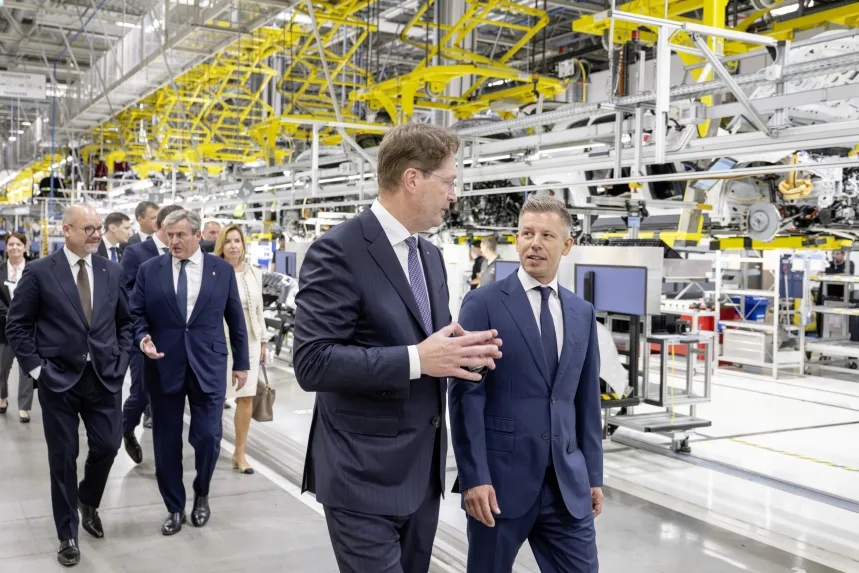
Mercedes-Benz has opened a newly constructed section of its Kecskemét plant in Hungary, marking another step in the ongoing transformation of its global production network. The ceremony drew political guests including Péter Magyar, Prime Minister of Hungary, and István Kapitány, the country’s Minister for Economy and Energy.
The expansion adds two entirely new halls for bodywork and assembly, along with a second press shop, a modern paint shop, and a battery assembly facility — all part of laying groundwork for the largest product offensive in the company’s history.
With this opening, the plant’s footprint has grown from 200 to 440 hectares, making Kecskemét the largest automotive production site in Hungary and one of the largest in Mercedes-Benz’s global network. The company has invested roughly one billion euros here as part of its 2022–2026 Business Plan, aimed at strengthening the competitiveness, efficiency and long-term viability of its production system.
Michael Schiebe, Member of the Board of Management of Mercedes-Benz Group AG for Production, Quality and Supply Chain Management, said the Kecskemét extension increases the resilience and flexibility of the global network, calling the site a blueprint for manufacturing that’s intelligent, connected, digital and focused on efficiency, quality and sustainability — enabling competitive production of models like the GLB and the new electric C-Class. Christian Dickert, Site Manager at Kecskemét, credited the plant’s staff for driving both the extension and the ramp-up of the new electric C-Class through what he called a strong team effort.
Electric C-Class Production Begins
With the symbolic start of production for the new all-electric C-Class, Kecskemét is now building a battery-electric core model for the first time — another step in Mercedes-Benz’s electrification push.
The move leans into a “local-for-local” strategy, with key components like body parts and high-quality drive batteries for both the GLB and C-Class EVs produced directly on site, shortening supply chains and adding resilience in a volatile market.
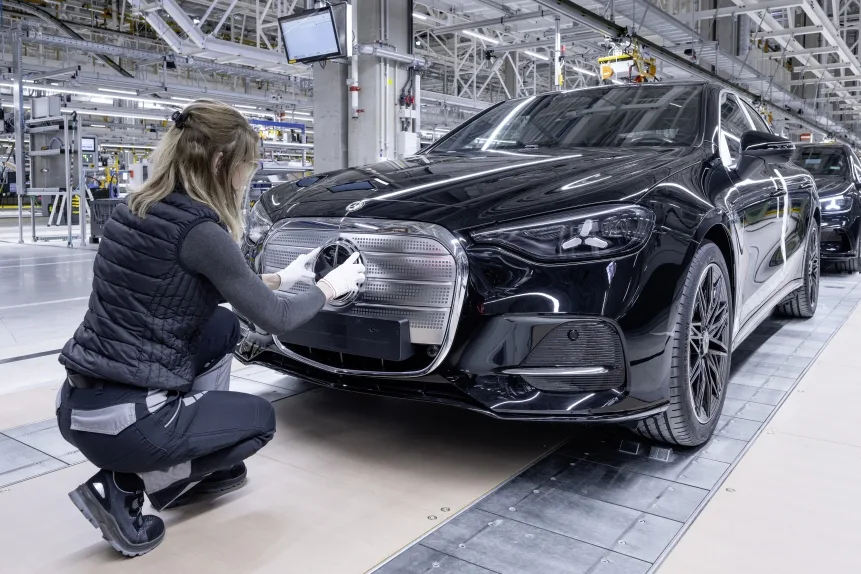
Production here follows a dual setup: combustion and battery-electric models share a single line in the existing hall, while the new hall is built specifically for fully electric vehicles, letting Mercedes-Benz adjust output quickly to demand.
Kecskemét now links into a broader European MMA production network alongside the Rastatt plant in Germany, with the electric GLC set to be built at both Bremen and Kecskemét depending on demand. The compact version of the next G-Class, meanwhile, will be built exclusively in Kecskemét, underscoring the site’s growing strategic weight.
Digital Tools Drive the New Production Line
Kecskemét now ranks among the most advanced sites in Mercedes-Benz’s global network, combining digital production technology, ergonomic workstations and AI-supported applications. The backbone is MO360, the company’s digital production ecosystem, which links production, quality and supply chain data across sites and makes it accessible to employees worldwide.
A standout addition is the Digital Factory Twin — the first time Mercedes-Benz has built a complete digital replica of an entire assembly hall inside NVIDIA Omniverse. It lets teams virtually experience and control production processes, simulate individual steps, and track the full manufacturing flow of the new electric C-Class before anything happens on the real line, improving planning quality and reducing risk during ramp-up.
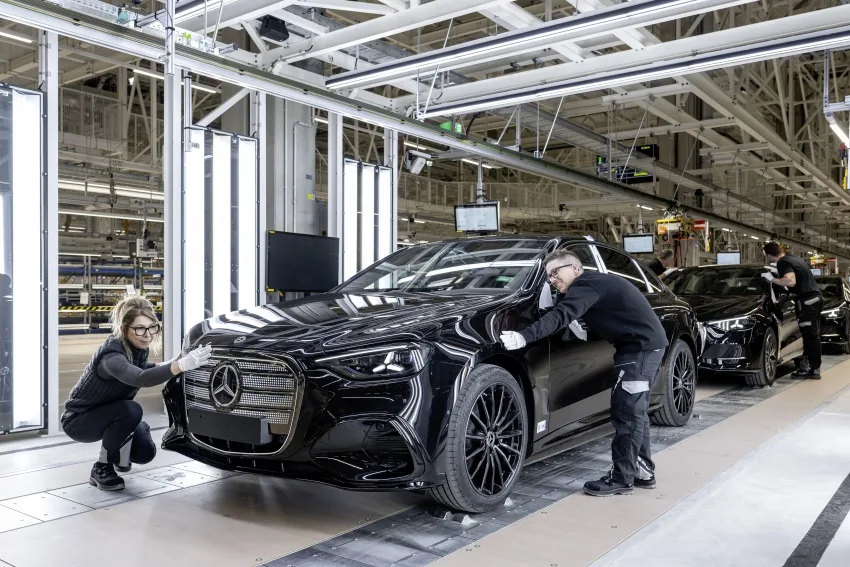
AI plays a role in quality control too: the MO360 Vision System uses camera-based applications to catch vehicle defects in real time, while AI-based assistance tools help staff make sense of complex production data. MB.OS adds another layer, tying production systems more closely to vehicle software and digital applications.
Sustainability Built Into the Expansion
The extension also reflects Mercedes-Benz’s sustainability targets. A 240,000-square-metre open-space solar park west of the plant, with 27.4 MWp capacity, works alongside rooftop photovoltaic systems on the new halls to bring total capacity to 42.3 MWp — covering around 25 percent of the site’s annual energy needs.
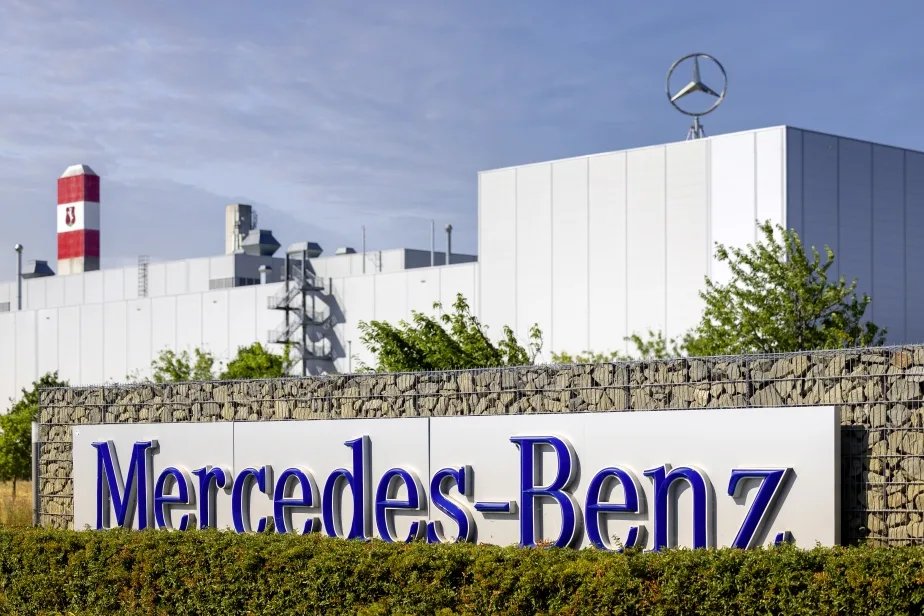
The new paint shop alone cuts energy consumption by about 20 percent and CO₂ emissions by roughly 80 percent compared with the existing facility, while additional investments target water efficiency and waste reduction across production.
A Regional Employer With Local Roots
With more than 5,000 employees currently on site, Kecskemét is already the largest and most attractive employer in the region. Mercedes-Benz Manufacturing Hungary Kft. continues investing in workforce training through the Mercedes-Benz Academy Kecskemét, the Mercedes-Benz School, a partnership with Neumann János University, and work-life balance initiatives including on-site childcare.