
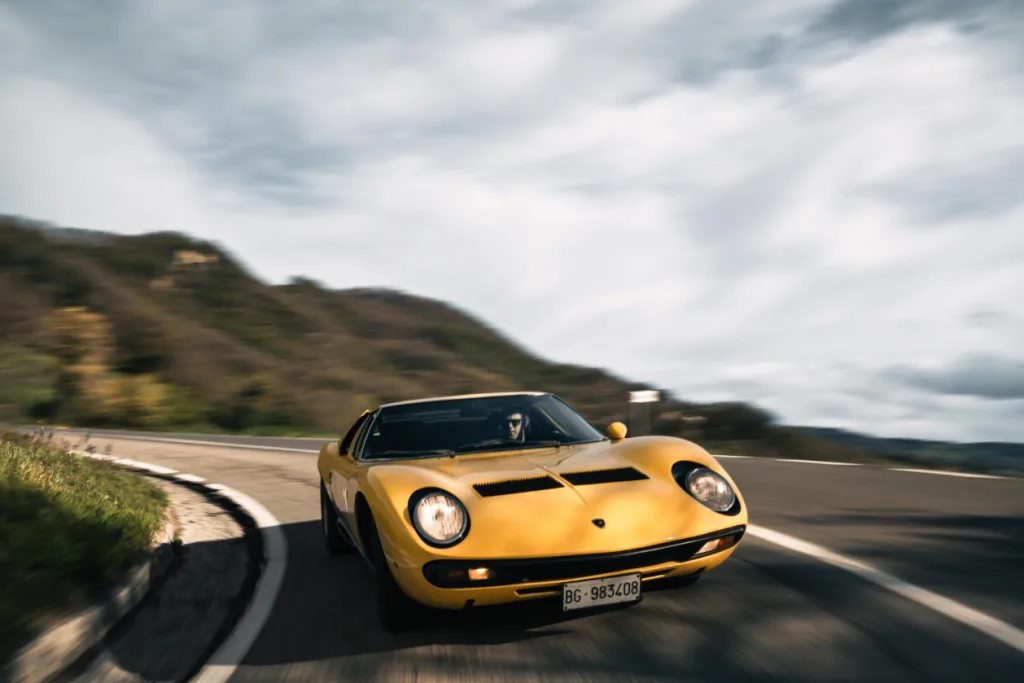
The Lamborghini Miura SV, marking its 55th anniversary this year, redefined performance cars when it launched in 1971. As the ultimate evolution of the Miura, it established the “Super Veloce” designation — a name that has since become shorthand for Lamborghini’s most uncompromising V12 models.
The SV was the last and most extreme version of what’s widely considered the first true supercar. Lamborghini had already built extensive experience through the earlier Miura P400 (1966) and its successor, the Miura S (1968), and the SV built directly on those foundations to become the natural conclusion of the Miura story.
The original Miura had already made history as the first car to carry a transversely mounted V12 ahead of the rear axle, instantly reshaping the sports car world — but the SV, in production until 1973, pushed that formula further with upgrades aimed at both greater control and everyday usability.
Stephan Winkelmann, Chairman and CEO of Automobili Lamborghini, said the Miura SV brought the Miura’s evolution to its ultimate expression and introduced a designation that would become integral to the brand’s DNA. He said Super Veloce has always represented the purest interpretation of Lamborghini performance — combining heightened driving emotion, enhanced dynamic capability and a distinctive character — and that every SV model since has carried forward that same commitment to pushing performance boundaries.
Addressing the Original Miura’s Limitations
Both the P400 and S versions of the Miura were spectacular to drive, but their demanding handling left room for improvement, particularly around high-speed stability and engine lubrication. Lamborghini responded directly to feedback from test drivers and customers by refining the original concept.
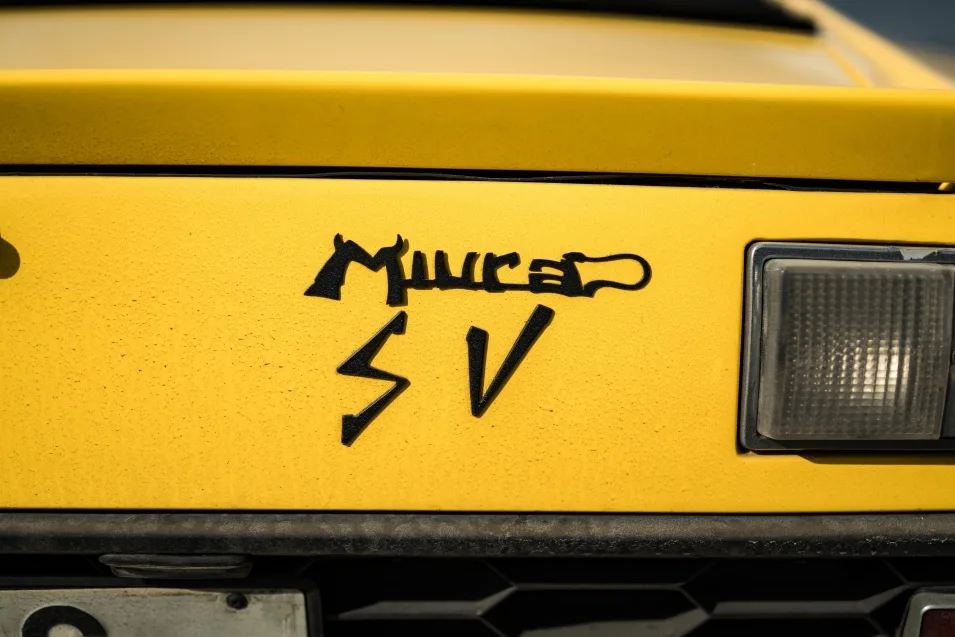
At the SV’s core remained the transversely mounted 3.9-liter V12, now developed to produce 385 hp at 7,850 rpm and 388 Nm of torque at 5,500 rpm. That extra power, combined with numerous chassis and aerodynamic improvements, sharpened both performance and drivability compared with its predecessors.
The result was a car that reached 0-100 km/h in under 5.5 seconds and topped 290 km/h — making it one of the fastest production cars of its era and cementing the Miura lineage’s place at the forefront of the emerging super sports car category.
A Separated Oil System and a Stiffer Chassis
Beyond the power increase, one of the SV’s most significant technical changes involved its lubrication system. Earlier Miuras shared a common oil circuit between engine and transmission; Lamborghini separated the two for the SV, substantially improving durability and reliability in what marked a genuine step forward in the car’s development.
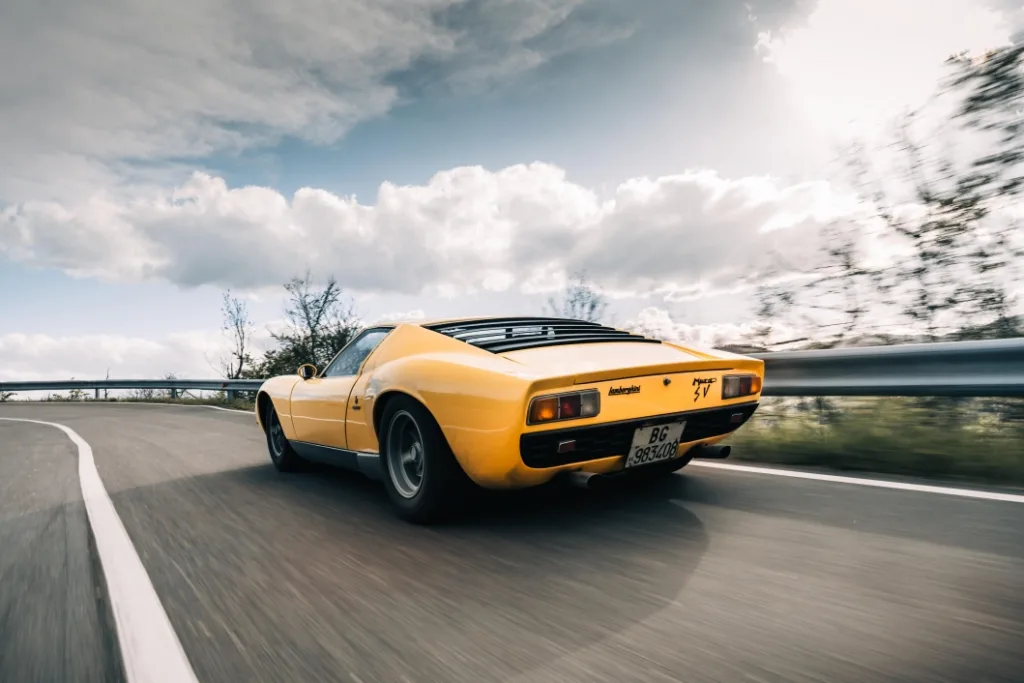
Lamborghini also reworked the chassis, widening the rear track, adjusting the suspension, and stiffening the setup overall without sacrificing ride comfort. The result was noticeably improved stability at high speed and more precise, controlled handling, while newly introduced ventilated disc brakes — powerful by the standards of the time — delivered more consistent deceleration.
A Cleaner Look With Purpose
Visually, the Miura SV distinguished itself from earlier versions without disrupting the model’s now-iconic silhouette. The characteristic “eyelashes” around the headlights were removed for a cleaner front end, while significantly widened rear fenders made room for larger tires and visually underscored the car’s increased performance — changes that were functional as much as aesthetic, tied directly to the SV’s improved dynamics.
A Legacy That Still Defines the Brand
Fifty-five years after its debut, the Miura SV remains the foundation of a philosophy that has shaped some of Lamborghini’s most focused, uncompromising V12 models. More than a name, Super Veloce has become an enduring part of Lamborghini’s identity and history.
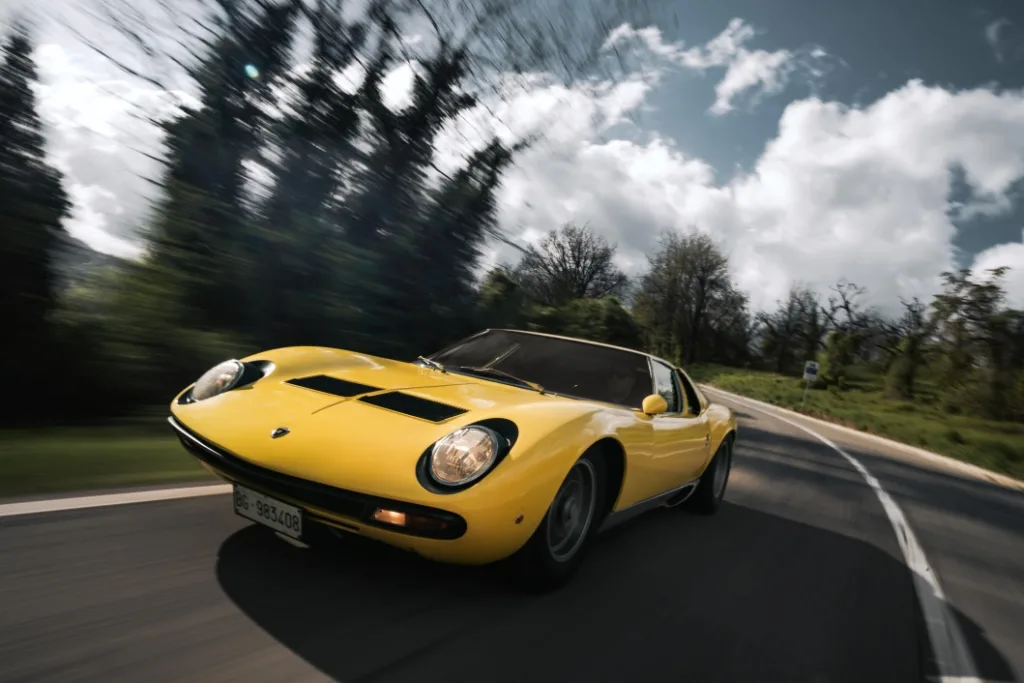
The Miura SV, built from 1971 to 1973, used a 3.9-liter V12 producing 385 hp at 7,850 rpm and 388 Nm at 5,500 rpm, reaching over 290 km/h with a 5.5-second 0-100 km/h time and a kerb weight of 1,245 kg. Key improvements included separated engine and transmission lubrication, a wider rear axle for better traction, revised rear suspension, and — on some examples — a limited-slip differential.
As the final version in the Miura series, it dropped the headlight covers for a more modern look and delivered the highest power output and road holding in the lineup, originally priced at 8,600,000 lire.