
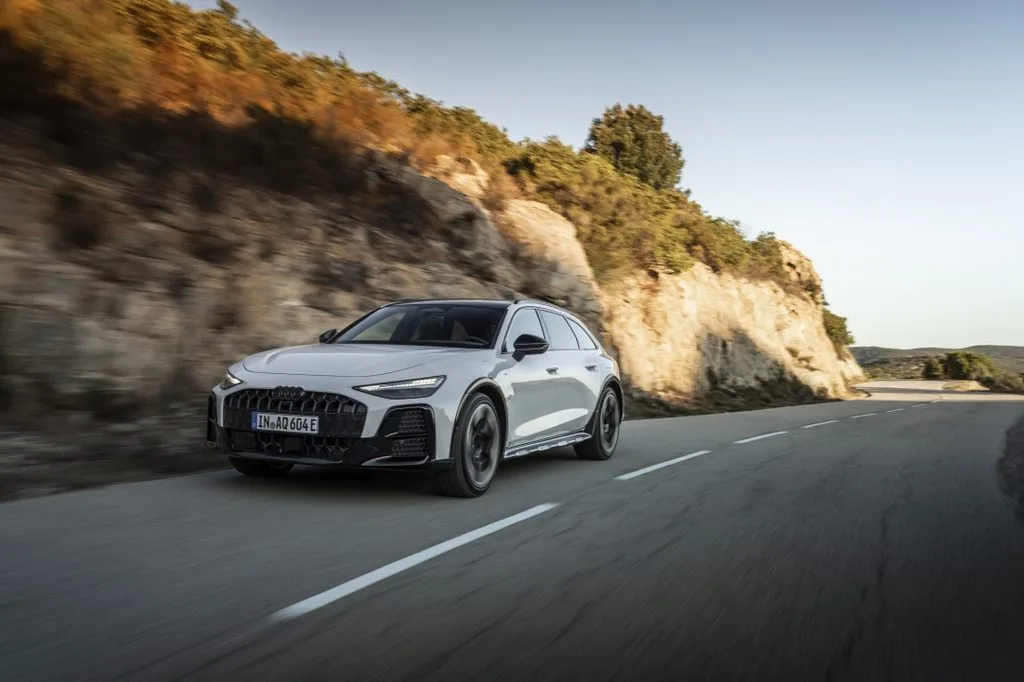
The new Audi A6 allroad is now at European dealers, priced from €77,250 for the V6 TDI and €80,250 for the plug-in hybrid.
The wagon uses a 3.0-litre V6 diesel with MHEV plus technology and an electrically driven compressor, and for the first time the allroad is also offered as a plug-in hybrid, the A6 allroad e-hybrid. Both pair their electrified power units with quattro ultra, an all-wheel-drive system that is always available but tuned for efficiency.
Two Clutches Cut the Drag
quattro ultra relies on an electronically controlled multi-plate clutch at the transmission output and a second decoupling clutch in the rear differential.
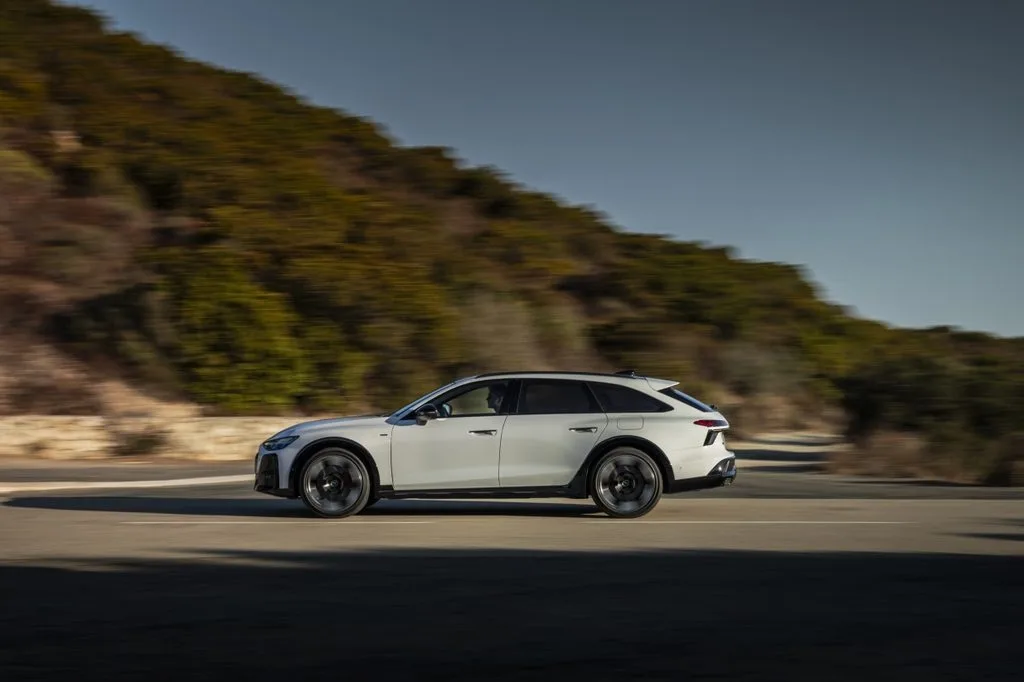
When all-wheel drive would bring no tangible benefit, the system opens both clutches, disconnecting the driveshaft and rear drivetrain components and reducing friction and drag torque. Under light load with no risk of wheel slip, the car then runs essentially as a front-wheel-drive model, with 100 percent of torque going to the front axle.
An Algorithm That Looks Ahead
The control system works predictively. It tracks steering angle, load demand, transmission setting, lateral and longitudinal acceleration, body movement and the friction coefficient, and it learns from the driver’s behaviour and the chosen Audi drive select mode.
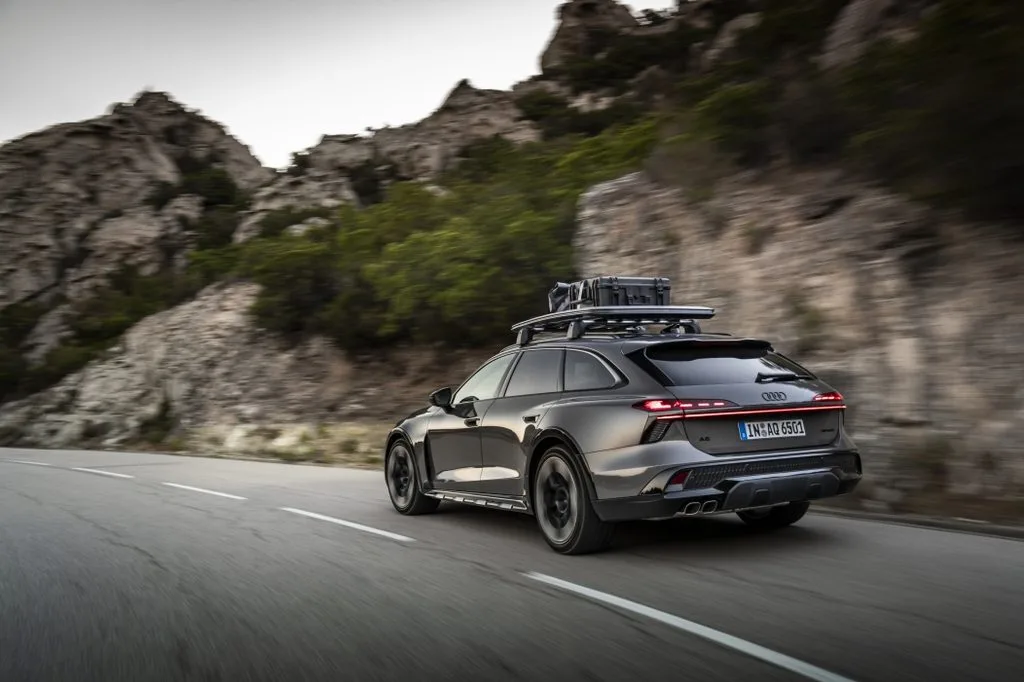
The calmer the driving, the less often the system engages; the more dynamic, the more often. Audi says the computational model anticipates the need for all-wheel drive about 0.5 seconds in advance, while a full engagement, including synchronising the disconnected parts and closing the rear differential clutch, takes roughly 200 milliseconds.
All-wheel drive is therefore ready before it is required, whether setting off, cornering hard, accelerating sharply or driving on low-grip surfaces. Rouven Mohr, the board member for Technical Development at Audi, said drivers do not notice the changeover between modes and feel only the traction and dynamics associated with quattro.
Torque Where It’s Needed
When the situation calls for it, the multi-plate clutch engages the rear wheels and torque is split according to traction, handling and comfort. Under hard acceleration on dry roads, Audi‘s internal measurements show more than 70 percent of torque can go to the rear.
Four Decades of quattro

Audi has offered quattro since 1980, evolving from the manually lockable centre differential of the Ur-quattro through successive Torsen differential generations to today’s intelligently controlled systems.
More than 15.6 million Audis with quattro have been built, a third of everything the brand has produced since 1980. With quattro ultra, Audi says it aims to lower consumption and emissions while keeping the character the system is known for.