
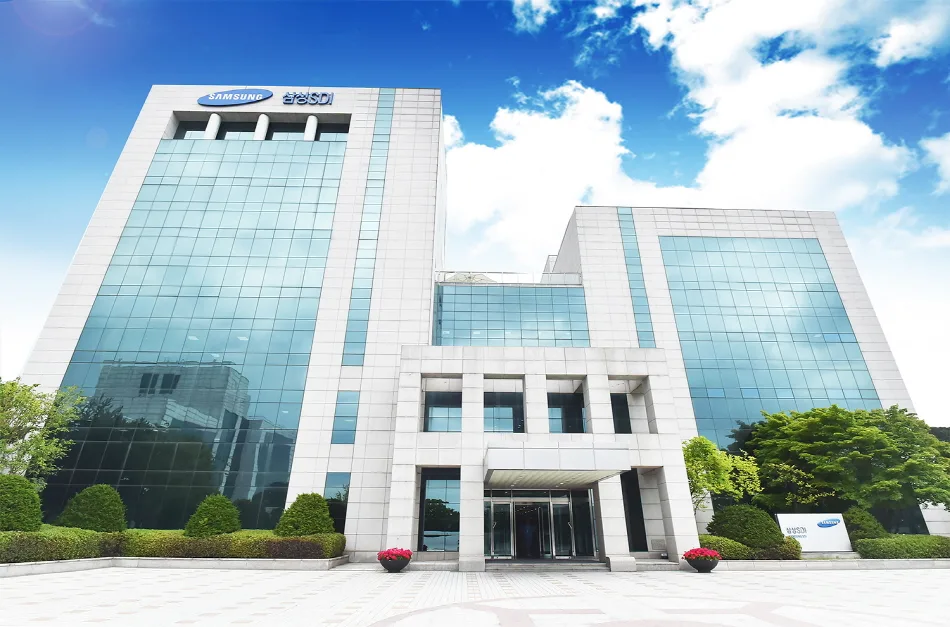
Samsung SDI reported second-quarter 2026 revenue of KRW 3.77 trillion ($2.59 billion) and operating profit of KRW 203.8 billion. Revenue rose 18.5% (KRW 589.4 billion) year-over-year and 5.4% (KRW 192.4 billion) from the previous quarter, while operating profit turned positive for the first time in seven quarters, dating back to the third quarter of 2024.
With cumulative first-half operating profit reaching KRW 48.2 billion, Samsung SDI returned to profitability sooner than expected, delivering on its commitment to a turnaround this year. Net profit for the quarter totaled KRW 471.6 billion, up 740.5% from the previous quarter and turning positive year-over-year as well.
Battery Business Drives the Recovery
In the Battery Business, revenue rose 18.8% year-over-year to KRW 3.52 trillion, with operating profit reaching KRW 159.3 billion — marking a return to surplus. Growth came from increased sales of high-power batteries for uninterruptible power supply systems, battery backup units, power tools, and electric vehicles in Europe.
Profitability improved significantly on the back of higher sales of high-value products, AMPC benefits tied to increased local production in the United States, and the impact of U.S. tariff refunds. In Electronic Materials, revenue rose 14.5% year-over-year to KRW 249.8 billion, with operating profit up 34.8% to KRW 44.5 billion, driven by solid semiconductor materials sales and improved results from film materials used in foldable smartphones.
Key Developments in the First Half
Samsung SDI’s first-half recovery was driven largely by strong demand from AI data center applications, particularly high-power products used in utility-scale ESS, UPS and BBU systems. Leveraging its prismatic battery technology and local manufacturing capabilities, the company secured long-term supply agreements with major ESS customers in the United States and won key orders for next-generation distribution-grid ESS projects in Korea.
The company also expanded its automotive customer base by winning a new project with Mercedes-Benz, joining BMW and Audi to complete its portfolio of Germany’s top three premium automotive brands.
Samsung SDI additionally secured the industry’s first cylindrical battery project for hybrid electric vehicles, while expanded sales of high-power batteries for power tools and the launch of a new prismatic EV battery with industry-leading energy density contributed to higher utilization rates.
The company also continued building future growth avenues through partnerships in humanoid robotics and aerospace, while diversifying its customer base for next-generation semiconductor packaging materials.
Outlook for the Second Half
Samsung SDI expects its earnings recovery to continue through the second half and plans to further strengthen its competitiveness beyond the current turnaround.
For ESS batteries, the company will keep building out its local U.S. supply chain and stay on track for mass production of prismatic LFP batteries, supported by growing demand for utility-scale ESS and UPS systems tied to renewable energy expansion and rising AI data center investment.
The company also plans to pursue a range of Korean projects using its domestic supply chain and manufacturing base, while expanding production capacity to meet UPS demand.
Samsung SDI is additionally advancing sodium-ion battery development for AI data center UPS and utility-scale ESS applications, citing long lifespan, high power capability and safety advantages as reasons for significant long-term growth potential, with plans to push forward on commercialization and mass production.
For EV batteries, Samsung SDI expects European demand to grow on expanded incentive programs and higher fuel prices, even as the U.S. market remains soft, with plans to expand supply for mass-market models and pursue new opportunities including LFP battery projects.
In small batteries, the company plans to expand production capacity for high-power cylindrical batteries to meet demand from BBU and power tool applications, along with emerging opportunities in humanoid robotics and aerospace.
In electronic materials, demand for semiconductor and display materials is expected to stay strong, with plans to expand sales of next-generation packaging materials and high-value display film materials.
A Samsung SDI official said that while the company initially anticipated a second-half turnaround, stronger-than-expected revenue growth and improved profitability across business units allowed it to return to profitability earlier than planned, adding that the company will continue pursuing sustainable growth while strengthening profitability.