
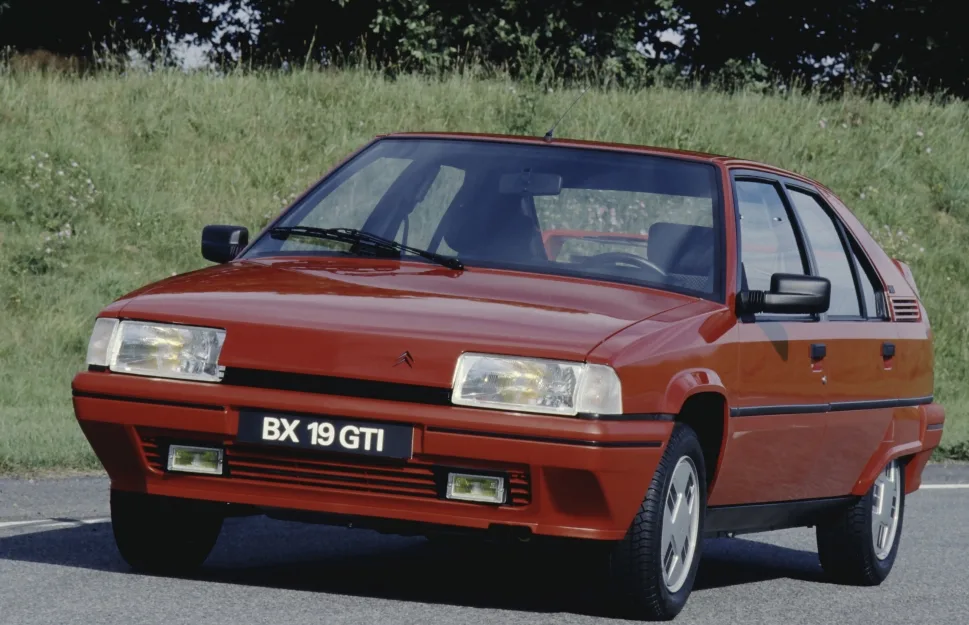
Citroën is revisiting the BX GTi, the sportiest version of a model that debuted at the foot of the Eiffel Tower before its October 1982 launch at the Paris Motor Show.
Designed by Bertone under Marcello Gandini, the BX went on to become one of Citroën’s biggest successes, with more than 2.3 million built through 1994.
The GTi variant arrived with the July 1986 facelift, replacing the BX 19 GT and BX Sport with a goal laid out by designer Carl Olsen — also behind the AX and the CX Series 2 — of pairing the BX Sport’s performance with enough comfort to suit a proper family saloon.
Citroën frames the result as a car that delivered high-level performance without giving up comfort or practicality, a combination that kept it memorable in a crowded sports-saloon segment.
Design and Performance
The facelift brought wider front and rear wings, more wraparound body-colored bumpers, white indicators aligned with the headlights and full galvanization against corrosion.
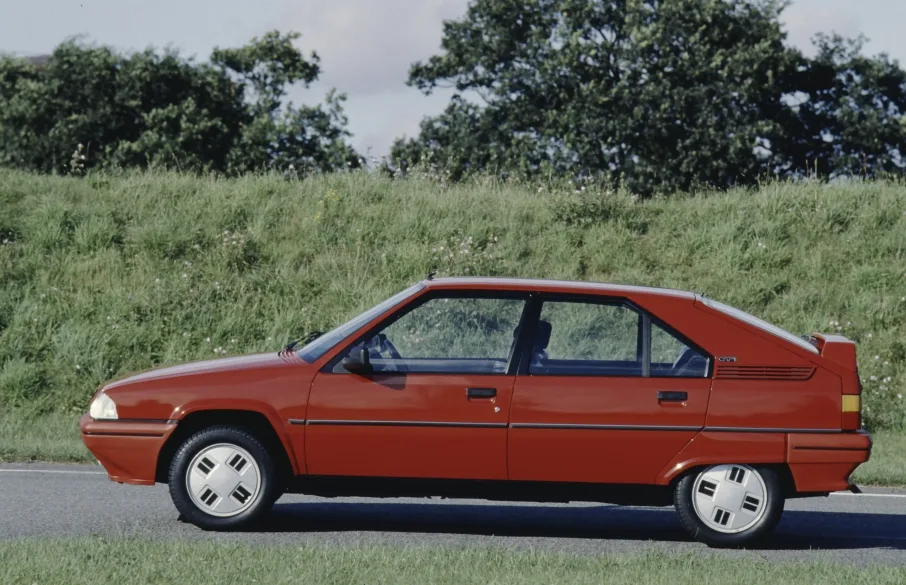
At 4.24 meters long, the BX GTi was recognizable by its rear spoiler, front fog lights borrowed from the BX Sport, distinctive wheel trims, specialized tires and discreet GTI badges on the rear quarter panels and tailgate.
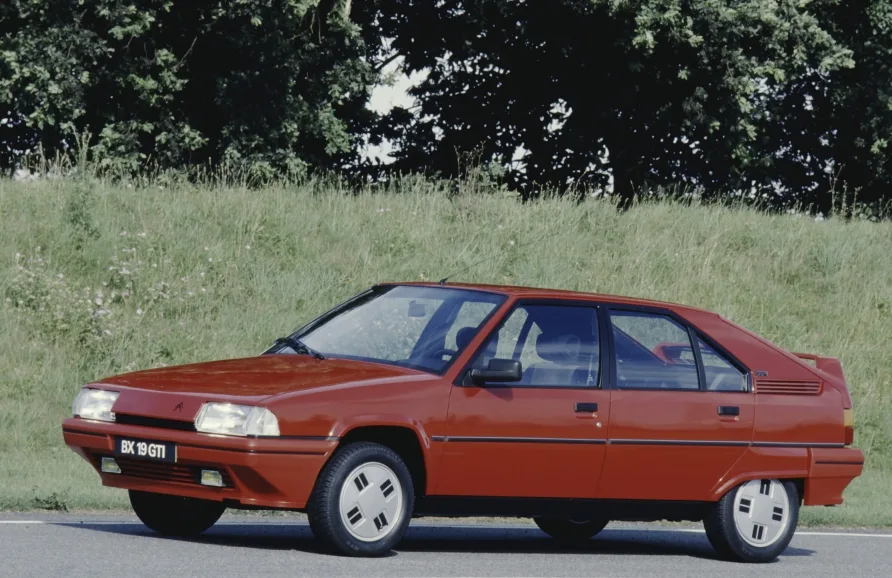
Its 4-cylinder, 8-valve electronically fuel-injected engine produced 125 ch DIN and 175 Nm of torque at 4,500 rpm, giving brisk acceleration, a top speed approaching 200 km/h and a 30.5-second time over a standing kilometer — notable figures for the period.
A kerb weight of just 1,025 kg gave it a power-to-weight ratio of 8.2 kg per horsepower, better than most rivals and a direct contributor to its agility.
Comfort Without Compromise
True to Citroën’s heritage, the BX GTi used the brand’s hydropneumatic suspension, firmed up relative to other BX versions to reinforce the sporty character without sacrificing ride quality.
Four disc brakes, power steering and optional ABS rounded out a driving experience that stayed composed at speed while still soaking up road imperfections — a balance that set it apart from more radical competitors.
The standard equipment list was generous for the era, including height-adjustable velour seats, an electric passenger-side mirror, central locking, a dedicated six-dial instrument cluster, a door-ajar warning light and radio pre-installation, with leather seats, an electric sunroof, on-board computer, alloy wheels, air conditioning and a Hi-Fi pack available as options — enough to position the car as an ideal ride for a young professional.
Evolving Through the Years
A major step came for the 1988 model year with the BX GTi 16-Valve, powered by a new 1,905 cc XU9J4 engine making 160 ch at 6,500 rpm, good for a 218 km/h top speed and 0-100 km/h in 7.9 seconds with ABS as standard — making it the first mass-produced French car with a multi-valve engine.
It also introduced body-colored bumpers with black trim strips, side skirts, alloy wheels with high-performance Michelin tires, retuned suspension and an all-black interior with more supportive seats and a three-spoke sports steering wheel, pushing the 8-valve GTi into a supporting role.
A BX GTi 4X4 followed in 1989 with a permanent four-wheel-drive system built around a front transfer box and rear limited-slip differential, splitting torque 53/47 front to rear, with an electrically controlled center differential lock for difficult conditions.
A Decade of Incremental Updates
From 1990, the range adapted to unleaded premium petrol, reducing output to 123 hp without hurting performance or fuel economy.
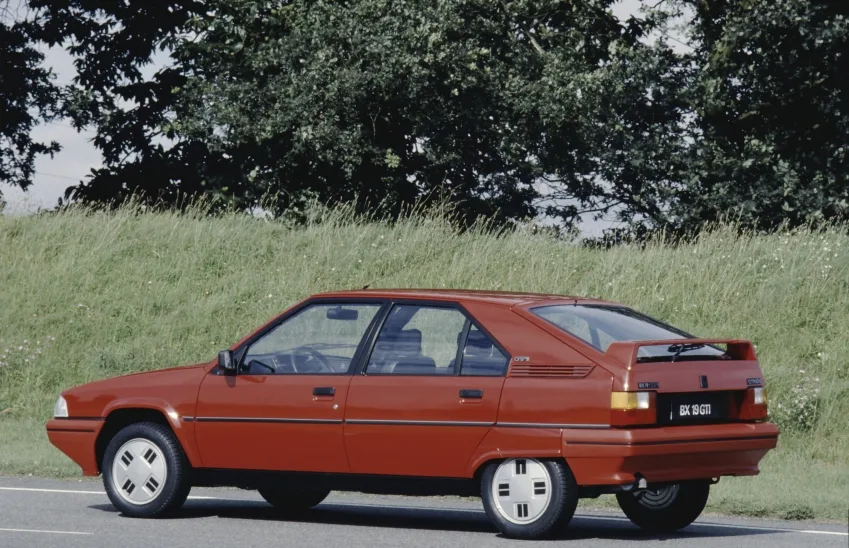
In July 1991, light-alloy wheels and the 16-valve’s sports steering wheel became standard alongside power steering across the range and improved soundproofing, followed in July 1992 by standard air conditioning, black upholstery throughout and a 66-liter fuel tank across the BX lineup.
The BX GTi was finally dropped from the catalog in July 1993 as catalytic converters became widespread, closing a chapter in which Citroën continually introduced new technology to the model.