
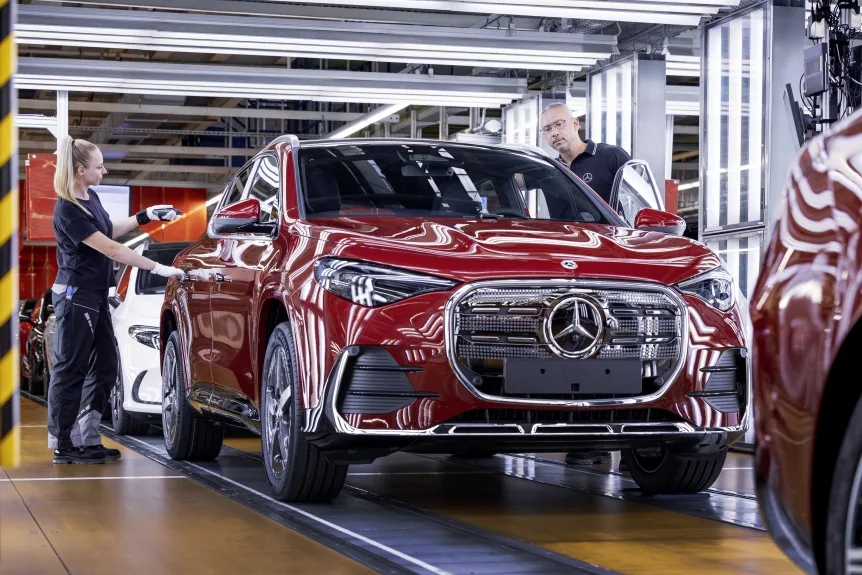
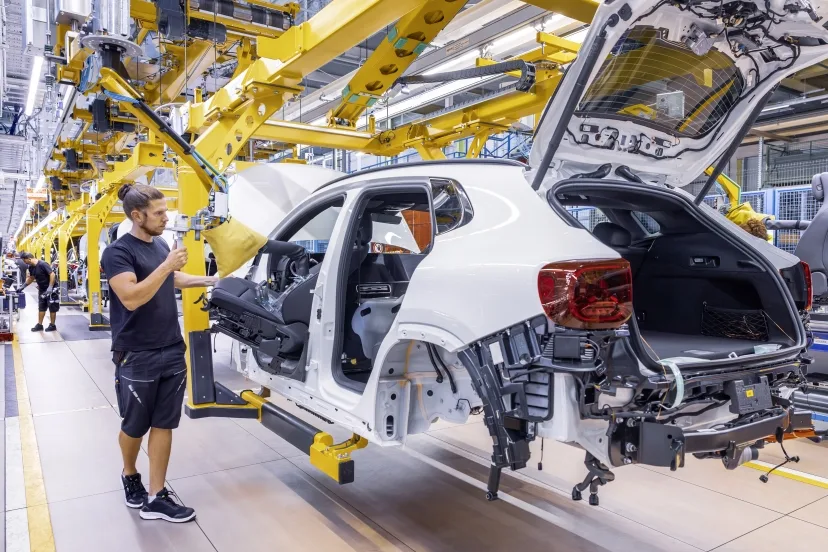
Mercedes-Benz has started series production of the new GLA at its Rastatt plant, with the fully electric version already running at full pace and a 48-volt high-tech hybrid variant, paired with a state-of-the-art combustion engine, set to follow later this year.
The GLA joins other models from Mercedes-Benz’s newest vehicle generation already built at Rastatt, reinforcing the plant’s role as the company’s center of excellence for compact vehicle production. Michael Schiebe, the Mercedes-Benz Group AG board member responsible for Production, Quality and Supply Chain Management, said the GLA launch and accompanying investment strengthen Rastatt’s position within the company’s global production network, pointing to the tight integration of MB.OS, artificial intelligence and the MO360 production ecosystem as proof of how digital technology is driving more flexible, efficient manufacturing.
Site Manager and Head of Production Marco Zwick credited the smooth transition to the Rastatt team’s expertise and flexibility in taking on a genuinely new vehicle generation.
A Flexible, Digitally Managed Plant
Rastatt has operated since 1992 and remains the region’s largest employer with around 7,000 workers. Its production line is drive-system-flexible, building hybrid, fully electric and conventionally powered vehicles side by side so the plant can respond quickly to shifting demand across global markets.
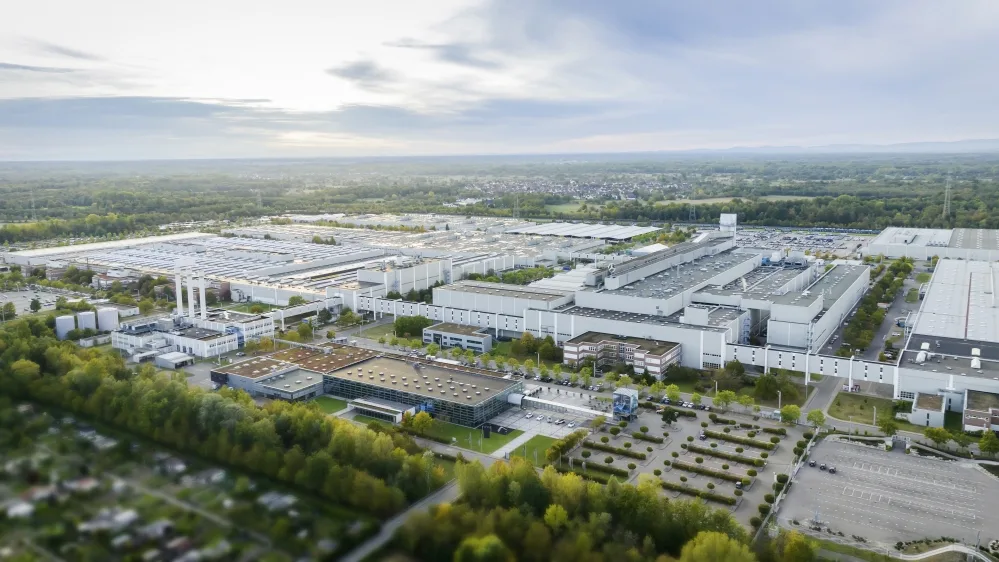
The new GLA is currently built in Assembly Hall 4.0, while Mercedes-Benz is investing a low-three-figure-million sum to convert the neighboring Hall 4.1, where GLA production will begin in 2027.
That conversion relies on digital twin technology, using high-precision simulation to configure and optimize the new line before construction — an approach that already delivered a record-setting completion time when Hall 4.0 was converted in 2023.
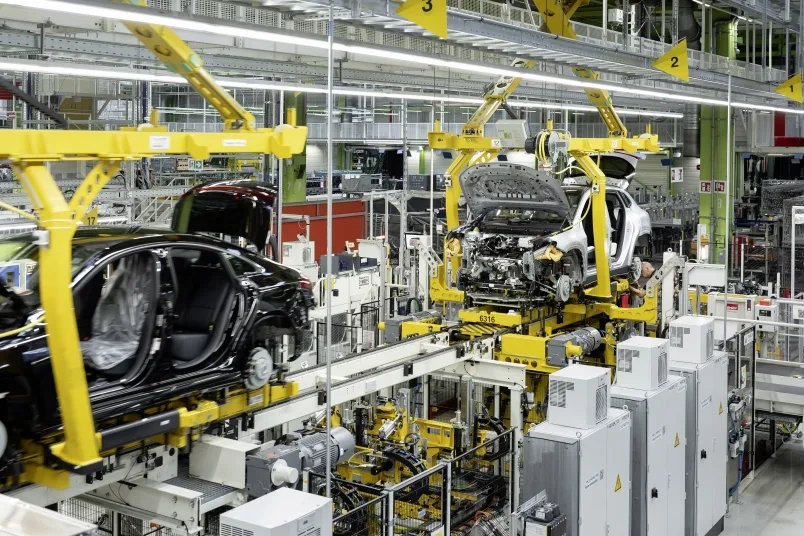
The Mercedes-Benz Operating System also plays a direct role on the line itself, using a chip-to-cloud architecture that delivers vehicle software through a central server in the Mercedes-Benz Intelligent Cloud rather than individual hardware modules, ensuring every car leaves the line running the latest software version.
A Supply Network Spanning Several Plants
The GLA’s electric drive units and axles come from Mercedes-Benz’s Untertürkheim network, including its Mettingen and Hedelfingen sites, where the electric motor, power electronics and transmission components that make up a drive unit are produced and assembled into complete systems; Mettingen separately assembles the GLA’s electric axles before shipping them to Rastatt as finished units.
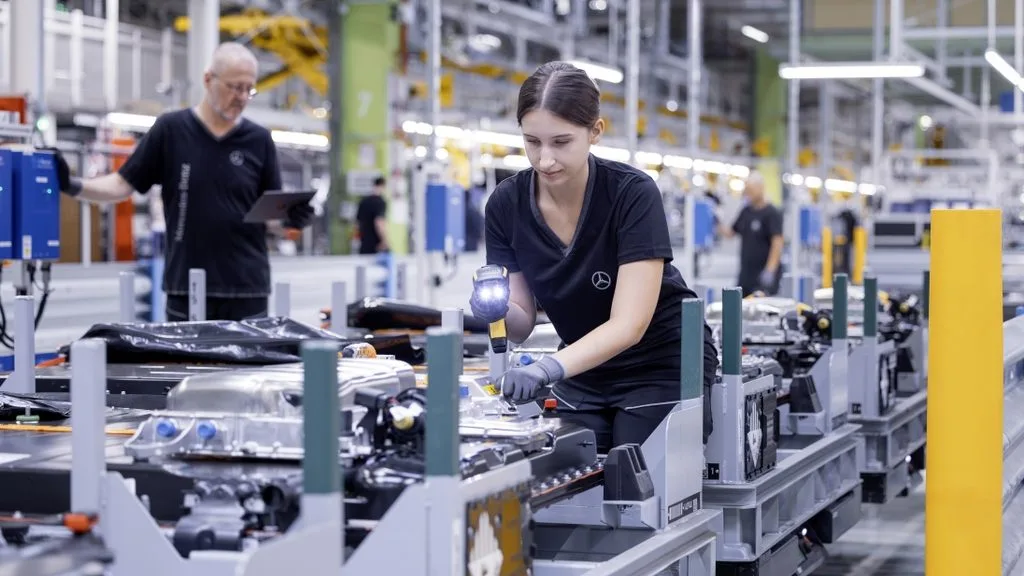
High-voltage batteries come from Mercedes-Benz’s Accumotive subsidiary in Kamenz, Saxony, which brings 13 years of battery production experience and serves as a center of excellence within a global battery network spanning three continents — in-house battery production remains a core part of Mercedes-Benz’s broader strategy.
Body-in-white, structural and body parts arrive from the Kuppenheim plant roughly 10 kilometers away, a supply relationship dating back to 2009 that now also covers the GLA; since early 2026, Kuppenheim has become organizationally part of the Rastatt plant itself.
Torsten Höink, Chair of the Works Council at Rastatt, called the GLA launch an important new chapter for the plant, tying the decision to build it there directly to the site’s competitiveness and long-term job security, and noted the timing’s significance during Mercedes-Benz’s 140th anniversary year.
What’s New on the GLA Itself
The new GLA pairs a lower stance, longer wheelbase and illuminated grille with a fully redesigned interior featuring a panoramic roof, a large MBUX Superscreen and upgraded materials, aimed at making everyday urban driving feel more confident and comfortable.

The car also introduces the MBUX Virtual Assistant with generative AI, built to support more natural, personalized interaction with the vehicle.