
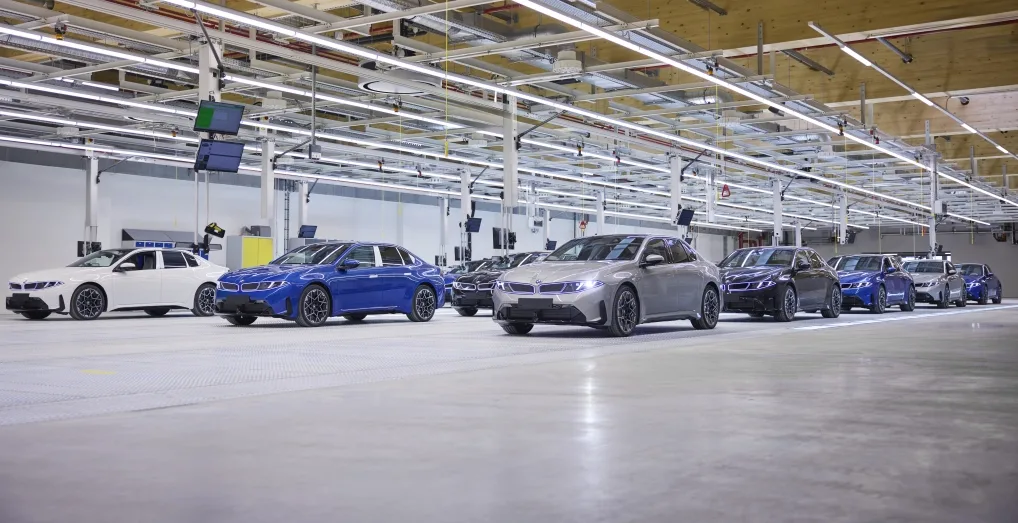
Series production of the new BMW i3 has begun at BMW Group Plant Munich. The i3 has been available for order since mid-June, and strong demand has already driven a steep production ramp-up at the plant.
Jochen Goller, member of the Board of Management of BMW AG responsible for Customer, Brands, Sales, said Neue Klasse models are proving very popular, and that the i3, as the second Neue Klasse model, has already seen strong demand since orders opened ahead of launch.
The i3’s arrival follows four years of intensive transformation at the plant, including construction of a new body shop and a new assembly hall with logistics areas. Raymond Wittmann, member of the Board of Management of BMW AG responsible for Production, said the start of i3 production marks a new era for BMW’s main plant, bringing together two things that belong together: the 3 Series, which embodies BMW more than almost any other model, and Plant Munich, which represents the brand more than almost any other production site.
He said the combination of headquarters, development and production in one location is a key driving force for BMW’s global network, with every plant benefiting from the experience gained through the Neue Klasse’s launch in Munich.
A 10% Cut in Manufacturing Costs
Peter Weber, head of BMW Group Plant Munich, said the start of i3 production lowers manufacturing costs at the plant by a further 10%. He credited forward planning, close cooperation with development departments and suppliers, and modern production technology within the plant’s new structures — alongside optimized processes, targeted automation and digitalization, and efficiencies built into the Neue Klasse’s new vehicle architecture.
An All-Electric Future for Munich
Starting in 2027, Plant Munich will produce exclusively fully electric vehicles, with further Neue Klasse models set to follow, securing the site’s future for decades to come.
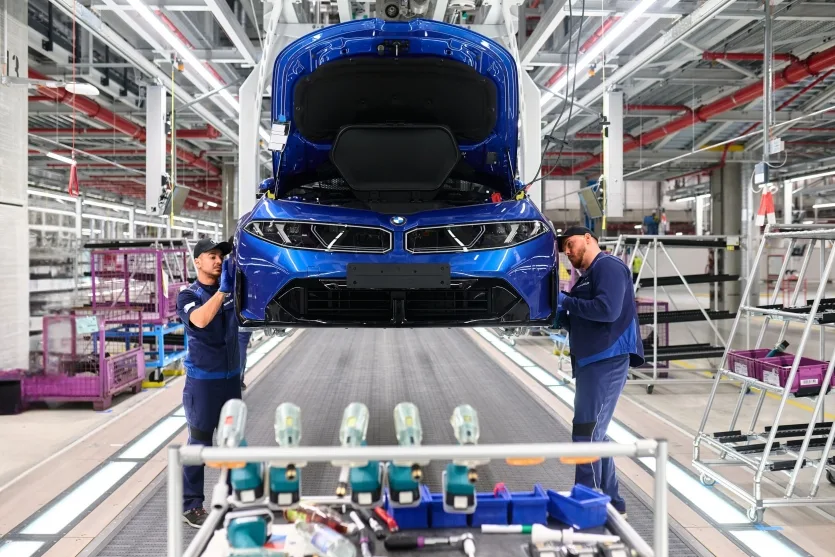
Weber said this shift won’t be driven by new systems and technology alone, crediting the people who drive change and innovation as the real foundation for the plant’s future viability, as the team works daily to make the plant more efficient without compromising quality.
A Historic Site Rebuilt Around Electrification
Munich has been closely tied to the BMW 3 Series since 1975, with more than nine million units built at the plant since then. The site has been fundamentally remodeled for the Neue Klasse while continuing to produce up to 1,000 vehicles per day, with a new body shop and cutting-edge assembly area — including logistics space — built across roughly a third of the plant’s footprint.
The most recent addition, a delivery hall currently in its commissioning phase, is where vehicles undergo final customer inspection before handover to sales. The result, BMW says, is a plant that’s more efficient, flexible and digital, better equipped for the demands of electromobility and the Neue Klasse.
The BMW iFACTORY Vision
The BMW iFACTORY represents the company’s broader vision for future production, centered on efficiency, sustainability and digitalization. Plants worldwide are implementing site-specific solutions under this framework to strengthen BMW’s resilience and reliability — a vision now fully realized across all technologies at Plant Munich.
Batteries and Motors Built Across a Regional Network
BMW’s newly built Plant Irlbach-Straßkirchen in Lower Bavaria, about 90 minutes from Munich, is boosting value creation across the region under BMW’s “local for local” approach, supplying Plant Munich and other German sites with sixth-generation high-voltage batteries — a vital contribution to Neue Klasse production, including the i3. Battery production there combines a zero-defect approach with advanced manufacturing technology developed at BMW’s Bavarian pilot plants, using continuous inline quality control, digital twins and artificial intelligence.
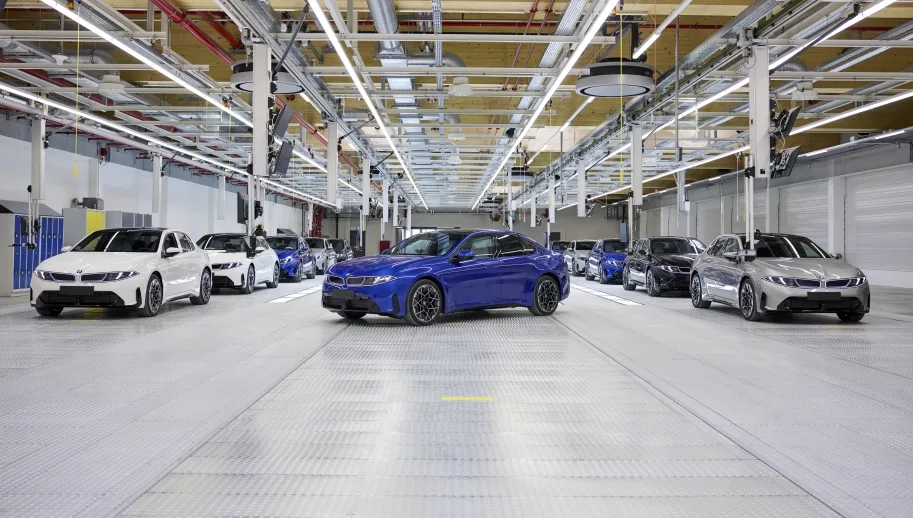
The i3’s Gen6 electric motor will be built at BMW Group Plant Steyr in Austria, which has produced drive systems for more than 40 years and is now adding its first electric motor to the lineup. All core components of the highly integrated e-drive — rotor, stator, power converter and transmission — will be produced on site, supported by new production lines and cleanroom environments. The aluminium foundry at BMW Group Plant Landshut supplies the electric motor housing to Plant Steyr.