
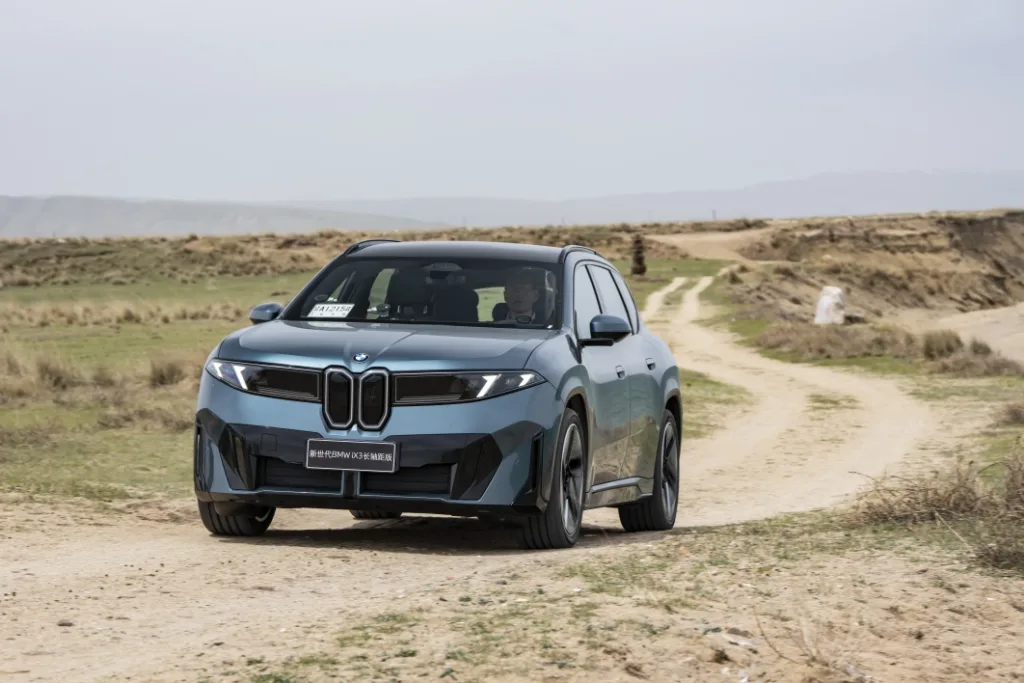
Demonstrating efficiency potential of the BMW Neue Klasse, the BMW iX3 Long Wheelbase successfully completed a demanding real-world endurance challenge covering more than 800 kilometers without recharging.
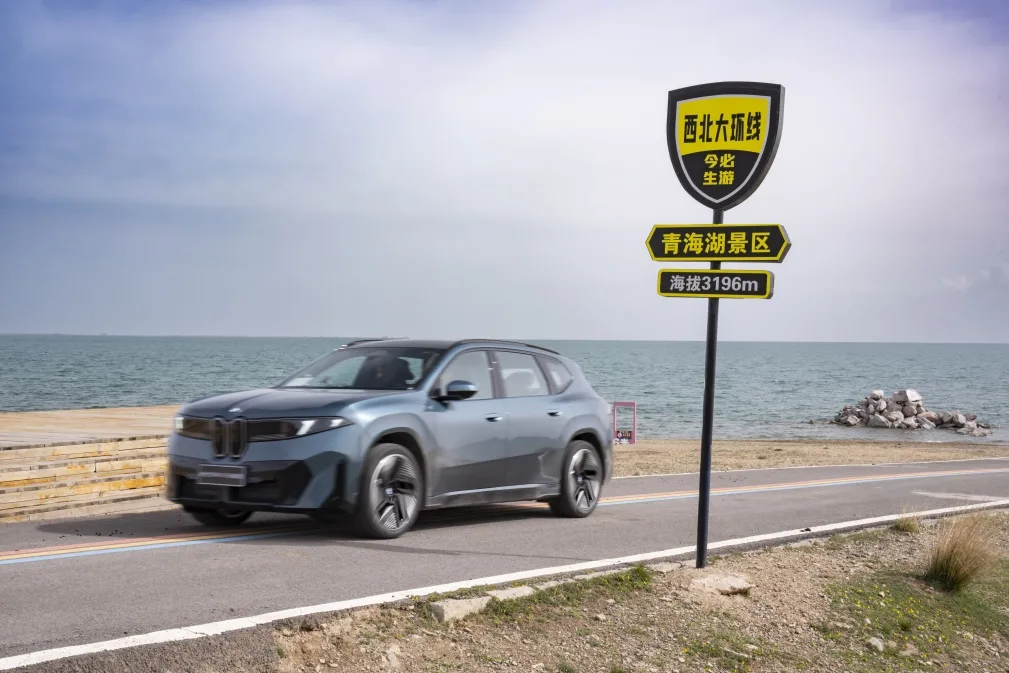
A BMW iX3 50L xDrive prototype equipped with 21-inch aerodynamic wheels completed the Qinghai Lake grand loop, departing from Xining and returning to its starting point after more than 800 kilometers of driving on public roads.
The vehicle finished the route with 2% battery capacity remaining and achieved average energy consumption of just 12.6 kWh per 100 kilometers. The result indicates total range potential of 835 to 840 kilometers under the conditions of the challenge.
The achievement highlights outstanding efficiency of the BMW iX3 Long Wheelbase under challenging real-world conditions and demonstrates BMW’s approach to electric mobility: delivering confidence in every kilometer.
Demanding Conditions Across Variable Terrain
Conducted entirely on public roads and under real-world traffic conditions, the challenge was designed to validate efficiency potential of BMW iX3 Long Wheelbase in environment closely reflecting everyday customer use.
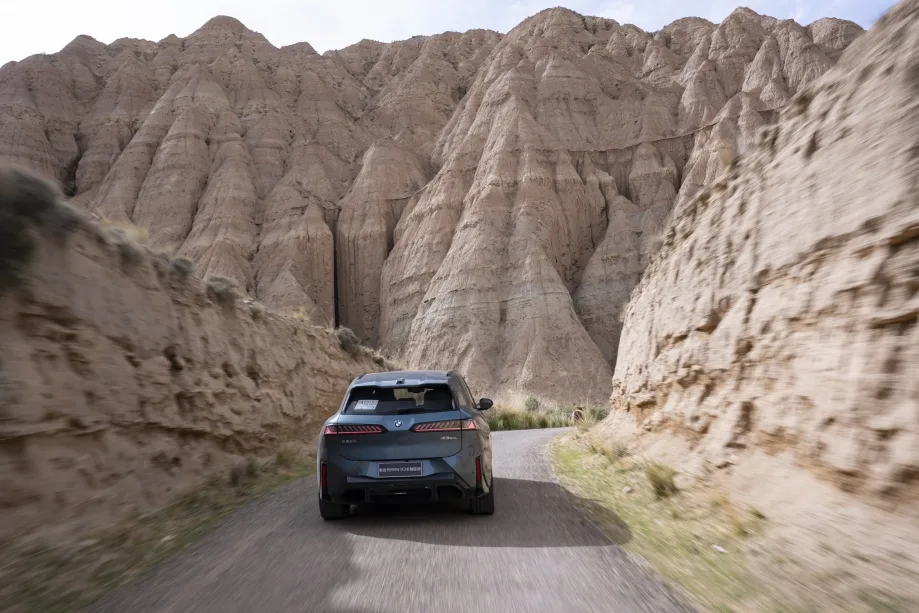
Starting in Xining at approximately 2,200 meters above sea level, the vehicle climbed to nearly 4,000 meters before descending again and completing the loop back to its starting point. Repeated climbs and descents across altitude difference of almost 2,000 meters continuously challenged drivetrain efficiency, energy management, and thermal control.
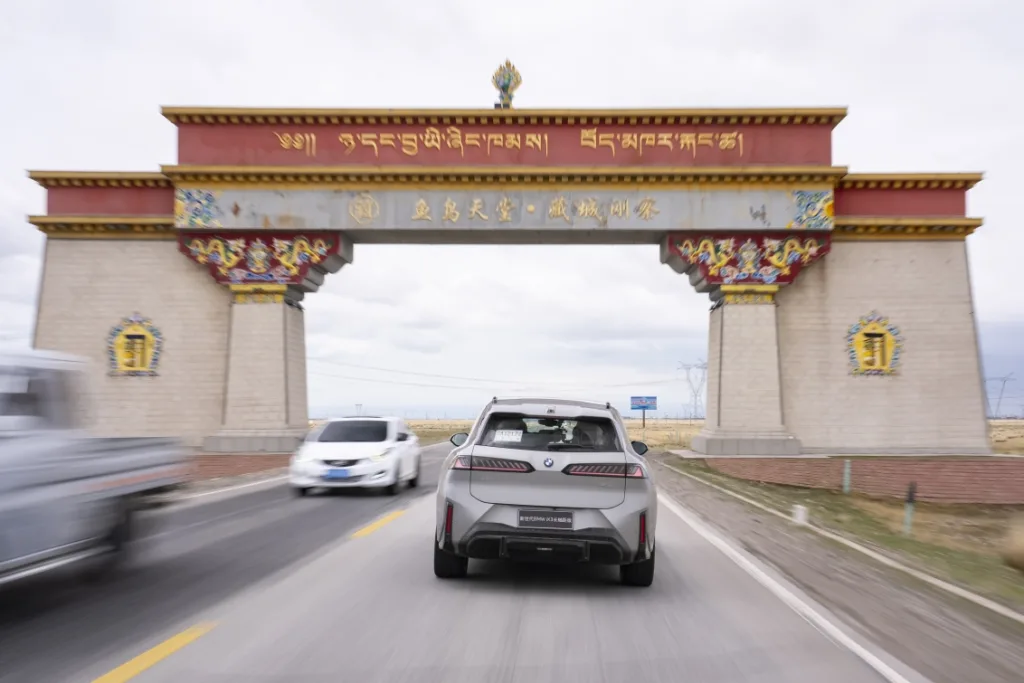
Weather conditions added further layer of complexity. During the journey, the vehicle encountered heavy snowfall, intense rain, and strong high-altitude sunshine, while ambient temperatures ranged from 1°C to 21°C. Combined with varying road surfaces, public-road traffic conditions, and demands of plateau driving, these conditions created highly representative test environment for electric mobility in everyday use.
To reflect realistic customer driving behavior, the entire route was completed in Efficient mode, balancing comfort and energy efficiency in manner closely aligned with long-distance everyday driving.
System-Level Efficiency Through Integrated Technologies
For BMW, efficiency is not defined by a laboratory figure. It is measured by how consistently a vehicle performs in real-world conditions across varying temperatures, elevations, and road profiles.
The challenge demonstrates how technologies of the BMW Neue Klasse work together as integrated system to maximize efficiency under demanding real-world conditions.
Key contributors include an optimized aerodynamic concept minimizing energy losses at higher speeds and BMW’s in-house developed Energy Master, which intelligently manages energy distribution based on route profile, temperature, and driving conditions.
BMW’s sixth-generation high-voltage battery features newly developed cylindrical cells and 108.7 kWh of usable energy, delivering significantly higher energy density while optimizing packaging, weight, and vehicle rigidity.
A newly developed drivetrain combining electrically excited synchronous motor and asynchronous motor reduces energy losses by up to 40% while increasing overall drivetrain efficiency by up to 20%. The Heart of Joy control system and highly efficient energy recuperation technology enable energy recovery in up to 98% of everyday braking situations.
Thermal Management and Stable Performance
Thermal management plays an equally important role, particularly under demanding environmental conditions. Cold mornings, warmer daytime temperatures, and rapid transitions between rain and snow require battery and cabin systems to respond efficiently and precisely.
The integrated thermal management system helps maintain stable operating conditions, supporting both occupant comfort and consistent range performance.
Efficiency Delivered in Everyday Driving
The Heart of Joy control system works in conjunction with highly efficient energy recuperation system to maximize energy recovery. In up to 98% of everyday driving situations, braking can be achieved through energy recuperation alone, allowing energy to be recovered during deceleration and downhill driving. As a result, efficiency gains are realized precisely where customers experience them most: in everyday driving.
For BMW, efficiency is not only about achieving longer range. It is about delivering predictable energy consumption, stable range performance, and reassuring driving experience, even when conditions change significantly.
Whether on long-distance journeys, mountain roads, or routes with highly variable weather conditions, customers benefit from greater confidence behind the wheel.
The challenge demonstrates that efficiency in BMW Neue Klasse is not result of single technology. It is result of holistic vehicle concept in which aerodynamics, drivetrain, battery technology, thermal management, energy recuperation, and intelligent control systems work together seamlessly.
As first model of BMW Neue Klasse, the BMW iX3 demonstrates next generation of electric mobility from BMW. By translating technological innovation into measurable real-world performance, it delivers what matters most to customers: confidence in every kilometer.