
A hallmark of luxury vehicles is a quiet cabin. Despite being an electric vehicle, the high-performance GV60 Magma creates unique challenges to control noise, vibration, and harshness (NVH), especially at higher speeds.
Booyeong Lee, Senior Research Engineer of the Genesis NVH Test Team, stated the project was driven by a clear directive: “maintaining everyday quietness even during high-performance driving.”
Sounds such as wind and road noise become more noticeable against the inherently quiet electric powertrain. This effect is heightened in a performance vehicle operating at higher speeds and utilizing high-performance tires that naturally transmit more noise and vibrations from road surfaces.
Wind and Road Noise Reduction Focus
To counter this, engineers focused on two key areas: minimizing wind noise at speeds exceeding 200 kilometers per hour and reducing road noise transmitted through high-performance tires and lightweight wheels.
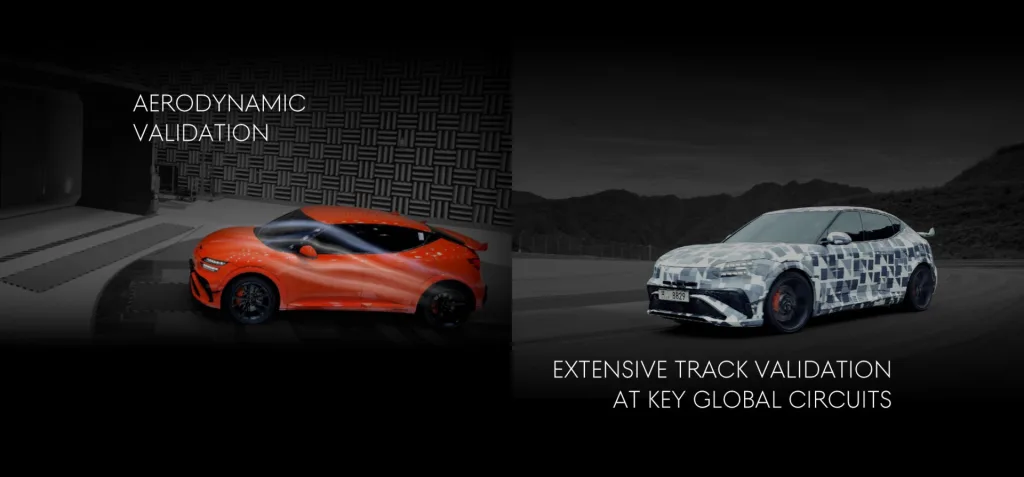
Genesis worked rigorously to establish NVH performance standards for the GV60 Magma. Research engineers evaluated the vehicle in extreme crosswind simulations and real-world testing on Germany’s Nürburgring and Autobahn, pushing the car to its top speed of 264 kilometers per hour.
Sealing Structure and Glass Improvements
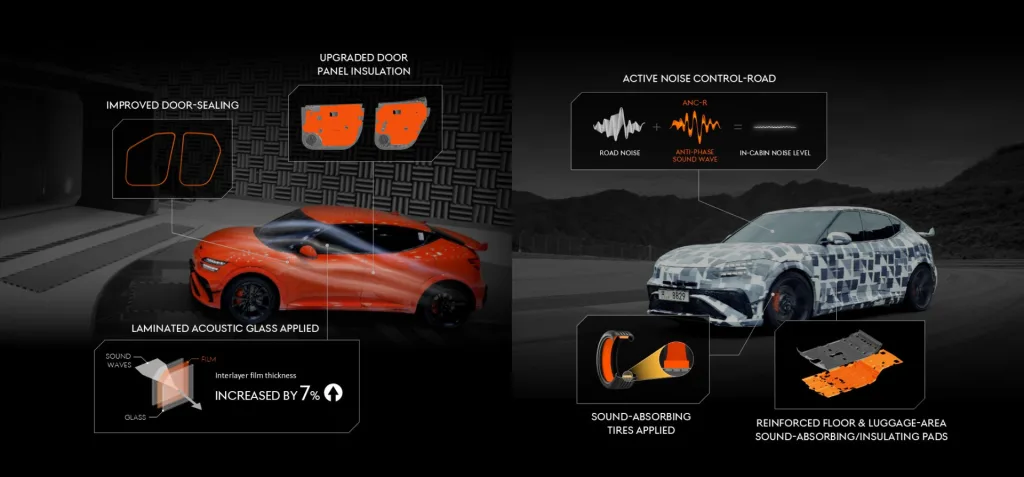
Tests revealed that the most noticeable noise during high-speed EV driving is airflow around the vehicle. To combat this airflow noise, the engineering team reinforced the vehicle’s overall sealing structure, redesigning the cross-sectional design of door seals and optimizing compression force distribution.
The thickness of the driver’s side-insulating glass film increased by 7%, and soundproof film was added to rear door glass as standard, creating a multi-layered barrier against intrusive noise. The team added sound-absorbing materials inside the door trim to more effectively suppress transmitted airflow noise.
Road Noise Mitigation and Active Control
To address road noise, the engineering team conducted detailed analysis of vehicle structure and noise transmission paths to determine optimal composition and placement of additional sound-absorbing materials. Sound-absorbing pads were installed inside the tires and sound-absorbing materials in the floor were reinforced.
The team also integrated Active Noise Control-Road (ANC-R) technology for sounds that got through these reinforced barriers. The ANC-R system uses accelerometers and microphones inside the vehicle to detect low-frequency road noise in real time, then generates an opposing sound wave through the vehicle’s speakers to effectively cancel it out.
GV60 Magma’s Electric Powertrain Noise Optimization
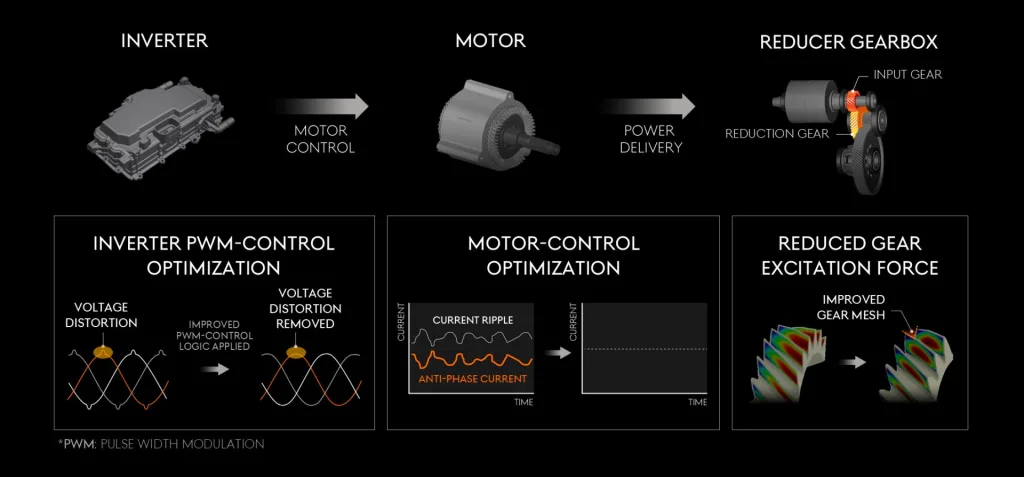
Significant attention was paid to the GV60 Magma’s high-performance Power Electric (PE) system. To mitigate high-frequency noises that can result from a motor and inverter with enhanced output, engineers optimized torque ripple compensation logic, reducing electrical excitation forces generated during motor operation without impacting efficiency.
The inverter control logic was specifically designed to minimize voltage distortion, another potential source of high-frequency noise during high-load driving. Additionally, to reduce gear noise, the machining quality of reducer gears was improved, and the press-fit force was meticulously tuned to ensure uniform, quiet meshing.
The result of these improvements is that the GV60 Magma maintains a tranquil, refined cabin environment even during high-speed driving, a new type of driving sensation even for experienced drivers.