
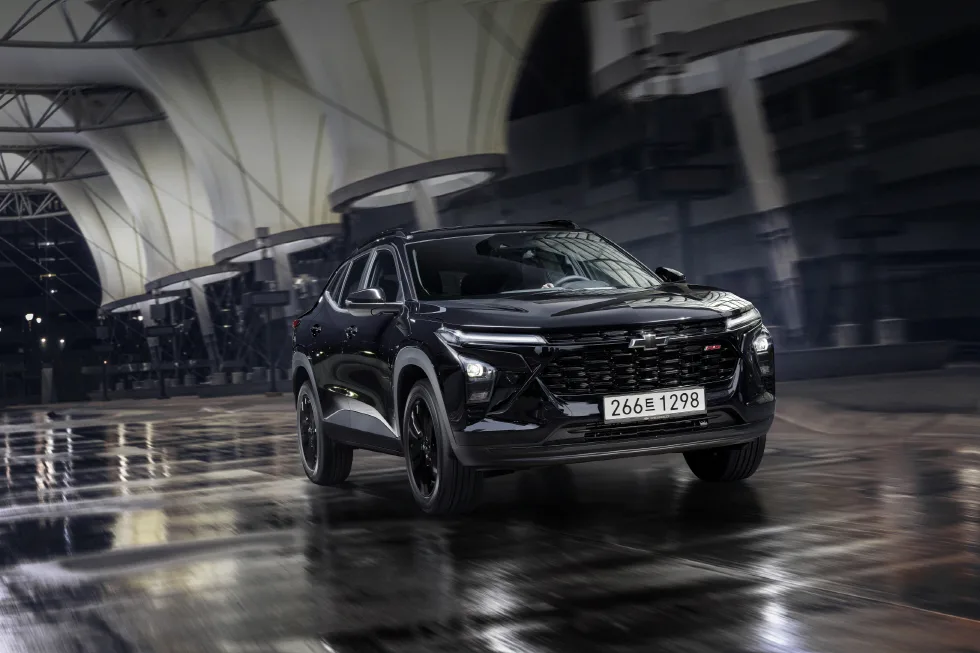
GM Korea has announced January 2026 sales of 44,703 units, representing substantial 41.4 percent year-over-year increase that signals strong momentum entering the new calendar year.
The performance was driven primarily by robust export demand, with 43,938 units shipped to overseas markets while 765 units were sold in the Korean domestic market, demonstrating the company’s strategic positioning as export-oriented manufacturing operation within General Motors’ global production network.
The January performance provides encouraging start to 2026 following what has been challenging period for Korean automotive manufacturing amid evolving global trade dynamics, intensifying competition from Chinese manufacturers, and shifting consumer preferences toward electric and hybrid powertrains.
GM Korea’s ability to achieve more than 40 percent growth despite these headwinds validates the company’s product competitiveness and manufacturing efficiency.
Overseas Sales Jump 44.6% on Strong Crossover Model Demand
GM Korea’s overseas sales totaled 43,938 units in January, increasing 44.6 percent compared to the same period in the prior year. This export performance demonstrates sustained international demand for vehicles manufactured at GM Korea’s production facilities, which serve as strategic manufacturing hubs supplying Chevrolet models to diverse global markets.
Sales of the Chevrolet Trax Crossover including derivative models reached 26,860 units, up 28.7 percent year-over-year, maintaining the model’s position as GM Korea’s highest-volume export product.
The Trax Crossover accounted for approximately 61 percent of total overseas shipments, underscoring the model’s critical importance to GM Korea’s production volume and capacity utilization.
The Chevrolet Trailblazer including derivative models achieved particularly impressive growth, with 17,078 units representing 79.4 percent year-over-year increase. This near-doubling of Trailblazer export volume suggests either successful market expansion into new geographic regions, market share gains in existing markets, or both factors contributing simultaneously to accelerated demand.
The concentration of export volume in two crossover models reflects broader global automotive market trends favoring utility vehicle configurations over traditional sedan bodystyles. GM Korea’s production specialization in crossover segments positions the operation advantageously to capitalize on sustained consumer preference shifts toward higher-riding vehicles offering perceived versatility and practicality advantages.
Chevrolet Trax Crossover Maintains Export Leadership Position
The Chevrolet Trax Crossover is characterized as compact utility vehicle offering balanced combination of practicality and style, supported by spacious interior accommodations, comfortable ride quality, and agile driving performance characteristics.
These attributes enable the model to compete effectively in highly competitive global compact crossover segment where numerous manufacturers vie for market share.
Based on these product strengths, the Trax Crossover ranked number one in domestic passenger car exports in 2025 according to data from the Korea Automobile & Mobility Association.
This export leadership position holds strategic significance for GM Korea’s operations, as high-volume models enable efficient capacity utilization, support supplier relationships through predictable production volumes, and justify continued manufacturing investment in Korean facilities.
The export leadership also demonstrates that Korean-manufactured vehicles can compete successfully in global markets despite higher labor costs compared to manufacturing operations in developing economies. The Trax Crossover’s success validates quality, design, and value proposition sufficient to overcome cost disadvantages through product attributes that resonate with international consumers.
The model’s spacious interior proves particularly important in compact crossover segment where interior volume represents key purchase consideration for families and consumers seeking single-vehicle solutions addressing diverse transportation needs.
Agile driving performance differentiates the Trax Crossover from competitors emphasizing pure practicality at the expense of dynamic characteristics, appealing to consumers desiring utility vehicle practicality without sacrificing engaging driving experience.
Chevrolet Trailblazer Combines Design Sophistication with Performance Capability
The Chevrolet Trailblazer delivers stable driving performance and wide range of convenience features through engineering approach combining sporty and sophisticated exterior design with differentiated engines and powertrains addressing varied consumer preferences and market requirements.
The model competes in midsize crossover segment characterized by intense competition from established manufacturers and emerging challengers.
In 2025, Chevrolet introduced limited-edition ACTIV trim in distinctive Pistachio Khaki exterior color, providing visual differentiation and appealing to consumers seeking personalized appearance beyond standard color palette options.
Limited editions create urgency through scarcity while enabling manufacturers to test market reception for unconventional design elements without committing to long-term production of potentially polarizing specifications.
The 2026 model year Trailblazer features new Mochaccino Beige exterior color, continuing Chevrolet’s strategy of offering distinctive color options that differentiate the model within competitive midsize crossover segment.
Color selection influences purchase decisions for substantial consumer segments, making strategic color palette development important element of product planning beyond fundamental engineering and feature content.
The 79.4 percent year-over-year export growth for Trailblazer substantially exceeds Trax Crossover’s 28.7 percent increase, suggesting the larger model is experiencing accelerated market acceptance.
This growth differential could reflect various factors including successful new market penetration, competitive advantages versus rivals in specific regions, or timing of model year introductions creating favorable year-over-year comparisons.
Domestic Market Performance Shows Selective Strength
GM Korea’s domestic Korean sales reached 765 units in January, representing relatively modest volume reflecting the company’s strategic positioning as export-oriented operation rather than domestic market share leader.
The Korean market remains highly competitive with strong domestic manufacturers Hyundai and Kia commanding dominant market share, leaving limited volume for other manufacturers including GM Korea’s Chevrolet brand.
The Chevrolet Trax Crossover led domestic sales with 607 units, accounting for approximately 79 percent of total Korean deliveries. This concentration demonstrates the model’s appeal to Korean consumers while also indicating limited domestic demand for GM Korea’s other product offerings beyond the compact crossover segment.
Sales of the American premium pickup truck Sierra surged 230.0 percent year-over-year to 33 units, representing dramatic percentage growth from very small base volume.
While absolute numbers remain modest, the growth trajectory suggests increasing Korean consumer interest in American full-size pickup trucks despite traditional preference for smaller vehicles more suited to dense urban environments and narrower road infrastructure.
The Sierra’s growth, though from minimal baseline, indicates potential emergence of niche premium pickup truck segment in Korea among consumers valuing distinctive American truck characteristics including towing capability, interior spaciousness, and commanding road presence.
This segment development aligns with broader Korean automotive market premiumization trends as affluent consumers seek differentiated vehicle choices beyond conventional passenger car and SUV categories.
Leadership Emphasizes Customer-Centric Strategy and Global Brand Strength
Gustavo Colossi, GM Korea Vehicle Sales, Service and Marketing Vice President, attributed the strong January performance to models aligning with diverse customer lifestyles continuing to see strong demand across global markets including Korea.
This customer-centric framing positions product success as result of understanding and addressing varied consumer needs rather than merely producing vehicles and hoping for market acceptance.
Colossi emphasized that GM Korea will continue placing customer trust as top priority while delivering diverse and differentiated customer experiences through the global Chevrolet brand.
This commitment to customer trust acknowledges that brand reputation and ownership experience quality influence long-term success beyond initial purchase decisions, with satisfied customers providing repeat business and positive word-of-mouth recommendations.
The reference to “global Chevrolet brand” highlights GM Korea’s integration within General Motors’ worldwide operations, leveraging global brand equity, product development resources, and manufacturing expertise rather than operating as isolated local subsidiary.
This global integration provides advantages including shared technology, marketing resources, and product portfolio breadth that independent manufacturers cannot match.
GM Korea February Promotion Campaign Offers Comprehensive Incentive Package
GM is running special promotion throughout February offering various benefits designed to stimulate Korean domestic sales during traditionally slower winter sales period.
Customers purchasing Chevrolet Trax Crossover, Trailblazer, or Sierra will be eligible for various installment programs providing payment flexibility, along with cash incentives reducing effective transaction prices and fuel cost assistance offsetting ongoing operating expenses.
The comprehensive incentive approach addresses multiple purchase decision factors simultaneously rather than focusing narrowly on purchase price reduction.
Installment programs improve affordability for consumers facing upfront payment constraints. Cash incentives reduce net cost while fuel assistance addresses ongoing ownership economics, proving particularly relevant for consumers concerned about total cost of ownership extending beyond initial acquisition.
Chevrolet is operating small car owner program offering KRW 200,000 (approximately $150 USD) in cash incentives to customers currently owning designated small vehicles from other brands.
This conquest incentive specifically targets competitors’ customers, providing financial motivation for brand switching while acknowledging that consumers downsizing from competitor small cars represent logical target demographic for Chevrolet’s compact crossover offerings.
The loyalty repurchase program provides cash incentives up to KRW 1,000,000 (approximately $750 USD) depending on purchase history, rewarding repeat customers and encouraging brand loyalty through tangible financial benefits.
The tiered incentive structure based on purchase history recognizes that long-term customers represent particularly valuable segment deserving premium treatment that acknowledges their sustained brand commitment.
“New Start Program” Targets Life Transition Purchase Triggers
The Chevrolet brand runs specialized “New Start Program” throughout February for customers purchasing Trax Crossover or Trailblazer, supporting individuals beginning new life chapters when vehicle purchases often occur as part of broader lifestyle transitions. This targeting strategy recognizes that major life events frequently trigger vehicle purchase consideration as transportation needs evolve with changing circumstances.
Eligible customers and their family members—including new or graduating students, new hires or retirees, newlyweds and growing families, newly licensed drivers, customers who recently moved or purchased homes, and first-time vehicle buyers—receive KRW 300,000 (approximately $225 USD) in cash incentives upon vehicle purchase.
This broad eligibility criteria encompasses diverse life transitions spanning educational, career, family formation, and residential milestones.
The program’s family member eligibility extension recognizes that vehicle purchase decisions often involve multiple household members even when titled to single individual, with parents frequently supporting adult children’s first vehicle purchases or families coordinating vehicle acquisitions around major life events.
By extending eligibility to family members, Chevrolet captures purchase opportunities where the primary decision-maker may not personally qualify but is purchasing on behalf of qualifying family member.
The life transition targeting proves strategically sound because consumers experiencing major changes often reevaluate existing arrangements including vehicle ownership, creating openness to brand switching and new vehicle configurations that might be dismissed during stable life periods.
The “new start” framing aligns vehicle purchase with positive life progression rather than merely transactional commerce.
Service Network and Multi-Brand Strategy Support Market Positioning
GM Korea offers diverse product portfolio built on multi-brand strategy for Korean customers, providing vehicle options spanning mainstream Chevrolet brand and premium segments through other General Motors brands available in the market.
This multi-brand approach enables GM Korea to address varied consumer segments and price points through differentiated brand positioning rather than attempting to stretch single brand across incompatible market positions.
The company provides standardized, high-quality services across nationwide network of more than 380 contracted service centers, based on GM’s certified technical procedures and systems.
This extensive service network proves essential for customer satisfaction and brand reputation, as ownership experience quality depends substantially on convenient access to competent service and maintenance support.
The 380-service center network demonstrates significant infrastructure investment supporting customer convenience through geographic coverage enabling reasonable travel distances for routine maintenance and repair services.
Standardized procedures based on GM’s global technical systems ensure service quality consistency across the network rather than allowing variable quality that undermines customer trust and brand reputation.
The emphasis on certified procedures and systems differentiates authorized service network from independent repair facilities, providing customers with assurance that service performed meets manufacturer standards using appropriate parts, tools, and technical knowledge.
This quality assurance proves particularly important for maintaining warranty coverage and ensuring vehicle reliability throughout ownership period.
Strategic Context and Future Outlook
GM Korea’s strong January performance occurs within context of General Motors’ ongoing global restructuring and strategic repositioning as the company navigates automotive industry transformation toward electrified powertrains, software-defined vehicles, and evolving consumer preferences.
The Korean operation’s export success provides valuable volume supporting GM’s global product portfolio while utilizing manufacturing capacity efficiently.
The concentration of volume in Trax Crossover and Trailblazer models creates both opportunity and risk for GM Korea’s operations. High-volume models enable operational efficiency and supplier relationship stability, but heavy dependence on two products creates vulnerability to competitive pressure, changing consumer preferences, or product life cycle transitions. Future product portfolio diversification may prove necessary for long-term operational sustainability.
The modest domestic Korean sales reflect ongoing challenges gaining meaningful market share in home market dominated by Hyundai and Kia with strong brand loyalty, extensive dealer networks, and product lines specifically optimized for Korean consumer preferences.
GM Korea’s primary strategic value derives from export manufacturing capability rather than domestic market penetration, positioning the operation as global production hub serving diverse international markets.
Looking forward, GM Korea faces strategic questions regarding electrification transition timing, product portfolio evolution beyond current crossover concentration, and maintaining cost competitiveness as Korean labor costs continue increasing relative to alternative manufacturing locations.
The January sales strength provides positive momentum, but sustained success requires continuous product renewal, manufacturing efficiency improvement, and adaptation to rapidly evolving global automotive market dynamics.