
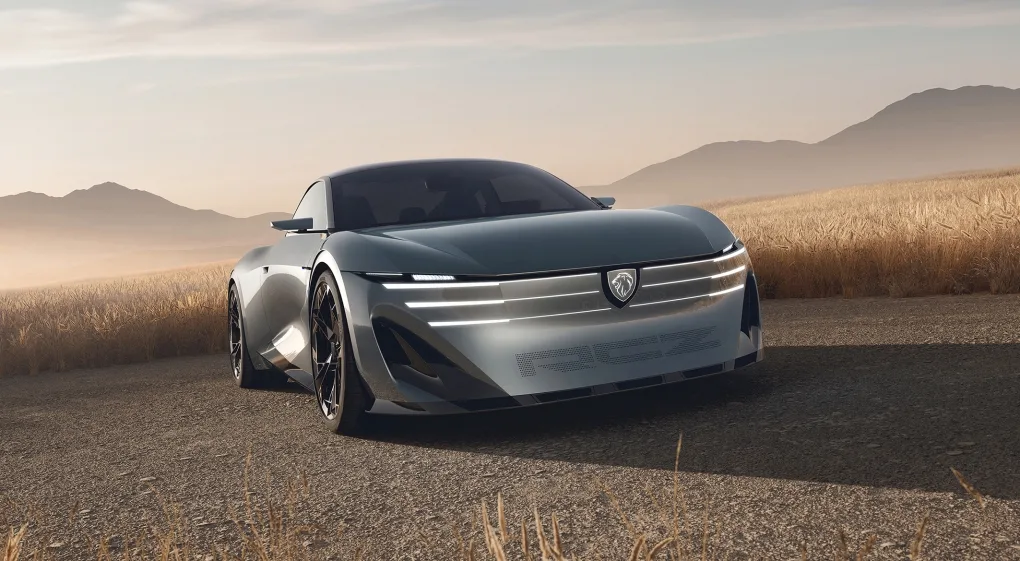
Peugeot‘s RCZ Vision is a concept that the brand describes as a manifesto, putting driving pleasure and French flair at the centre of its innovation plans.
It is the successor to the RCZ coupé built from 2009 to 2015, now a collector’s item, and previews the technology and design Peugeot intends for its future models.
It rides on an architecture based on the STLA One platform and pairs a solid-state battery, developed with Factorial Energy, with a 1,000-volt electrical system.
Peugeot quotes 500 hp, up to 600 km of range and consumption of 11.5 kWh per 100 km on the WLTP combined cycle, a figure it says is still to be confirmed. CEO Alain Favey said the concept sets out Peugeot’s vision of a car focused on the future and on ultimate driving pleasure, and shows that design and technology can combine in an instinctive, refined experience.
Hypersquare and a Quieter i-Cockpit
The RCZ Vision previews a next-generation i-Cockpit, a layout Peugeot has used for nearly 15 years. It pairs the Hypersquare steering control with transparent Micro LED displays, and Peugeot says it deliberately chooses “better over more” rather than adding screens.
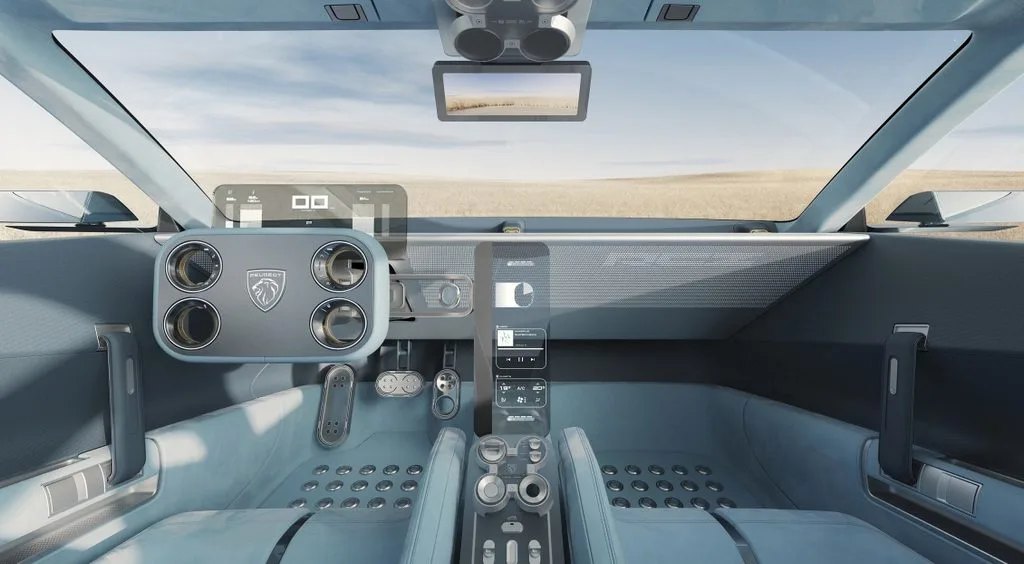
A transparent display sits just above Hypersquare and shows only the information the driver needs, with extensive personalisation, while a vertical floating central screen, angled toward the driver, handles infotainment and navigation.
The central display can be switched off entirely and effectively disappears from view because of its transparent structure. Drivers keep their hands on the steering control, with main functions reachable within its four rings. The production Hypersquare fitted here is the same one planned for the next-generation E-208.
X-by-Wire Technology
The concept carries Peugeot’s X-by-Wire systems. With Steer-by-Wire there is no mechanical link between the steering control and the wheels, and the steering ratio changes with vehicle speed. At low speed, maximum rotation is slightly less than one full turn, compared with three turns for a conventional wheel, making manoeuvres quick.
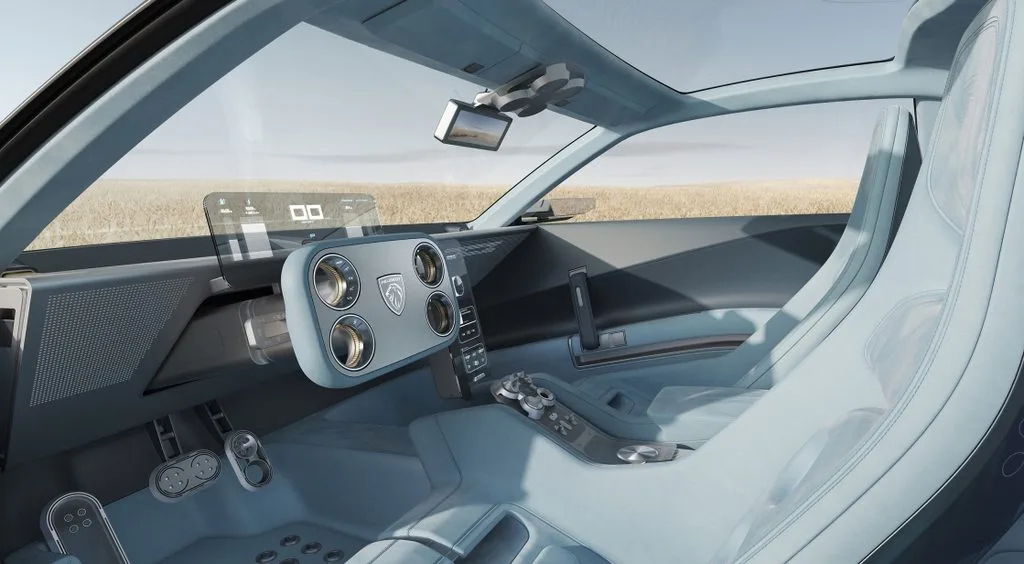
At higher speed the ratio is reduced for smoothness, and the system filters out vibrations from the road surface. The RCZ Vision is also Peugeot’s first car with Brake-by-Wire, which replaces the hydraulic connection from pedal to brakes with electronic control for finer modulation and smoother blending of regenerative braking. A Level 2++ hands-free driving function is available on demand in town and on open roads.
Solid-State Power
STLA One is a modular platform meant to support Peugeot’s future technologies, particularly X-by-Wire, while reducing complexity and speeding development and allowing for new battery options and easier component recycling.
The solid-state cells, tailored to the car’s performance targets, store more energy in less volume and offer strong charging and power capability. On the 1,000-volt architecture, state of charge can rise from 10 to 80 percent in ten minutes.
Feline Future Design
The RCZ Vision is the first expression of Peugeot’s “Feline Future” design language, which Design Director Matthias Hossann said grows out of the tension between feline strength and the precision of materials.
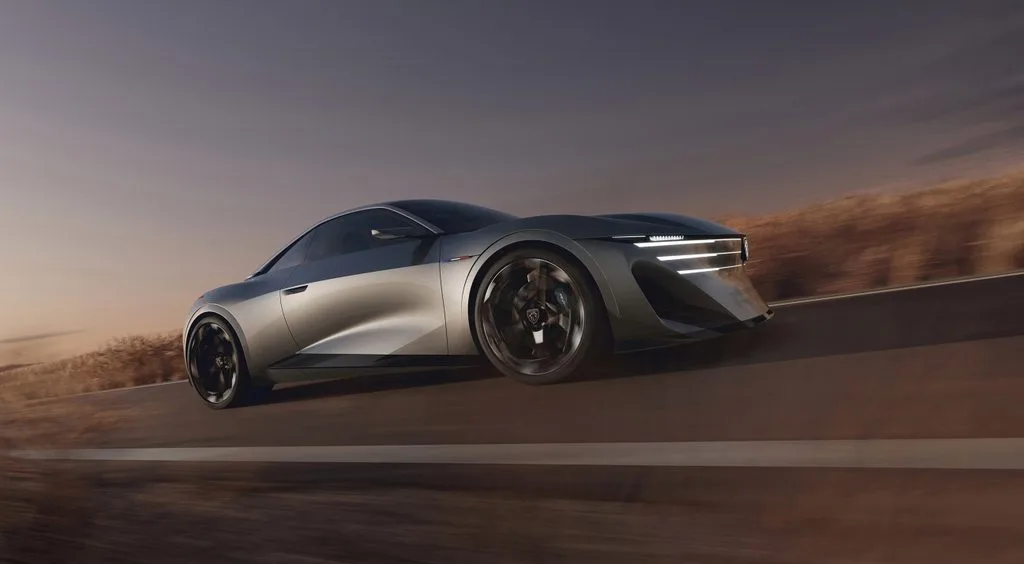
Five principles define it: Freedom, Courage, Elegance, inner force and Instinct. The car sits low and leans slightly forward like a cat ready to pounce, with strongly defined shoulders and deeply sculpted flanks that stay soft and rounded, set against a slim, transparent glass-bubble cabin.
The new light signature reinterprets Peugeot’s three claws as ultra-slim horizontal elements. At the front they sit beneath a compact Thin Lens LED headlamp that forms the lion’s gaze, alongside an illuminated emblem and micro-perforated “RCZ” graphics on the bumper and grilles.
At the rear, the three claws carry every lighting function, and an active spoiler, like the original RCZ’s, stays hidden until the car moves. The bubble roof and cockpit arches echo the first RCZ: the glass now runs from bonnet to tail, the double-bubble profile is accentuated for rear-seat space, and slimmer, seemingly floating arches are finished in paint made from recycled aluminium.
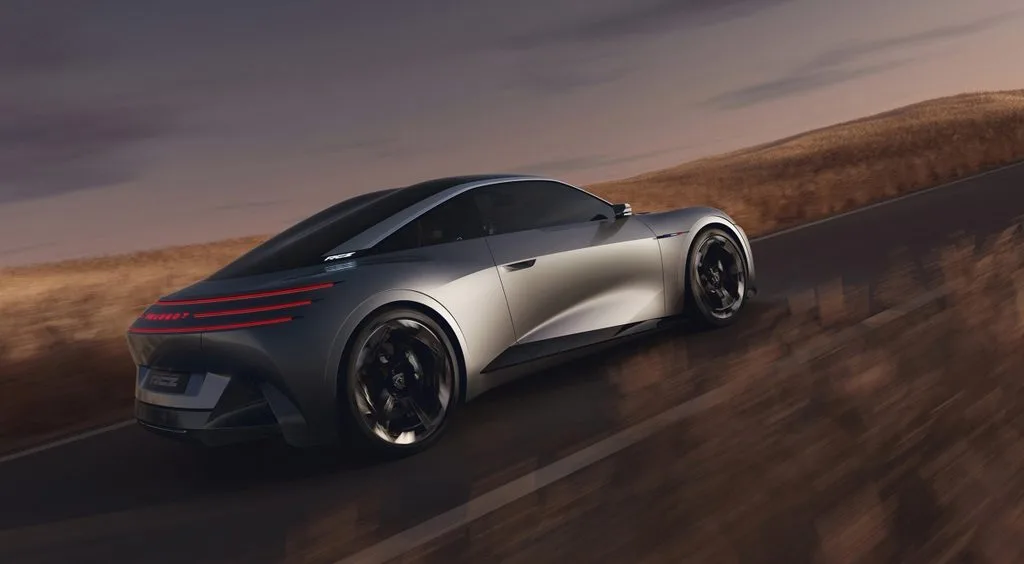
Forged aluminium wheels measure 21 inches at the front and 22 at the rear, with radiating spokes and small triangular details that nod to the original. An ultra-thin 110 mm battery helps the low silhouette.
A Four-Seat Grand Touring Cabin
Inside, Peugeot shows what a future flagship cabin might look like: a bright, welcoming space where technology stays discreet. The dashboard is sculpted tightly around its components, and the air vents retract into it when not needed.
A floating centre console carries aluminium physical controls for driving modes and climate on a frosted-glass surface. Asymmetrical seats provide extra support toward the centre of the car and protect the floating display, and open sections in the seatbacks save weight.
The four-seat layout fits two adults in the rear, and the rear seatbacks fold to increase luggage space.
Trim is in Alcantara and recycled leather in a light-blue scheme, and the dashboard clock is the Parade watch from French watchmaker SERICA, echoed on the screen in digital form. The seats use PELINOVA leather, made from untanned offcuts from the leather-goods industry that would otherwise go unused.