
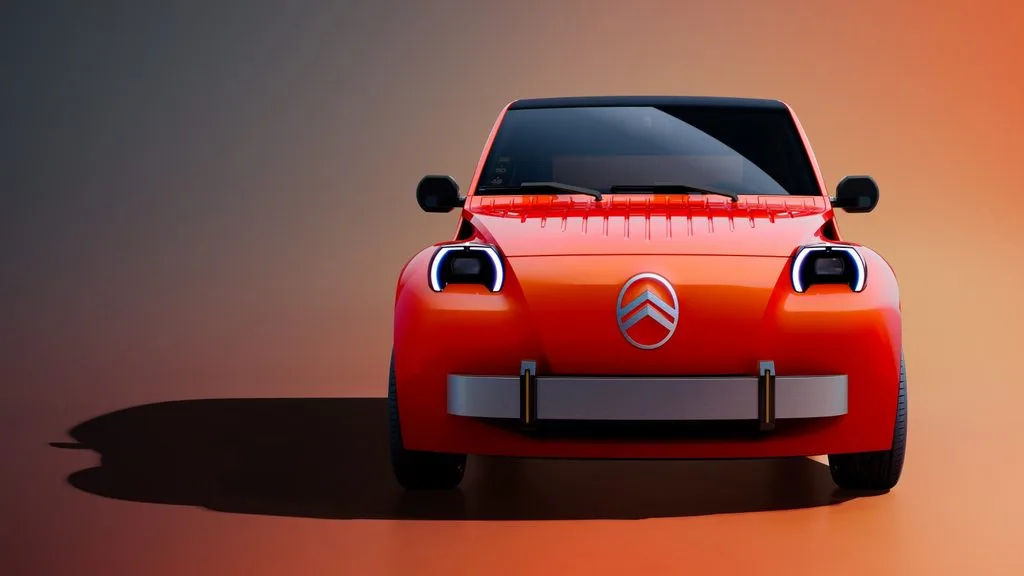
At the 2026 Paris Motor Show, Citroën has unveiled the 2 CV Concept, a modern electric reinterpretation of the car that first appeared at the same show in 1948.
The concept is electric, minimalist, compact and aimed at affordability, and it previews a production model that will join the Citroën range by 2028. CEO Xavier Chardon said the aim is not to copy a car from the past but to reinvent what made it special: simplicity, accessibility and the freedom it offered, now applied to make electric mobility simpler, more human and more desirable.
Small, Light and Priced for Volume
Citroën positions the car between the Ami and the C3 under the new European E-Car regulations. It will be built in Europe with a target starting price of about €15,000, a deliberate contrast to a market where cars keep growing larger, heavier and costlier.
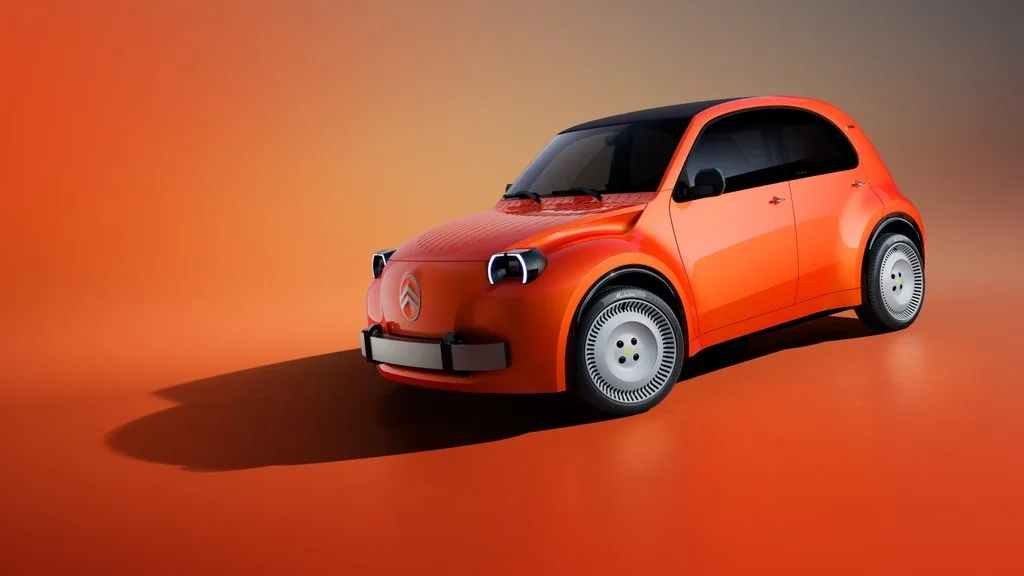
At 3.76 metres, it is shorter than the original 2 CV, which Citroën chose to recover the agility of small cars and ease city driving and parking. Weight is targeted at one tonne, which allows a smaller, cheaper battery with a range tailored to daily use.
The design favours mass production and easy repair, with flat surfaces, direct air intakes under the windscreen and bumpers that are separate from the bodywork and can be replaced individually. Citroën’s partner Michelin contributes a “universal digital twin of the tyre,” which lets the car adapt to conditions and monitor tyre condition continuously.
Styling Without Nostalgia
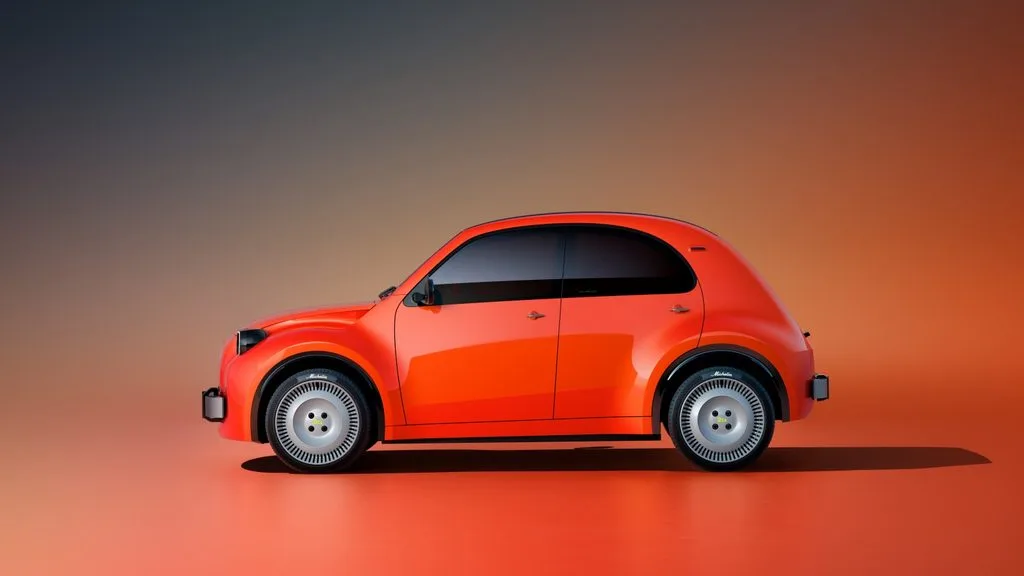
The silhouette keeps the original’s proportions and curves, drawn with tauter lines and fuller volumes. Round headlamps sit apart from the bodywork under a sweeping bonnet with creases inspired by the TPV, the 2 CV’s prototype, and windscreen wipers are left exposed.
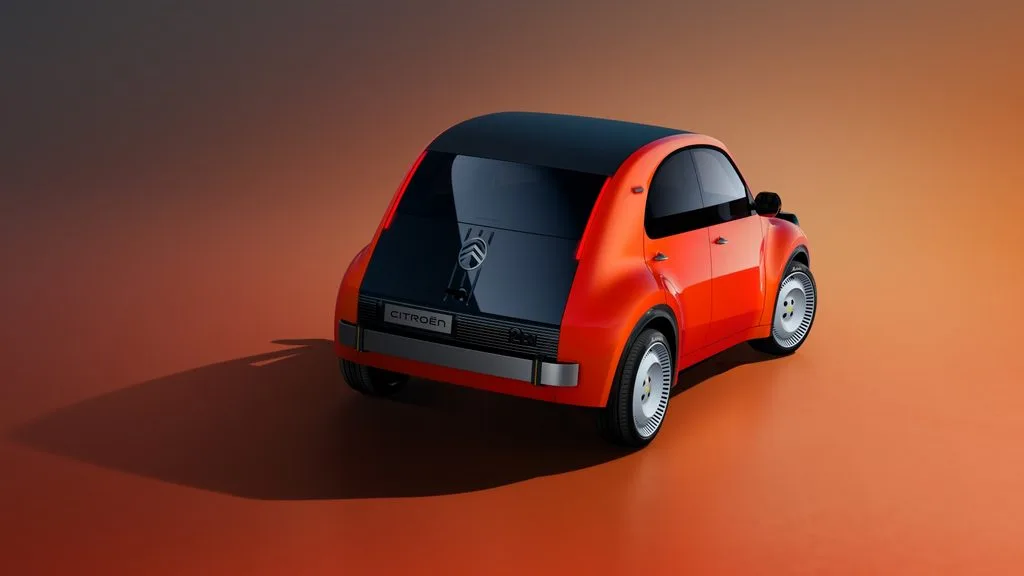
In profile, a vertical windscreen, flowing roof, rounded wings and 18-inch steel wheels inspired by the original wear Michelin tyres with the Heritage logo. At the rear, a black tailgate runs down to the bumper, as on the first 2 CV, with LED lights flanking it, three horizontal stripes, a visible tailgate handle and a number plate that lists the car’s nicknames in different countries.
A Cabin Without a Dashboard
Inside, there is no conventional dashboard. A cylinder carries a single-spoke steering wheel, a single control lever, a paddle gear selector and a Citroën Smart Vision display that places essential information in the driver’s line of sight, plus an 8-inch square touchscreen with comic-book-style graphics.
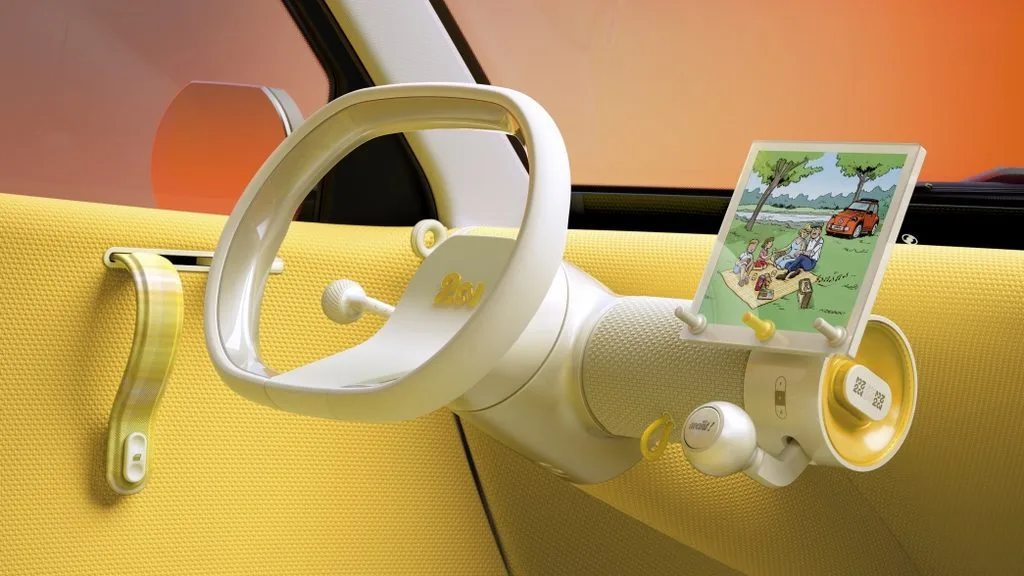
Wide seats use Citroën Advanced Comfort technology and the front seat pulls out to make a break more relaxing. A removable storage basket replaces the centre console, door handles are soft straps, a fabric sunroof brings in light, and a detachable radio called “Radioën” doubles as a speaker that can leave the car with the occupants.
The palette is bright. The Infra Red exterior starts from orange with yellow and red highlights. Seats are covered in a reworked tartan in zesty yellow, with Bakelite-like beige on the steering wheel, controls, instrument panel and seat piping.
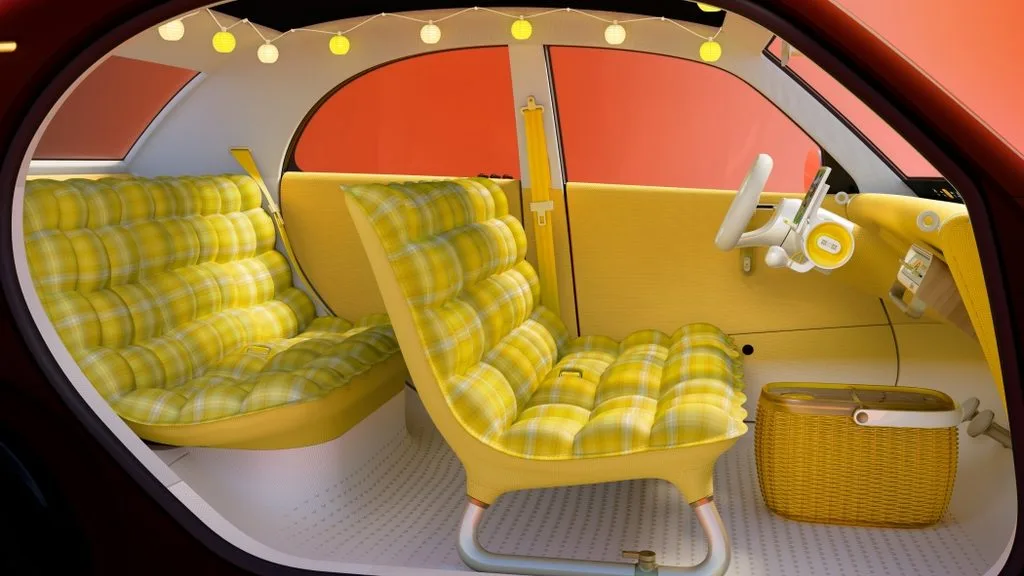
Cane-style textured fabric covers the floor, dashboard and door panels, the basket combines wood with 3D-printed bio-based plastic, and light grey steel wheels carry yellow colour clips that say “2 CV.”
Winks to the Original
Details recall the 2 CV throughout. The horn and the start-up sound echo the original, heart-shaped stickers evoke its popularity, and the numbers 48, 90 and 26 on the windscreen mark its 1948 launch, the end of production in 1990 and the concept’s 2026 unveiling.
The pedals carry a tortoise for the brake and a rabbit for the accelerator, and the door pockets are shaped to hold eggs, a tribute to the original specification. Tyres have an exclusive chevron pattern.