
The new Mercedes-Benz GLC inspires with its powerful reinterpretation of the classic Mercedes radiator grille introduced in 1900.
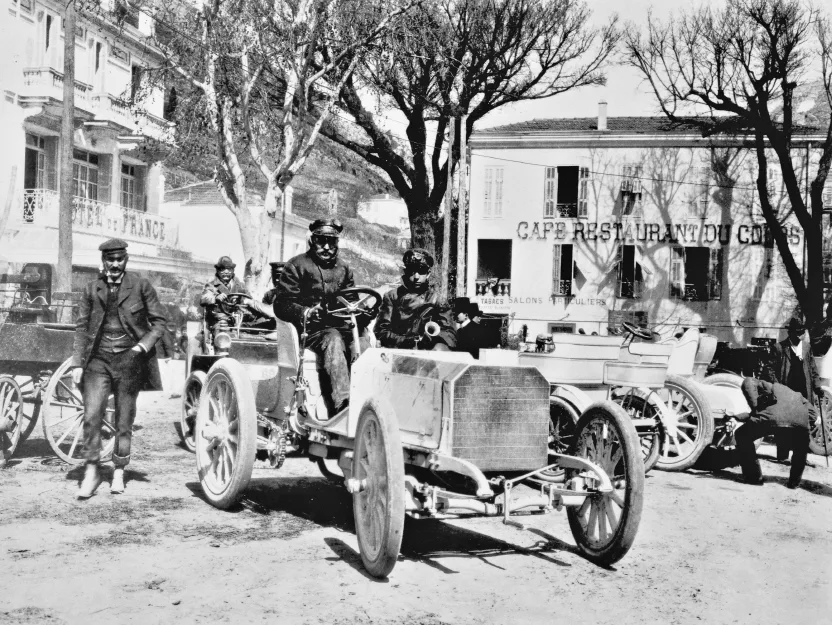
This iconic face of Mercedes-Benz automobiles traces its origins to the very first Mercedes, which was also the first modern automobile ever built – the Mercedes 35 hp. On 22 November 1900, Daimler-Motoren-Gesellschaft (DMG) in Cannstatt completes the first vehicle of this type.
This highly innovative automobile is created at the request of Emil Jellinek, a DMG business partner and an enthusiastic motorist. The extremely well-connected entrepreneur is the company’s most important customer at that time. In 1900 alone, he orders a total of 72 new vehicles, which he sells to buyers from Europe’s upper classes.
The Mercedes 35 hp is a high-performance vehicle of its time. It covers several segments, as is common at the time: as a sports version, it excels in races. Or, fitted with a prestigious body, it is suitable for comfortable journeys.
Accordingly, customers use the Mercedes 35 hp both in races and in everyday life – and enjoy an impressive presence everywhere. Just 14 years after Carl Benz and Gottlieb Daimler independently invented the motorcar in 1886, the Mercedes 35 hp from 1900 was a revolutionary overall design. It set the standard for the future development of the modern motorcar.
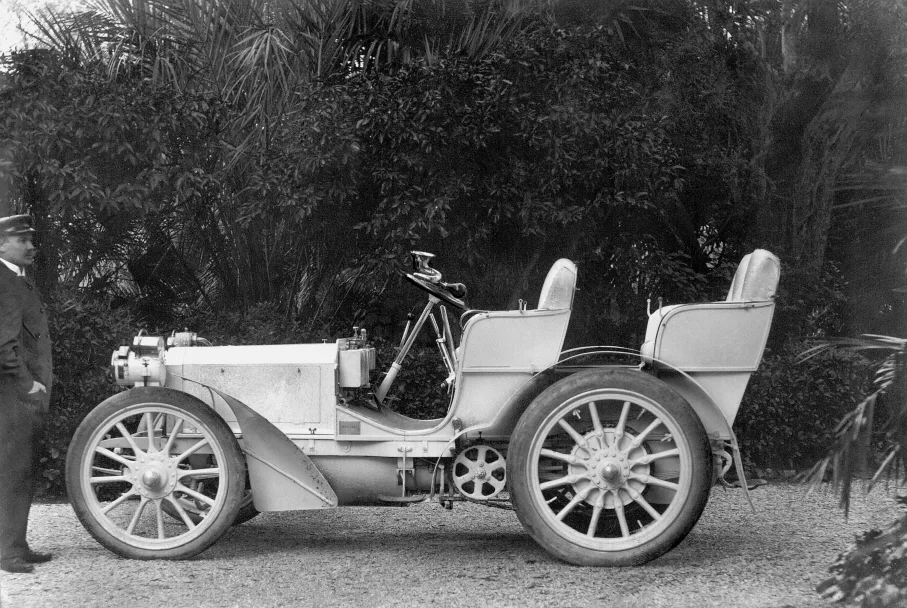
The story behind the Mercedes 35 hp: Jellinek demands from DMG chief engineer Wilhelm Maybach a modern, powerful and safe vehicle that would overcome the limitations of earlier automobiles with its innovative engineering.
The request is triggered by the fatal accident of racing driver Wilhelm Bauer, who was driving a Daimler Phoenix 23 hp racing car, which was entered by Jellinek during the Nice–La Turbie hillclimb during the Nice Race Week in 1900. Jellinek’s racing car competes under the pseudonym “Mercédès”, the first name of his eldest daughter. Shortly afterwards, this name becomes the brand designation for DMG automobiles.
New vehicle concept for sustained high performance
Maybach, the outstanding chief designer of DMG, and his team develop a completely newly designed vehicle. The Mercedes 35 hp is the first car to entirely break away from the concept of the motorised carriage: its low centre of gravity, long wheelbase and wide track provide for a level of driving safety and stability which has hitherto never been achieved.

Additional innovations include an angled steering column and a gearbox with a foot-operated clutch – key improvements in terms of ergonomics, and features which remain fundamental in automotive engineering to this day.
A key milestone is the new automobile’s drivetrain. The innovative design makes it possible to use a new high-performance engine. This four-cylinder engine, designed by Josef Brauner, delivers 25.7 kW (35 hp) with a displacement of 5.9 litres at 950 rpm – a spectacular figure for that time.
Maybach’s invention of the honeycomb radiator enables highly efficient cooling and sustained high performance. The honeycomb structure at the front of the vehicle, initially a purely technical necessity, evolves into an iconic design element of the Mercedes brand from 1926 onwards.
In the recently presented Mercedes-Benz GLC, this radiator motif constitutes a contemporary expression which points to the future of the automobile.
Process of refinement
The first Mercedes 35 hp undergoes several weeks of rigorous testing and meticulous fine-tuning. After this refinement stage, referred to as “running in”, the very first Mercedes in history is shipped to Emil Jellinek in Nice on 22 December 1900.
With resounding success, the DMG business partner enters this new type of automobile in the Race Week in Nice, held from 25 to 29 March 1901. The Mercedes 35 hp dominates the competitions, claiming victory in the Nice–Salon–Nice race over 392 kilometres and the Nice–La Turbie hillclimb, among others.
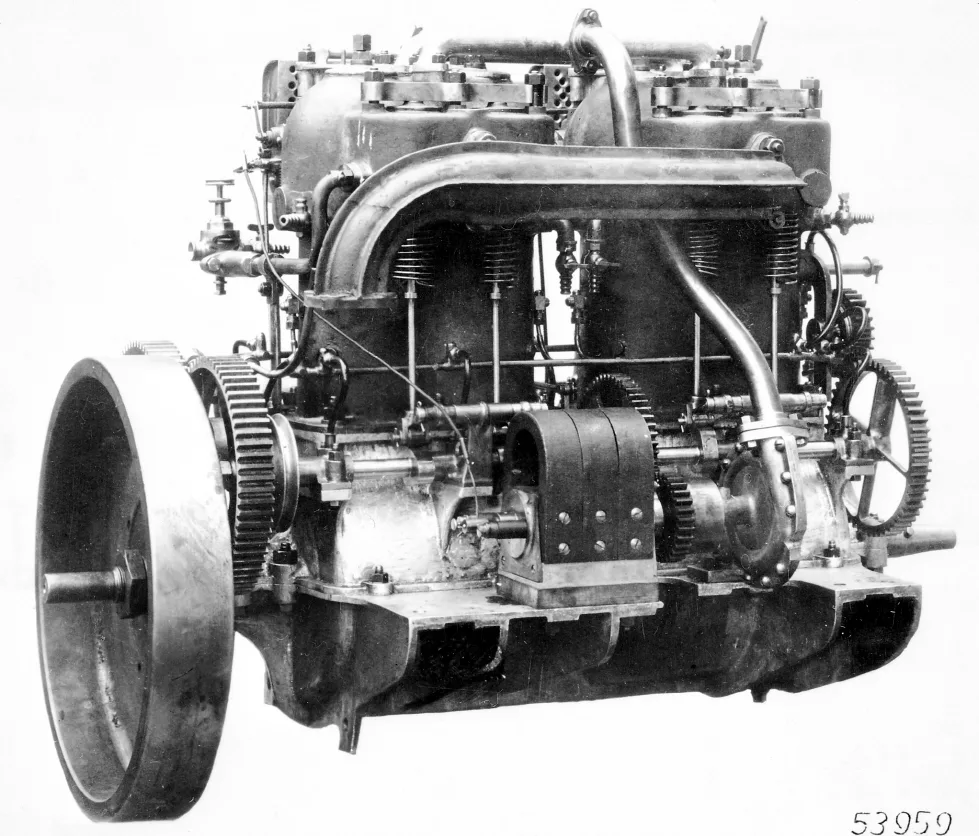
Following the Mercedes 35 hp of 1900, DMG launches its sister models, the Mercedes 12/16 hp and Mercedes 8/11 hp, in 1901. This first generation of Mercedes vehicles is succeeded in 1902 by the Mercedes-Simplex model range. The “Simplex” name is a reference to its operation, which is particularly simple for those times.
Another strategically pivotal decision is also made in 1900: DMG purchases a 185,000-square-metre site in Untertürkheim – now the main Mercedes-Benz plant. Gottlieb Daimler does not live to see these key developments – he passes away on 6 March 1900 at the age of just 65. Yet the innovative strength of the company he founded remains unchanged and continues to drive Mercedes-Benz into the future.