
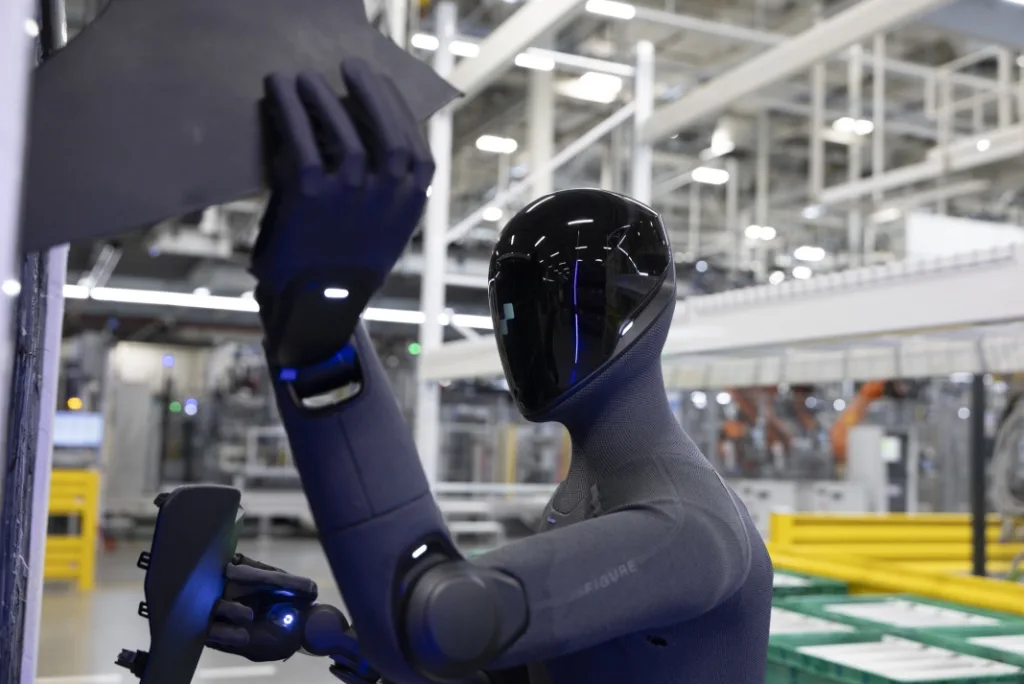
BMW Group intensifies the usage of digitalization and the use of artificial intelligence in production. With so-called Physical AI, which connects digital AI with real machines and robots, intelligent systems such as humanoid robots can be integrated into real production processes.
Following a successful deployment with the humanoid robot Figure 02 at BMW Group Plant Spartanburg in the USA, the further-developed successor, Figure 03, will now start at Spartanburg, working on complex sequencing applications in logistics.
Ulrich Wieland, Vice President of Production Control and Logistics, BMW Manufacturing, stated Plant Spartanburg is the birthplace of humanoid robotics in BMW Manufacturing’s operational day-to-day activities. Having already successfully completed a pilot with Figure 02 in the body shop, they are looking forward to deploying Figure 03 for a sequencing use case in logistics.
Brett Adcock, Founder & CEO of Figure AI, stated the 11-month deployment of Figure 02 proved that humanoids are no longer lab experiments—they can be a valuable asset in establishing a flexible, reliable manufacturing workforce. He noted excitement to continue work in Spartanburg as Figure tackles the complexity of the assembly and logistics hall.
Figure 02 Pilot Demonstrated Production Capability
The BMW Group already gained important experience with humanoid robotics at Plant Spartanburg in 2025. In collaboration with the technology company Figure AI, the Figure 02 robot supported the production of more than 30,000 BMW X3 vehicles over ten months.
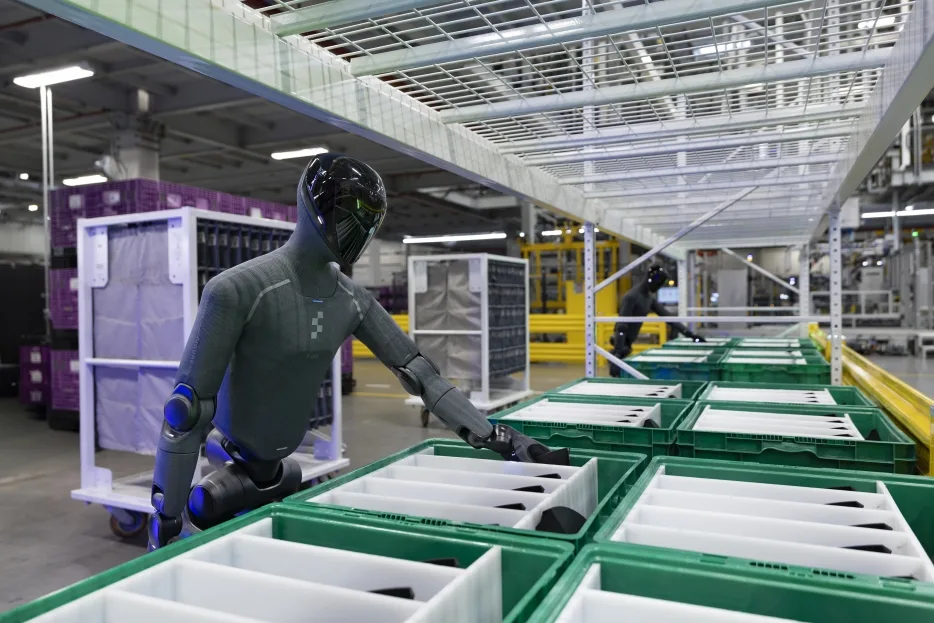
In the body shop, the robot inserted sheet-metal parts for the welding process—a task that demands high speed and accuracy and can be physically demanding. The collaboration demonstrated that humanoid robots can safely perform precise, repeatable work steps under real production conditions.
Next-Generation Figure 03 Features
The findings gained from this project form the basis for the next step with the successor model, Figure 03. Adcock explained the robot introduces several new features for expanded applications.
These include soft components designed for enhanced safety, wireless charging designed for higher availability, and audio functions for speech-to-speech communication, along with improved hands with tactile sensors and palm cameras designed to increase precision and dexterity.
Sequencing Application in Logistics
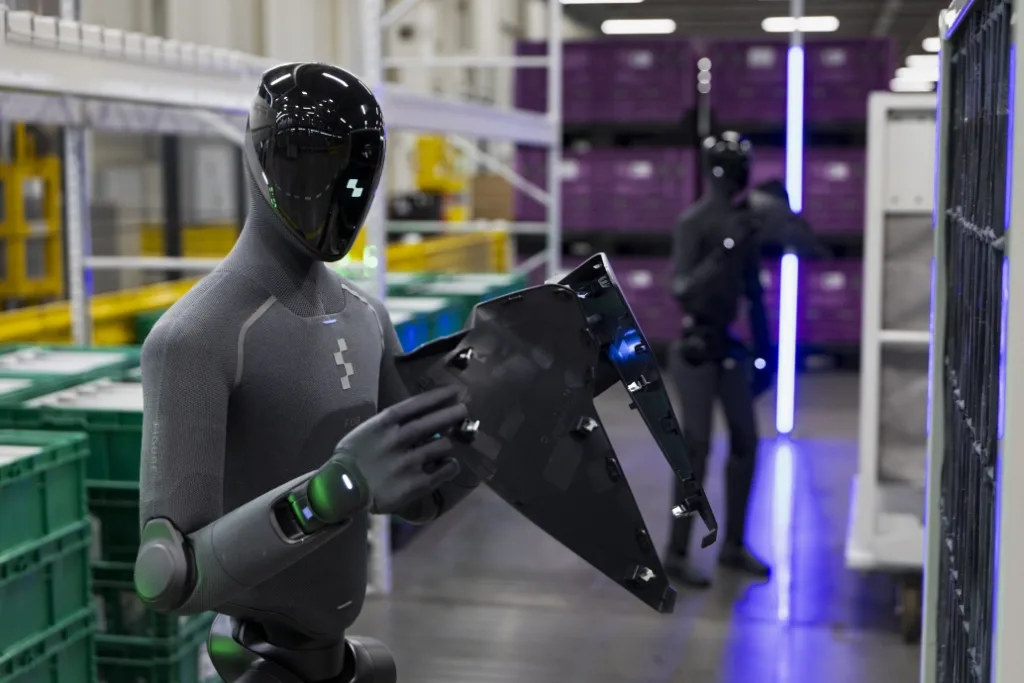
In the new sequencing use case application, delivered components initially arrive in larger containers, unsorted. Figure 03 will pick them up and sort them into a sequencing trolley. The trolley will then be taken to a defined collection point for onward transport.
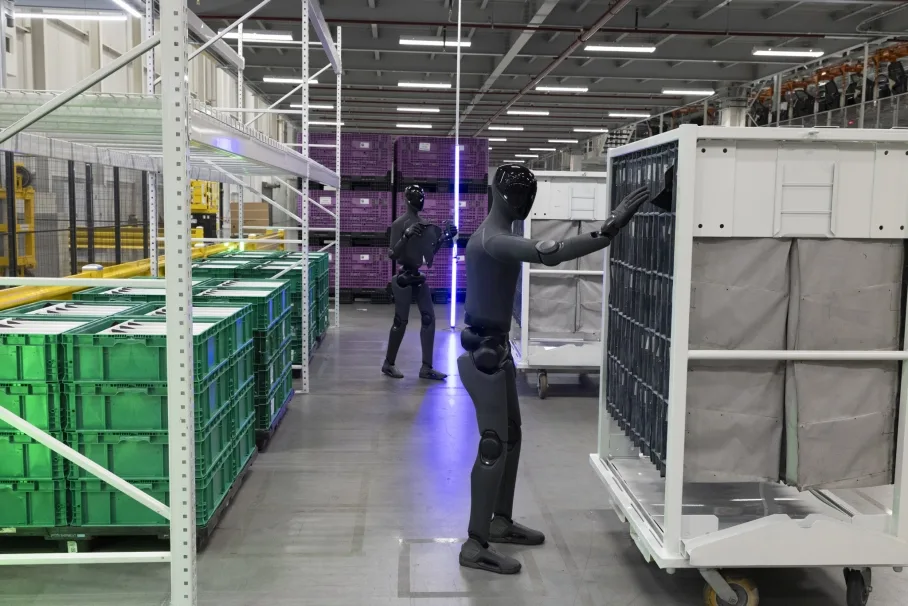
An automated tugger train or a Smart Transport Robot will then transport the parts to the installation location, where they will be provided to assembly employees “just in sequence.” This use case occurs frequently in automotive production logistics and offers potential for further development and scalability.
The use of humanoid robots is part of the BMW Group’s broader strategy to expand its automation portfolio with Physical AI. Humanoid robotics is a value-adding complement to existing automation.
Its potential lies particularly in monotonous, ergonomically demanding, or safety-critical activities. The aim is to protect and most effectively utilize employees while further improving workplaces.
BMW iFACTORY Digital Transformation
The new project is closely linked to the digital transformation of production at Plant Spartanburg. Hall 52, where variants of the BMW X3 and, in the future, the electrified BMW iX5 will be assembled, has been extensively expanded and updated.
Digital applications were already used during planning and continue to be implemented in the BMW iFACTORY approach in daily production operations. Before components arrive at the production line, virtual 3D simulations help optimize processes and enable error-free implementation from the outset.
The BMW Virtual Factory makes complexity manageable and supports employees by simulating human movement sequences. This tool refines manual processes from planning through to the production line, with a key objective of optimizing employee ergonomics.
AI Quality Assurance Systems
Artificial Intelligence is also being used in quality assurance. With AIQX (Artificial Intelligence Quality Next), Plant Spartanburg uses AIQX for visual and acoustic quality inspection to ensure consistent quality in a dynamic production environment.
BMW has established AIQX as a standard and is assessing options to make the system available to suppliers as well. It uses camera systems and sensors during line operations and provides line employees with immediate feedback via smart devices.