
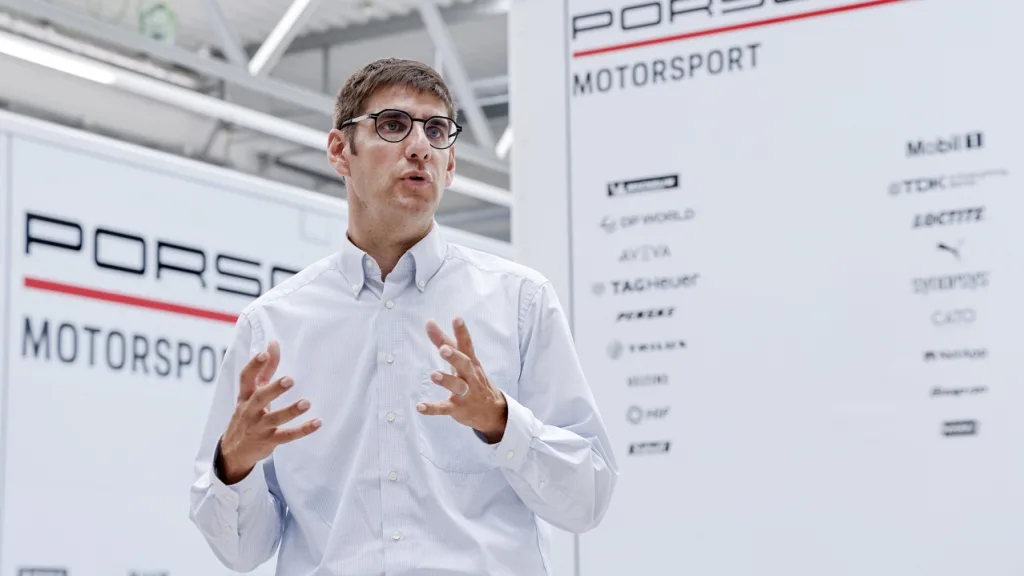
Dr. Florian Bach now leads sustainability at Porsche Motorsport, a role that traces back to more than six years spent working motorsport for a rival German manufacturer, where he raced against Porsche in the World Endurance Championship and at Le Mans starting in 2014.
A decade later, he joined Porsche itself to take on its sustainability strategy — work he describes as a personal dream given Porsche’s history of overall Le Mans wins and its current presence across four international racing series. That combination of performance and resource efficiency is what keeps him engaged in the role.
Reconciling Speed With Sustainability
Bach doesn’t see motorsport and sustainability as being in conflict. He points to motorsport’s long history as a proving ground for new technology, arguing that extreme racing conditions let Porsche develop and test innovations faster than it otherwise could, while still working to reduce their environmental footprint.
External pressure factors in too — FIA sustainability accreditation is now required to compete in several racing series — and Bach notes that Porsche’s own customer research shows growing interest in sustainability, which the company sees as a chance to build long-term credibility and stand apart from competitors.
Racing as a Testbed for Road Cars
The core of Bach’s argument is that motorsport’s constant push toward performance limits makes it an ideal place to trial new materials and technology under conditions road cars never face.
Porsche formalizes this by sitting on the FIA’s Sport Environment & Sustainability Commission, helping shape sustainability policy across the sport, and by keeping close ties between its motorsport and production teams so each side can learn from the other.
That relationship shows up directly in Porsche’s road cars: the 99X Electric race car validated a direct oil-cooling system for its electric motor and a regenerative braking and charging system capable of up to 600 kW, both of which have since made their way into production sports cars.
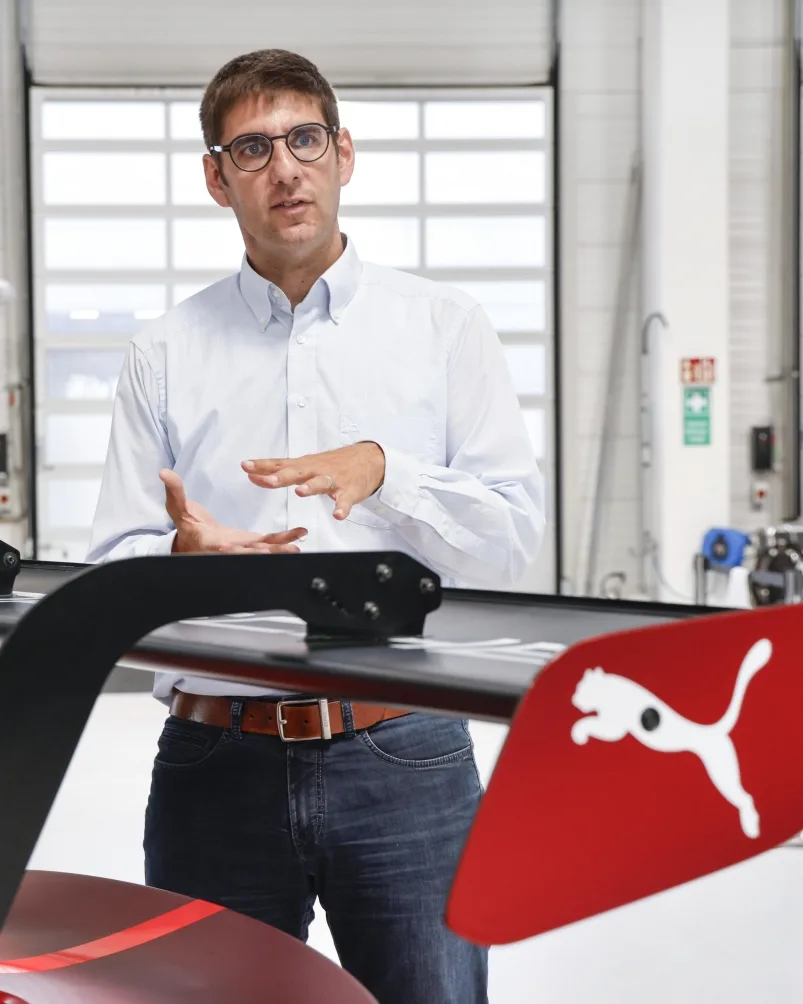
Other motorsport-derived technology, including pre-chamber ignition, exhaust gas energy recovery and improved cooling systems for chassis and high-voltage components, has followed a similar path into Porsche’s regular lineup.
Materials Take Center Stage
Materials innovation is a growing focus alongside powertrain work. Porsche now uses recycled carbon fiber, sourced from 911 GT3 RS production offcuts and combined with a bio-based resin, in 21 body components including the rear wing, doors and tailgate, cutting both manufacturing emissions and resource use.
Its current Cup car runs on eFuels, and the upcoming 911 GT4 R, arriving for the 2027 season, will use natural fiber-reinforced composites for its doors, rear wing, engine cover and parts of the cockpit — a material Bach says offers meaningful weight and CO2 advantages that could eventually apply to production vehicles as well. Porsche has also partnered with Michelin on racing tires made from more than 50 percent bio-based and recycled material, including pine resin and reclaimed scrap tires.
Beyond the Car Itself
Porsche’s sustainability push extends past the vehicles themselves. At its Weissach development site, the truck fleet now runs on renewable HVO100 fuel, a fully electric tractor trailer has been in operation since 2026, and logistics processes have been streamlined to cut waste.
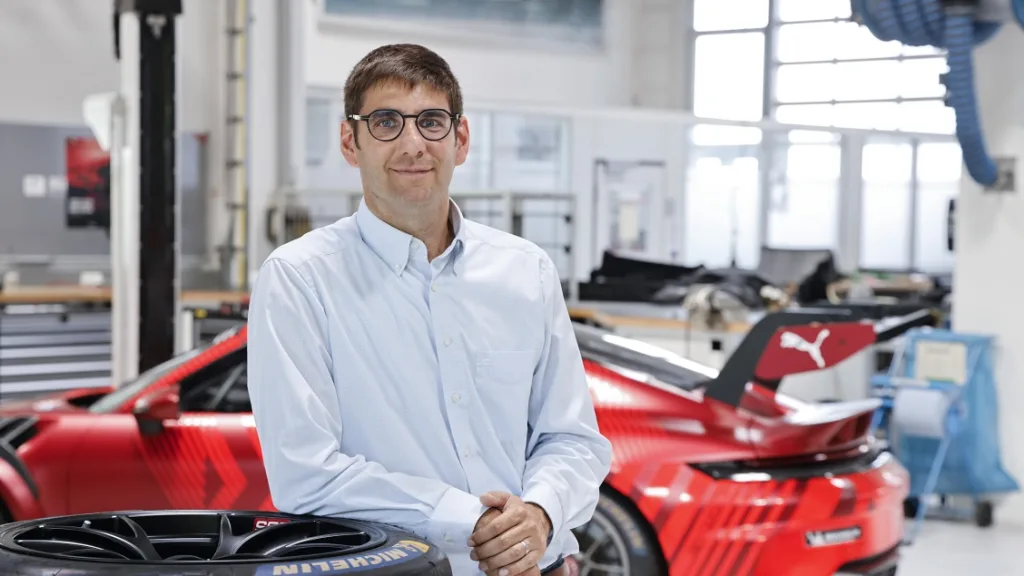
The team also runs a “Racing for Charity” initiative that converts race distance into support for social projects. On the data side, Porsche has conducted a full life cycle assessment of the 911 GT3 Cup to pinpoint its biggest emissions sources, and Bach says transparency is central to making real progress — work that’s now feeding into a new carbon accounting tool meant to sharpen the company’s CO2 measurement.
What Keeps Him Motivated
Bach says the variety of the role and the collaboration across teams within Porsche is what he finds most engaging, with different perspectives driving the best ideas.
His longer-term goal is embedding sustainability more permanently into motorsport, which he says takes teamwork and a willingness to try new approaches — something he compares directly to racing itself, where the same relentless pursuit of the next tenth of a second applies just as much to performance as it does to efficiency.