
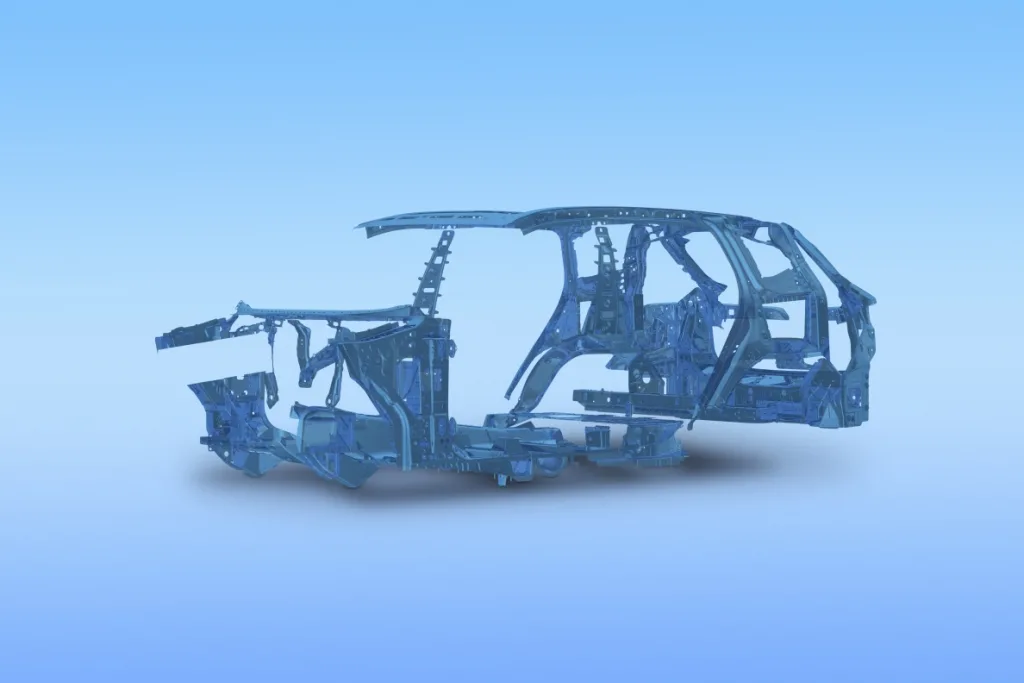
With the new BMW X5, the BMW Group is systematically extending its holistic sustainability approach to additional vehicle derivatives.
The aim is to further optimise the entire vehicle lifecycle and minimise its carbon footprint—from the supply chain and production through to the use phase and, ultimately, recycling.
Supply Chain Decarbonisation
Targeted decarbonisation throughout the supply chain is a key lever for reducing CO₂e emissions. The BMW Group focuses in particular on renewable energy and secondary materials, along with product and process innovations, applying this holistic approach across all X5 drivetrain variants. The impact is reflected in the results: during product development, CO₂e emissions of the BMW X5 were reduced by around 40 percent.
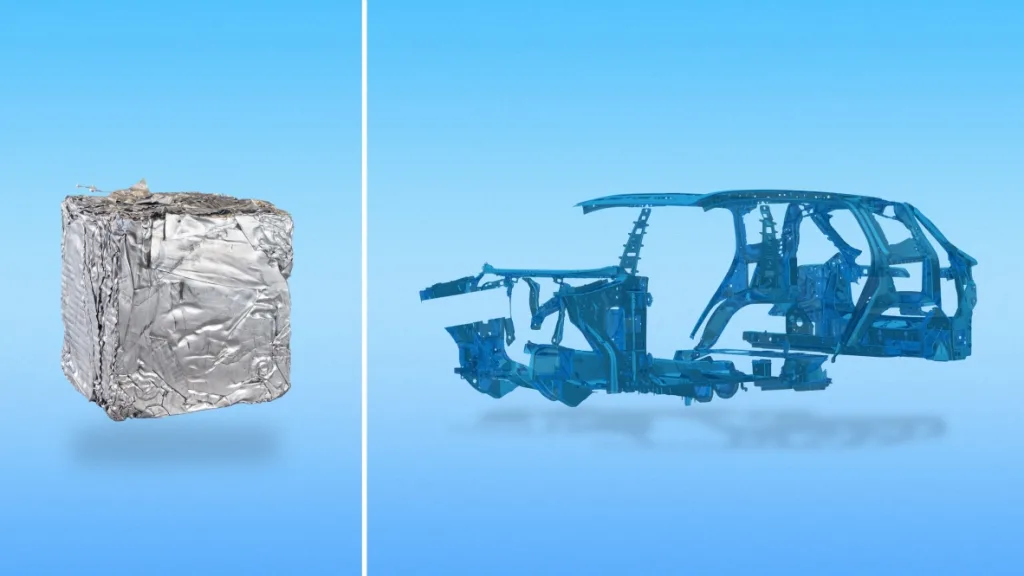
A further advance is the increased use of CO₂e-reduced flat steel for the body. Around 50 percent of the flat steel used is electric arc furnace steel with a high proportion of secondary material, produced using renewable energy. This high share results from close, long-standing collaboration with local suppliers in North America.
Systematic Use of Secondary Materials
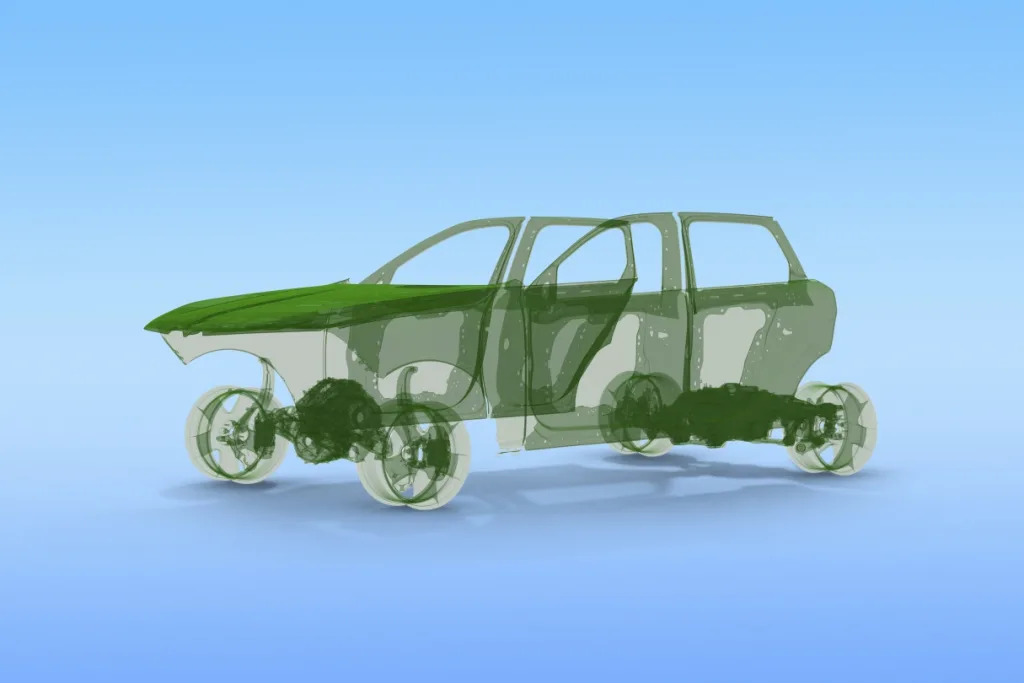
The new BMW X5 achieves a high proportion of secondary raw materials, even in heavy-duty components. These include aluminium suspension parts such as wheel rims, swivel bearings, wheel supports, rear axle supports, and brake callipers, manufactured using renewable energy for both electrolysis and production.
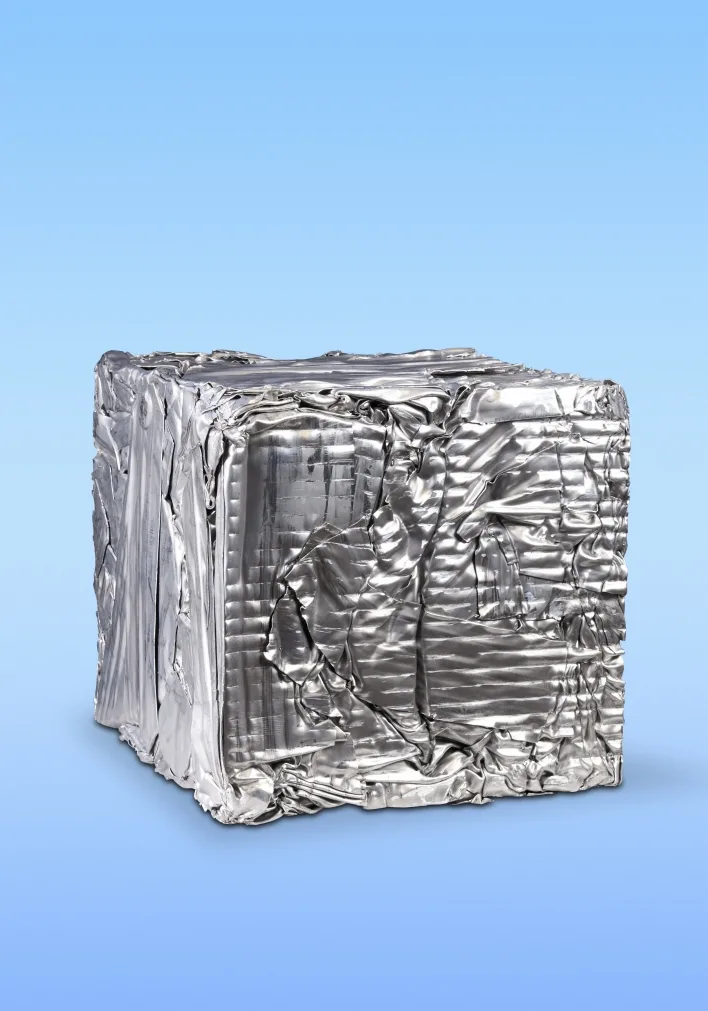
The aluminium used for the doors contains 35 percent recycled and closed-loop material from BMW Spartanburg’s press shop, while the base material for the headliner fabric yarn is made from 100 percent recycled PET. In the battery-electric BMW iX5 60 xDrive, around one third of the total vehicle consists of secondary raw materials, equivalent to 940 kilograms.
Gen6 Battery Cells with Lower Footprint
The Gen6 battery cells in the BMW iX5’s high-voltage battery include a high proportion of secondary materials in the cobalt, lithium, and nickel content. Renewable energy is also used in producing anode and cathode materials and in cell manufacturing.
Compared with the Gen5 cell used in the BMW iX, CO₂e emissions have been reduced by around 28 percent per watt-hour.
Efficiency During the Use Phase
Through its EfficientDynamics technology package, the BMW Group optimises vehicle efficiency across all relevant subsystems during the use phase, including aerodynamics, lightweight construction, low rolling resistance wheels and tyres, and overall energy management. EfficientDynamics has been used across all drive technologies since 2007.
The new fully electric BMW iX5 also features the familiar “Heart of Joy” from the BMW iX3 and BMW i3, with the BMW Dynamic Performance Control driving stack developed entirely in-house. Alongside confident drivability and a smooth stopping experience, the system enhances efficiency by recovering more energy through recuperation in significantly more driving situations, right down to a standstill.
Early CO₂e Breakeven Point
Comprehensive decarbonisation across the supply chain, production, and use phase results in an early breakeven point. Depending on the drivetrain variant, annual mileage, and charging electricity source, the new BMW iX5 60 xDrive achieves a CO₂e advantage over a comparable combustion-engine model after approximately one to two years of use.
Sustainable Production at Spartanburg
The holistic sustainability approach extends to manufacturing at BMW Group’s largest production site, Plant Spartanburg, where all external power required for production comes from renewable sources. Between 2006 and 2025, energy consumption per produced vehicle fell by 66 percent, while landfill waste dropped by 88 percent over the same period.
The newly built high-voltage battery assembly plant in Woodruff, connected to the main plant, runs entirely without fossil fuels in normal operation.
Publicly Available Carbon Footprint
The BMW Group will publish the Product Carbon Footprint for the BMW X5, validated by the German Technical Inspection Association (TÜV), to accompany the series launch. The report, including the underlying calculation methodology, will be publicly available, providing transparency regarding the raw materials used and CO₂e emissions across the vehicle’s entire lifecycle.