
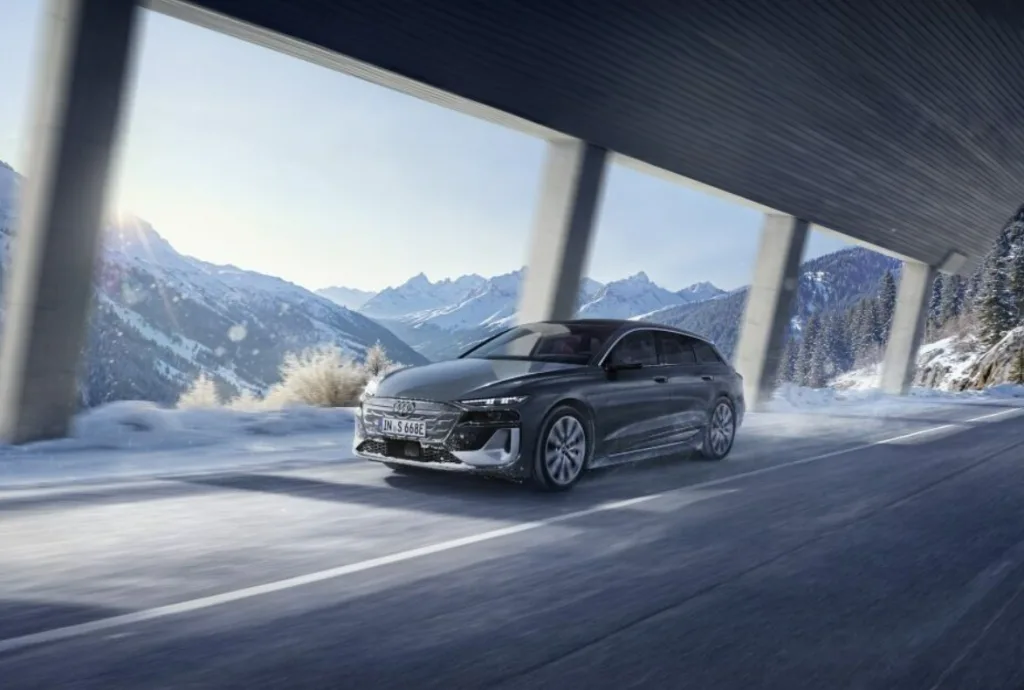
Audi delivered more than 1.6 million vehicles to customers worldwide in 2025, representing approximately 3 percent decline compared to the previous year’s 1,671,218 units, though the company demonstrated upward momentum with deliveries rising year-over-year in every month beginning in September.
This sequential improvement signals positive trajectory as the German premium automaker navigates complex geopolitical and economic headwinds while executing strategic shift toward electric mobility.
Order books provide encouraging indicators for future performance, with last year’s orders increasing over 13 percent compared with 2024 baseline.
Particularly notable, orders for electric models jumped approximately 58 percent, demonstrating strong consumer interest in Audi’s expanding battery-electric vehicle portfolio and validating the company’s substantial investments in electrification technology and product development.
Record Electric Vehicle Deliveries Drive Strategic Transformation
Deliveries of all-electric models reached record of over 223,000 units in 2025, representing approximately 36 percent increase over 2024 figures and accounting for approximately 13.7 percent of total Audi deliveries.
This substantial electric vehicle growth demonstrates successful execution of Audi’s electrification strategy despite challenging market conditions that pressured overall delivery volumes.
The electric vehicle performance proves particularly significant given broader automotive industry context where battery-electric adoption rates vary substantially across markets, regulatory environments continue evolving, and charging infrastructure development progresses unevenly across geographic regions.
Audi’s ability to achieve 36 percent electric vehicle growth while navigating these complexities validates product competitiveness and brand positioning in premium electric segments.
Marco Schubert, Member of the Board of Management for Sales and Marketing, emphasized that the product initiative is hitting the road with deliveries gradually reflecting this progress. He specifically noted that increases in 2025 were mainly achieved for electric models, demonstrating that customers are eagerly adopting electric vehicles like the Audi A6 e-tron and Audi Q6 e-tron.
A6 e-tron and Q6 e-tron Lead Electric Vehicle Portfolio Expansion
Two new electric vehicles proved instrumental in driving electric demand, with the Audi A6 e-tron achieving 37,000 unit deliveries and the Audi Q6 e-tron reaching 84,000 units in their respective launch years. Combined, these two models accounted for over 121,000 deliveries, representing more than 54 percent of total Audi electric vehicle volume.
The Q6 e-tron’s strong 84,000-unit performance demonstrates particular success in the competitive premium electric SUV segment where consumer preferences increasingly favor utility vehicle configurations over traditional sedan bodystyles. The model’s acceptance validates Audi’s strategic decision to prioritize SUV and crossover electric offerings alongside traditional passenger car configurations.
The A6 e-tron’s 37,000-unit delivery represents solid performance for electric sedan segment where consumer adoption typically lags SUV categories. The model’s sales demonstrate continued viability of premium electric sedans when executed with appropriate technology, design, and value proposition, addressing market segment that some competitors have deprioritized in favor of exclusively SUV-focused electric portfolios.
Audi achieved delivery records in multiple markets including Canada, Poland, Turkey, and Denmark, demonstrating geographic breadth of electric vehicle acceptance beyond traditional early-adopter markets.
These records in diverse markets with varying electric vehicle infrastructure maturity levels and regulatory frameworks suggest broad appeal of Audi’s electric vehicle offerings rather than success limited to specific favorable market conditions.
Geopolitical and Economic Challenges Pressure Overall Performance
Geopolitical and economic challenges continued exerting pressure on delivery figures throughout 2025, creating headwinds that offset positive electric vehicle momentum and prevented overall delivery growth.
An intense competitive environment in China, where Audi faces pressure from both established premium competitors and rapidly advancing domestic manufacturers, significantly impacted performance in the company’s largest single market.
U.S. tariff policy affected the entire automotive sector and shaped global consumer behavior through uncertainty regarding trade frameworks, potential price increases, and broader economic confidence impacts.
These policy factors created challenging planning environment for automakers while potentially dampening consumer willingness to make major purchase commitments during periods of economic and trade policy uncertainty.
Solid performances in Europe, Germany, and overseas and emerging markets could not fully offset negative factors impacting China and North American volumes.
This geographic performance divergence highlights increasing importance of maintaining competitive strength across diverse markets rather than relying on concentrated geographic exposure, as regional challenges can substantially impact overall results even when other markets perform well.
European Markets Maintain Stability with Strong Electric Growth
In Europe excluding Germany, Audi delivered more than 464,000 vehicles, down only 0.5 percent to effectively match prior year performance despite challenging macroeconomic conditions across the region. This stability demonstrates resilient demand for Audi products in mature European markets where the brand maintains established presence and strong dealer networks.
Electric vehicle deliveries in Europe excluding Germany increased approximately 40 percent to around 113,000 units, continuing positive global electric vehicle trend while outpacing overall European electric vehicle market growth rates.
This performance suggests Audi is gaining electric vehicle market share in European markets through competitive product offerings and effective go-to-market execution.
The substantial European electric vehicle growth reflects combination of favorable regulatory environment including tightening emissions standards, relatively developed charging infrastructure in Western European markets, and consumer receptiveness to premium electric vehicles in markets with established Audi brand presence and customer loyalty.
German Home Market Achieves Strong Growth with Electric Surge
Audi recorded solid gains in its home market of Germany, delivering over 206,000 vehicles representing 4 percent increase compared to prior year. This growth in the company’s domestic market holds particular strategic significance given brand heritage, manufacturing presence, and symbolic importance of home market performance for German automotive manufacturers.
Approximately 41,000 German deliveries were all-electric vehicles, representing approximately 89 percent increase over prior year and demonstrating remarkable electric vehicle adoption acceleration. This surge validates appeal of new electric models to German customers who typically demonstrate sophisticated automotive knowledge and demanding quality expectations.
The 89 percent German electric vehicle growth substantially exceeds overall German battery-electric vehicle market growth rates, indicating Audi is successfully capturing disproportionate share of incremental electric vehicle demand in its home market.
This performance suggests the A6 e-tron and Q6 e-tron resonate particularly strongly with German consumers familiar with Audi brand attributes and willing to embrace electric mobility when presented with compelling product offerings.
North American Performance Pressured Despite Electric Record
In North America excluding Mexico, Audi delivered more than 202,000 units, declining 12 percent compared to prior year’s 230,220 units. This substantial volume decrease reflects challenging North American market conditions including shifting consumer preferences, competitive intensity, and macroeconomic factors affecting premium vehicle demand.
Despite overall volume decline, approximately 33,000 North American deliveries were electric vehicles, representing 15 percent increase and establishing new regional record for Audi electric vehicle sales. This electric vehicle growth demonstrates that product competitiveness and consumer interest in Audi electric offerings remain strong even as overall brand volume faces pressure.
In Canada specifically, deliveries reached record of over 37,000 units representing 11 percent increase, providing bright spot within broader North American performance.
The Canadian success suggests market-specific factors including regulatory environment, consumer preferences, and competitive dynamics create more favorable conditions for Audi brand compared to larger U.S. market.
The North American electric vehicle record achieved despite 12 percent overall volume decline indicates that electric vehicle growth partially derives from conquest sales attracting new customers to the brand rather than merely converting existing Audi customers from internal combustion to electric powertrains.
This conquest dynamic proves strategically valuable for long-term brand building and customer base expansion.
Chinese Market Intensity Pressures Volume Despite Leadership Position
Competition in China remained intense throughout 2025, with Audi delivering around 618,000 vehicles representing 5 percent decline compared to prior year’s 649,900 units. Despite volume decrease, Audi achieved leading position among core premium competitors, maintaining relative competitive strength even as absolute volumes declined.
The Chinese market dynamics reflect fundamental transformation of the world’s largest automotive market where domestic manufacturers have achieved rapid advancement particularly in electric and connected vehicle technologies.
These domestic competitors combine aggressive pricing, advanced technology, and deep understanding of local consumer preferences to challenge established premium brands’ historical market positions.
Audi’s model initiative for the Chinese market will continue at rapid pace in 2026, with key models including the Audi A6L, Audi A6L e-tron, Audi Q5L, and AUDI E7X set to launch.
This accelerated product cadence reflects recognition that maintaining competitive position in China requires continuous product renewal addressing local preferences for long-wheelbase configurations, advanced technology features, and increasingly, electric powertrains.
The planned 2026 Chinese launches including both internal combustion (A6L, Q5L) and electric (A6L e-tron, E7X) variants demonstrate Audi’s dual-track strategy addressing ongoing strong demand for premium internal combustion vehicles while establishing positions in rapidly growing electric segments.
This balanced approach acknowledges that Chinese market electrification occurs unevenly across price segments and geographic regions, requiring diverse product portfolio addressing varied consumer preferences.
Overseas and Emerging Markets Deliver Strong Growth
In overseas and emerging markets, Audi increased deliveries approximately 6 percent to around 134,000 units, providing important growth contribution offsetting declines in larger established markets.
All-electric model deliveries in these markets rose 26 percent to 14,000 units, demonstrating electric vehicle appeal extends beyond wealthy developed markets to include emerging economies.
Among countries with highest growth were Argentina increasing 77 percent, Turkey increasing 28 percent, and Egypt increasing 21 percent. These substantial percentage increases from relatively smaller bases demonstrate successful market development efforts and potential for continued expansion as these economies develop and premium vehicle demand increases.
The emerging market growth proves strategically significant for geographic diversification reducing dependence on mature markets facing saturation and intense competition.
While absolute volumes in emerging markets remain smaller than established regions, growth trajectories suggest these markets will contribute increasingly meaningful volume and revenue over time as middle class expansion drives premium vehicle demand.
Audi Sport Performance Reflects Model Transition Impact
Audi Sport delivered around 36,000 high-performance vehicles in 2025, declining 13 percent compared to prior year. The company explicitly attributes this decline to reduced availability resulting from model changeover rather than diminished demand, suggesting temporary rather than structural performance issue.
Model changeovers inherently create delivery gaps as outgoing models wind down production while successor models ramp up, temporarily reducing available inventory and constraining sales.
The Audi Sport decline should therefore be evaluated in context of product cycle timing rather than indicating fundamental problems with high-performance vehicle demand or Audi Sport brand strength.
Strategic Positioning for 2026 Recovery and Growth
Marco Schubert expressed confidence in continuing upward trajectory in 2026, citing new corporate strategy, dealer partner network strength, and international team capabilities as positioning elements for success.
This optimistic outlook reflects confidence that sequential monthly improvements observed from September through December 2025 will extend into 2026 as product initiatives gain traction.
The 58 percent increase in electric vehicle orders provides tangible evidence supporting optimistic 2026 outlook, as order books typically convert to deliveries over subsequent months creating visibility into near-term volume trajectory.
The strong electric order growth suggests consumer reception of new electric models exceeds initial expectations, potentially enabling Audi to exceed conservative delivery forecasts if order momentum sustains.
Audi’s 2025 performance demonstrates successful navigation of challenging market environment through strategic focus on electric vehicle portfolio expansion, geographic diversification, and product renewal addressing evolving consumer preferences.
While overall volume declined modestly, the 36 percent electric vehicle growth and sequential improvement trend establish foundation for potential return to overall growth as market conditions stabilize and expanded product portfolio drives increased competitiveness across segments and regions.
Audi delivers 1.6 million vehicles in 2025
| Audi brand deliveries | Cumulative | ||
| 2025 | 2024 | Change vs. 2024 | |
| World | 1,623,551 | 1,671,218 | –2.9 % |
| Germany | 206,290 | 198,342 | +4.0 % |
| North America1 | 202,143 | 230,220 | –12.2% |
| China2 | 617,514 | 649,900 | –5.0 % |
| Europe (excluding Germany) | 464,046 | 466,209 | –0.5 % |
| Overseas and emerging markets | 133,558 | 126,547 | +5.5% |
1 North America excluding Mexico
2 China including Hong Kong