
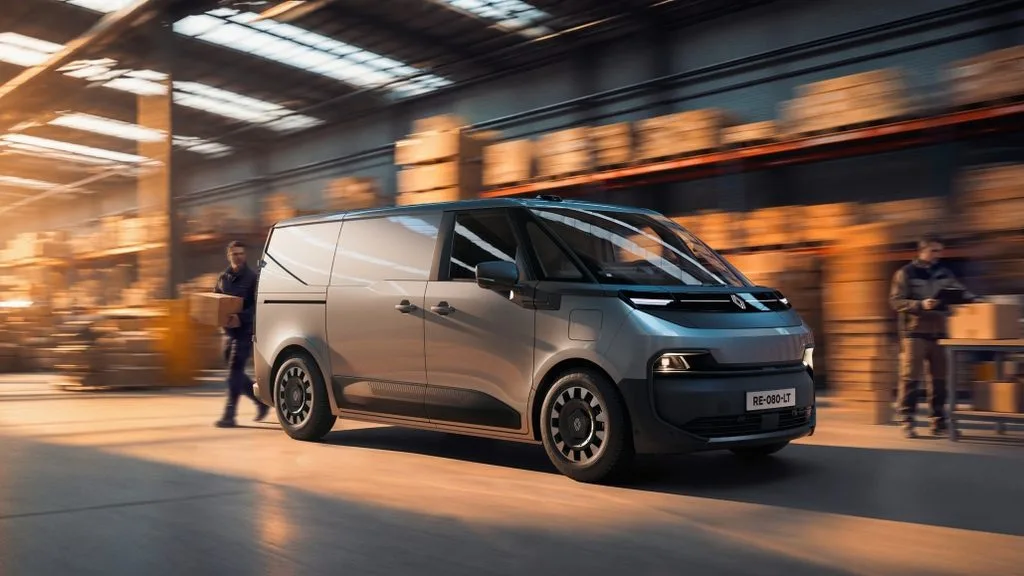
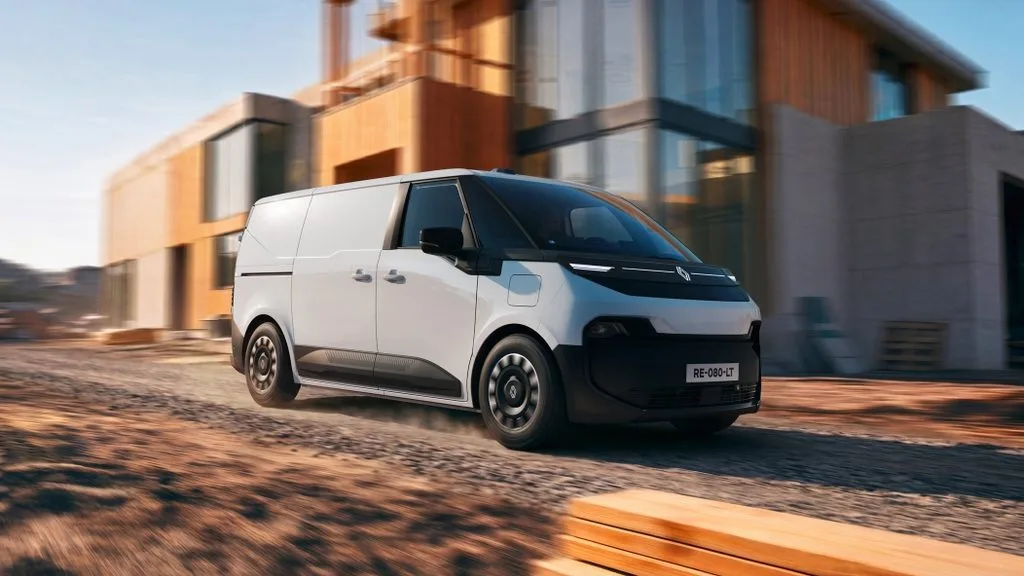
Renault used the 2026 IAA Transportation show in Hanover to unveil the new Trafic Van E-Tech Electric, one of five new light commercial vehicles planned through 2028 under the brand’s futuREady strategy.
Jan Ptacek, VP of Renault LCV, described the new Trafic as more than a lineup addition, framing it as a genuine shift in the European LCV market through added technology, services and conversion options.
The launch builds on strong momentum for Renault’s van business — the brand holds the No. 2 position in the European LCV market and has outperformed the broader market for four consecutive quarters, with the Master leading the large van segment and both Kangoo and Trafic placing on the podium in their respective categories.
The original Trafic has sold more than 2.8 million units since 1980, and the new electric version, designed and built at Renault’s Sandouville plant in France, marks the next chapter in that history. A panel van version arrives by year-end, with chassis-cab and crew-cab variants following in 2027.
Range, Charging and Lower Running Costs
Renault rates the new Trafic’s range above 470km (WLTP homologation pending), rising to nearly 690km in city driving — enough for up to five working days without recharging.
Built on Renault Group’s new RGEV medium van platform with 800V electrical architecture, the van offers what Renault calls the best fast-charging performance in the European LCV segment, regaining up to 280km of range (380km in city driving) in just 20 minutes. Renault estimates total cost of ownership runs up to 10% lower than an equivalent combustion-engine version.
Designed Around the Driver’s Day
The new Trafic handles with a 10.3-meter turning circle — comparable to the Renault Clio — making it well suited to tight urban streets, while its 1.89-meter height clears standard underground parking structures.
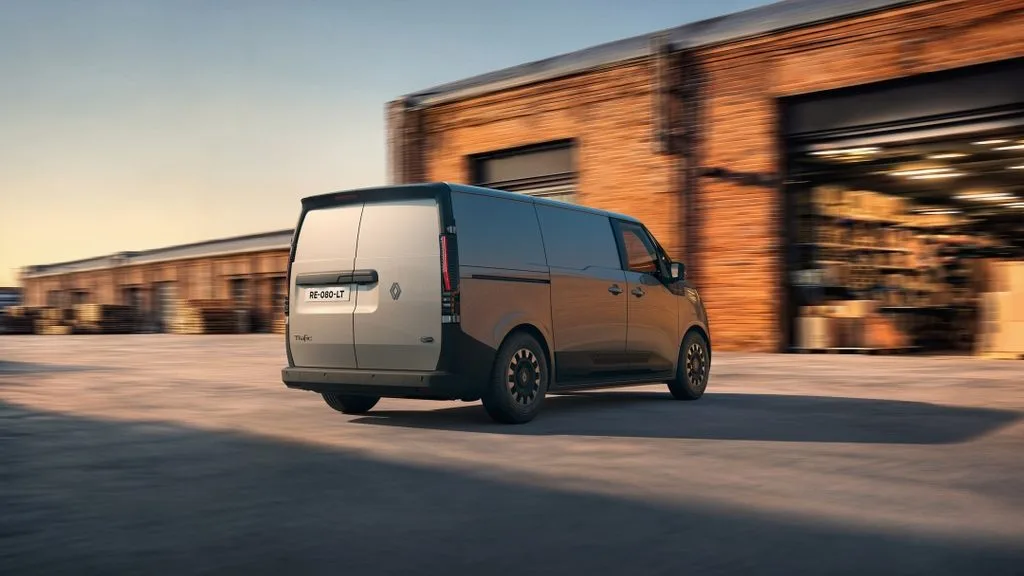
Multi-link rear suspension, an ergonomic driving position and the quiet operation typical of electric vehicles give it a driving feel closer to a passenger car, which Renault frames as a direct contributor to driver comfort and focus over a working day.
Europe’s First Software-Defined Van
The new Trafic becomes the first Renault Group vehicle, and the first LCV in Europe, built on software-defined van architecture, replacing roughly 80 separate electronic control units with just two supercomputers running CAR OS, an Android-based operating system developed with Google.
That architecture enables regular software updates, a more personalized driving experience, predictive-maintenance-based safety improvements, and — Renault argues — stronger resale value thanks to the vehicle’s ability to keep gaining new capabilities over its service life, in much the same way a smartphone does.
Still Built Like a Workhorse
Despite the technology upgrades, the new Trafic keeps the practical basics expected of a commercial van: up to 5.8 cubic meters of load capacity, a 1.3-tonne payload, 2-tonne towing capacity, room for three Euro pallets, and a 53cm load height.
Frédéric Clermont, VP of Renault’s LCV product line, called the van unique in its blend of running cost, value and passenger-car-level comfort, while still delivering the fundamentals that make it a genuine business tool.
A Lower-Carbon Lifecycle
Renault says the new Trafic cuts its carbon footprint by more than 45% compared with an equivalent diesel van, based on a 200,000km lifecycle assessment using the average European electricity mix — working out to roughly 33 tonnes of CO2 equivalent versus about 63 tonnes for a comparable diesel model.
That improvement comes from balancing range, battery size and vehicle weight (the 470km range comes from an 81 kWh battery, among the most efficient ratios in the market), a 6% improvement in aerodynamic drag, and a powertrain efficiency above 90%. Production at the low-carbon-powered Sandouville plant, close to some of Europe’s largest LCV markets, further reduces the vehicle’s overall footprint.
Built From the Ground Up for Conversion
Renault designed the new Trafic specifically to simplify conversions, with a flat floor, 1.30 meters of space between the wheels, and a 1.3-tonne payload shared across panel van and chassis versions.
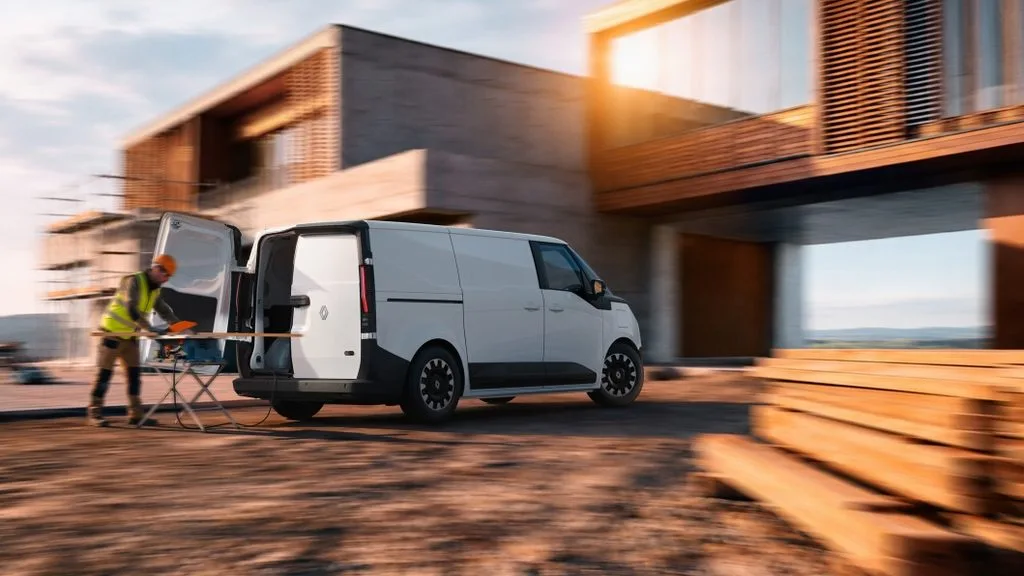
The van ships standard with Vehicle-to-Load capability, letting users power electrical equipment — like tools at a construction site — directly from a socket in the load compartment, with a future ePTO (electric power take-off) function planned to support heavier conversions such as refrigeration units or ambulance equipment, drawing up to 3.6 kWh and 10 kWh respectively from the same battery and charging system.
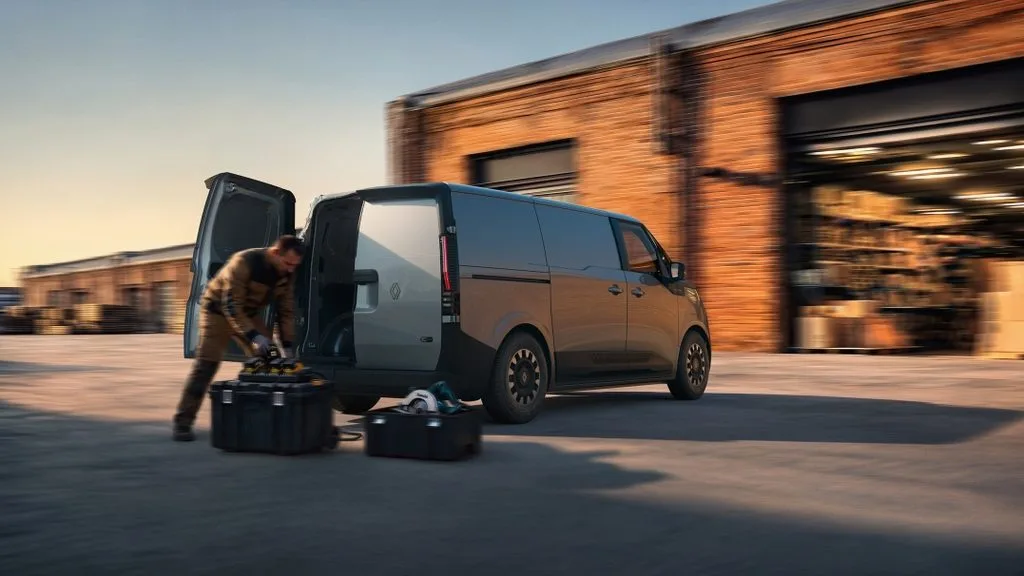
A feature called Convertor Companion also lets body converters build dedicated conversion controls directly into Renault’s openR link infotainment system, giving users one centralized interface instead of a separate screen for their specific conversion.
Three Tiers of Conversion Support
Renault structures its conversion services across three levels. The first, “converted by Renault,” covers conversions done directly at the brand’s three French LCV plants — Maubeuge, Sandouville and Batilly — for the most commonly requested builds like crew cabs and high-volume vans.
The second level runs through Qstomize, a Renault Group-owned conversion specialist handling more specialized work, including vehicles for customers with reduced mobility. The third level draws on a network of 300 certified body converters across Europe, each audited every three years against Renault’s quality standards and treated as ongoing partners rather than simple suppliers.
Keeping Fleets Running With Renault UPTIMIZE
Starting in 2027, Renault will roll out UPTIMIZE, a fleet program built on the new van’s software-defined architecture that aims to cut incident-related downtime in half by shifting from reactive repairs to proactive, data-driven maintenance.
The program rests on three elements: predictive maintenance that uses real-time vehicle data and AI to flag potential issues before they cause downtime while grouping service visits for efficiency, giving fleet managers a simplified dashboard covering mileage, energy use, route planning, charging and driver scoring; priority, no-appointment customer support combining remote diagnostics with dedicated B2B service backed by more than 400 Renault Pro+ centers across Europe; and in-vehicle apps, including a standard “energy & safety control” tool that applies a fleet manager’s preferred efficiency and safety settings automatically, alongside the option for businesses to build their own custom in-vehicle apps for specific needs like last-mile delivery.
Zakaria Zeghari, VP of Sales and Marketing for LCV, said the program is designed to lower both downtime and running costs through that combination of predictive data, fast customer support and Renault’s dedicated professional service network.