
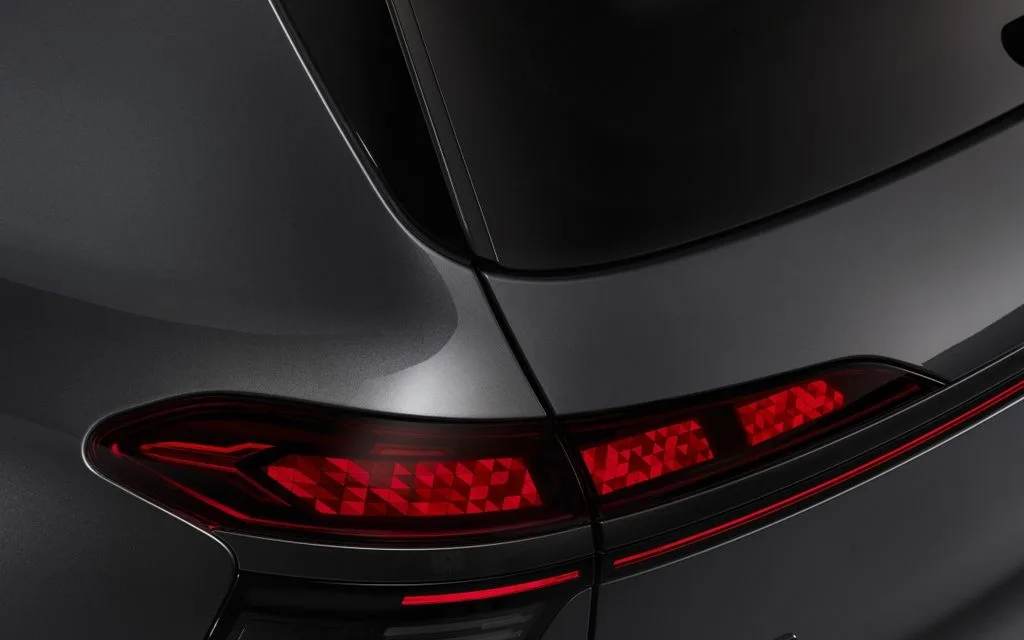
The Audi Q9 is the first production car to use three-dimensionally curved digital OLED panels. Audi says the third-generation technology opens new options for safety and communication and marks a milestone in a lighting story that began ten years ago.
The company presents itself as the only automaker to keep advancing OLED technology, moving it from a light source toward a digital means of communication.
Ultra-Thin Glass and Six Curved Panels
The carrier glass of the OLED panels is only 0.1 millimetres thick, roughly the thickness of a human hair. That allows the panels to bend to a radius of up to 200 millimetres and follow the body’s contours. The rear lights use 512 segments spread across six panels.
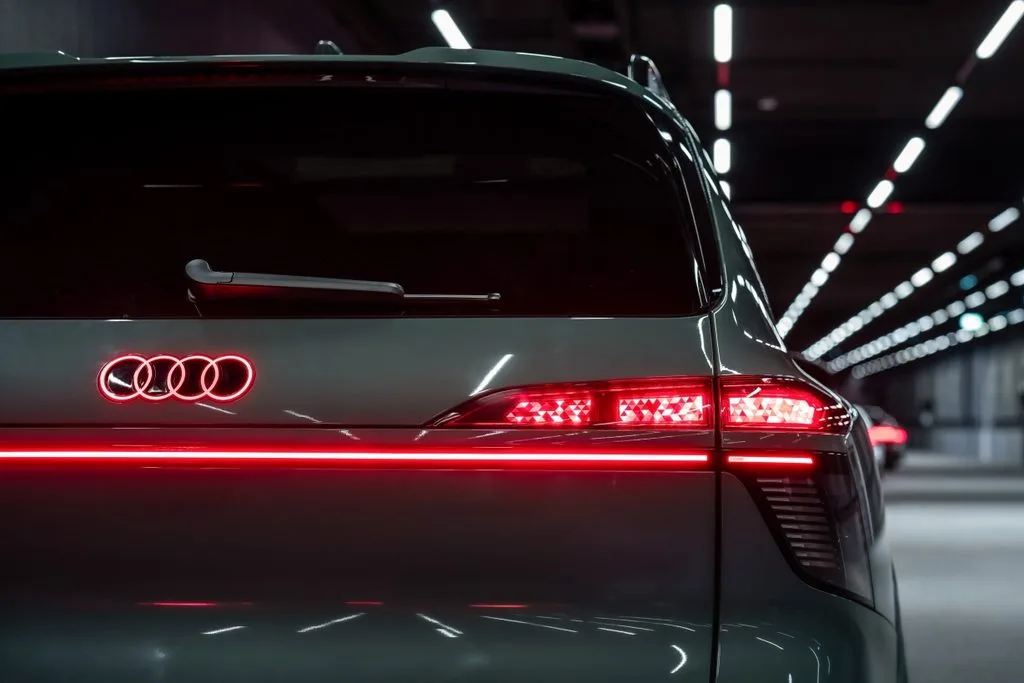
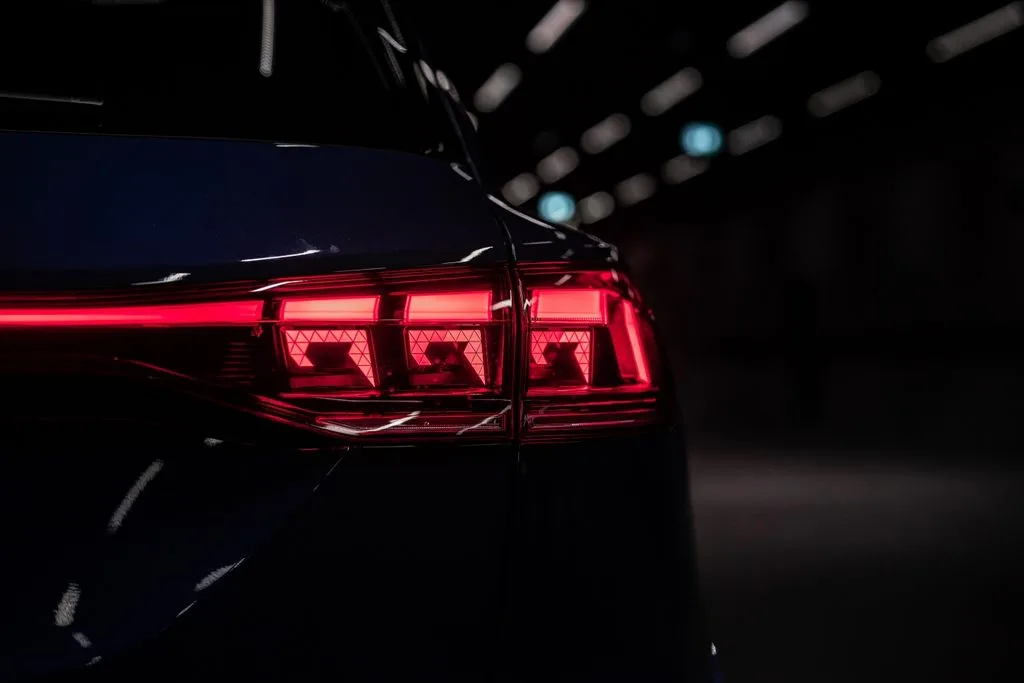
The largest is a curved outer panel with 99 segments, followed by a middle panel with 84 segments and an inner panel with 73. Audi says the panels are designed and validated for automotive durability, uniformity and contrast.
Placing the OLEDs in the outer areas of the rear lights keeps the light visible from wider side angles, which Audi links to road safety. The communication light can also show warning symbols, giving other road users visual alerts about breakdowns or accident sites.
Personalisation and Signatures
The high segment count allows up to eight digital light signatures at the front and rear. For the first time, Audi offers semi-active signatures alongside static and fully active ones, creating three-dimensional effects, especially at night.
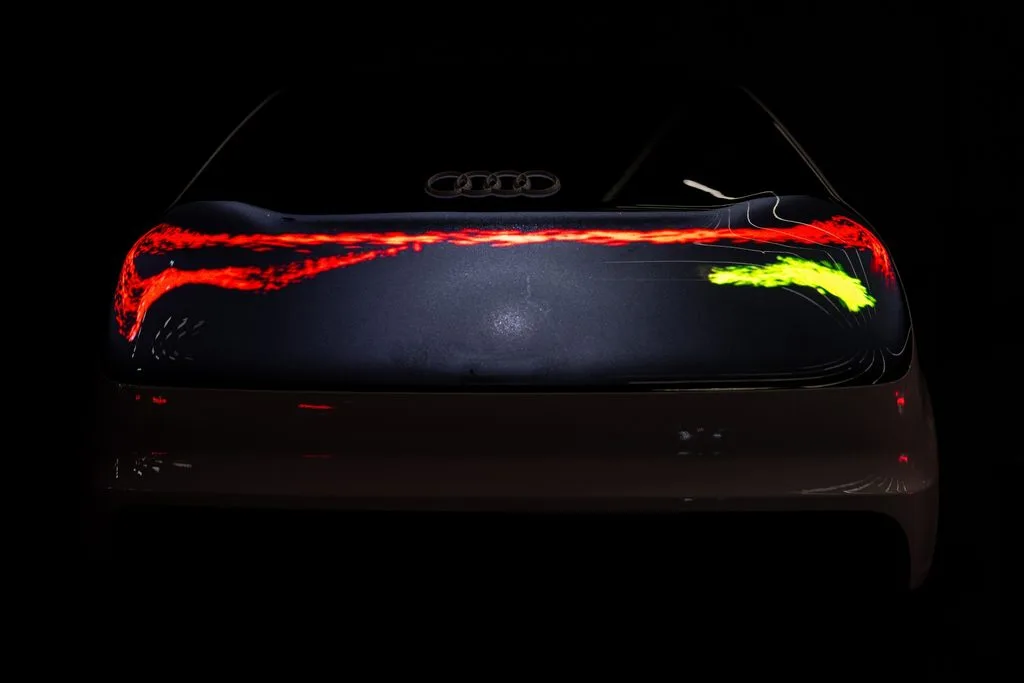
The advanced turn signal, first seen on the Audi Q7, projects a stylised, dynamic indicator onto the road when the car turns or changes lanes after dark, so pedestrians and cyclists can see the intended direction earlier.
Digital Matrix LED Headlights
The Q9’s digital Matrix LED headlights use a micro-LED module with 25,600 individual micro-LEDs in a unit about 13 millimetres wide. Each LED is roughly 40 micrometres across, enabling high-resolution light images.

The system provides lane lighting, orientation lighting on rural roads and turn-signal projection on motorways, and it can switch off lane lighting in favour of orientation lighting in narrow construction zones. Audi says these assistance functions work within the system’s limits and support the driver.
A Decade of OLED Development
Audi introduced OLED rear lights in the 2016 TT RS. In 2020 the Q5 brought the first digital generation, allowing individual segments to be controlled and the rear-light signature personalised. The second generation arrived with the Q6 e-tron in 2024, with ten times more individually controllable segments and added safety functions such as proximity indication. Audi calls the Q9 the most advanced stage yet.
Stefan Berlitz, Audi’s Head of Lighting Development, said light’s first job is safety, seeing and being seen. He said Audi aims to gradually turn light into an intelligent means of communication between the vehicle and its surroundings.