
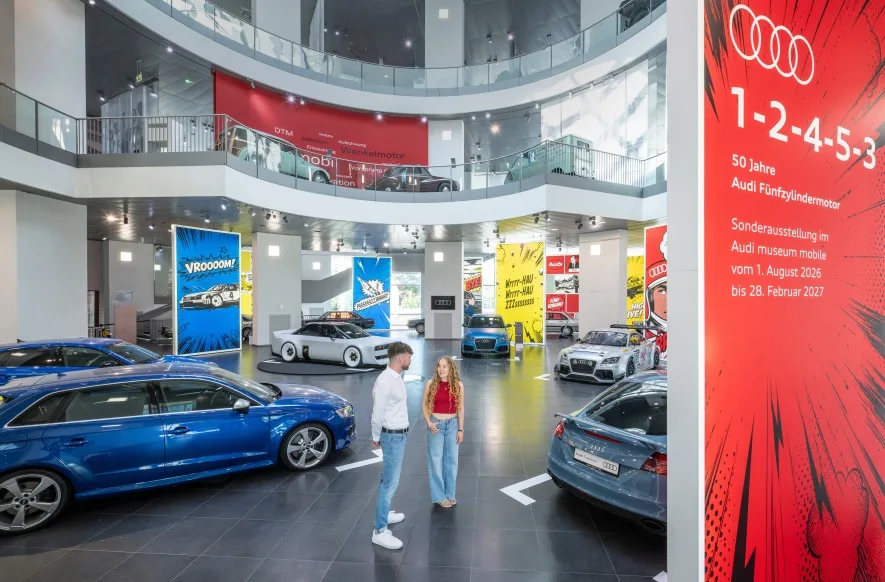
Audi Tradition is marking 50 years of the brand’s five-cylinder engine with a new exhibition, “1-2-4-5-3: 50 years of Audi five-cylinder engines,” opening August 1 at the Audi museum mobile in Ingolstadt and running through February 28, 2027.
Curator Stefan Felber said the anniversary carries particular weight for Audi, pointing to how strongly the engine’s sound and performance history have shaped the brand’s identity, and noted the exhibition responds directly to requests from fans and museum visitors.
The show pairs seven engine displays with fourteen vehicles spanning the engine’s history, including the Audi 100 5E, 200 5T, 90 quattro, S2 Coupé, Avant RS2, S6, TT RS, RS 3 and the RS Q3 and GT50 concepts, alongside the Megola motorcycle that predates Audi’s own use of the layout.
Born From a Packaging Problem
The five-cylinder’s story starts in August 1976, when Audi engineers developing the second-generation Audi 100 debated between inline five- and six-cylinder layouts for a car meant to move upmarket.
Space constraints and poor weight distribution ruled out the six-cylinder option, pushing engineers toward a five-cylinder layout that was technically known but rarely used in mass-production cars at the time. Built off the EA 827 four-cylinder engine that debuted in the Audi 80 in 1972, the resulting EA 828 five-cylinder carried over much of that engine’s architecture — the belt-driven overhead camshaft, 88-millimeter cylinder spacing and valve layout — while adding a longer crankshaft, larger main bearings and a longer stroke.
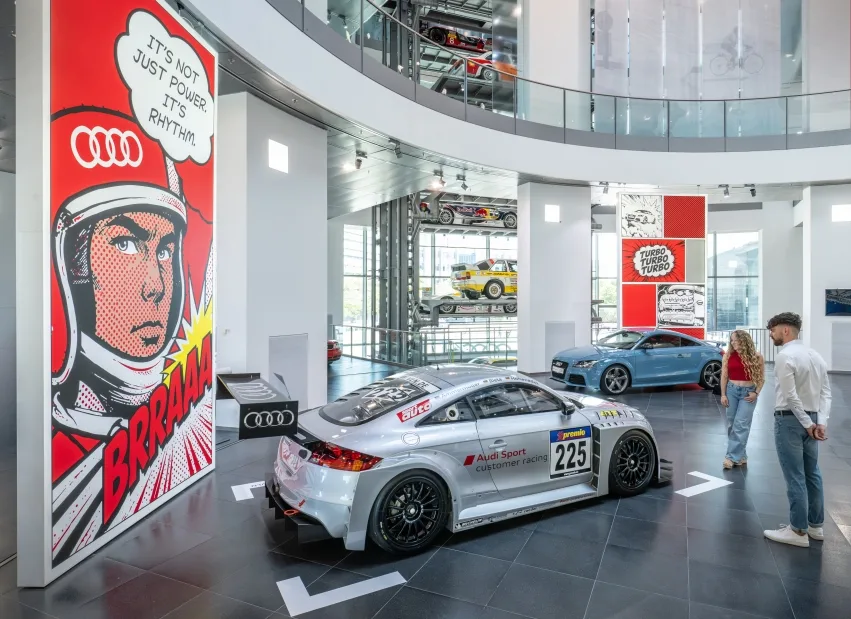
The engine’s now-famous sound comes from its odd cylinder count and unusual 1-2-4-5-3 firing order, spaced at 144 degrees of crankshaft rotation for smoother running. That first engine, at 2,144cc, made 100 kW (136 PS) in the Audi 100 5E, good for a 9.5-second sprint to 100 km/h and a 190 km/h top speed.
From Diesel Debut to Rally Dominance
Audi expanded the five-cylinder concept quickly: a naturally aspirated diesel version arrived in 1978, followed a year later by the first turbocharged five-cylinder gas engine in the flagship Audi 200 5T, producing 125 kW (170 PS).
Turbocharging became the main lever for extra power since displacement had little room to grow — a strategy that paid off when Audi unveiled the quattro at the 1980 Geneva Motor Show with a 147 kW (200 PS) turbocharged five-cylinder.
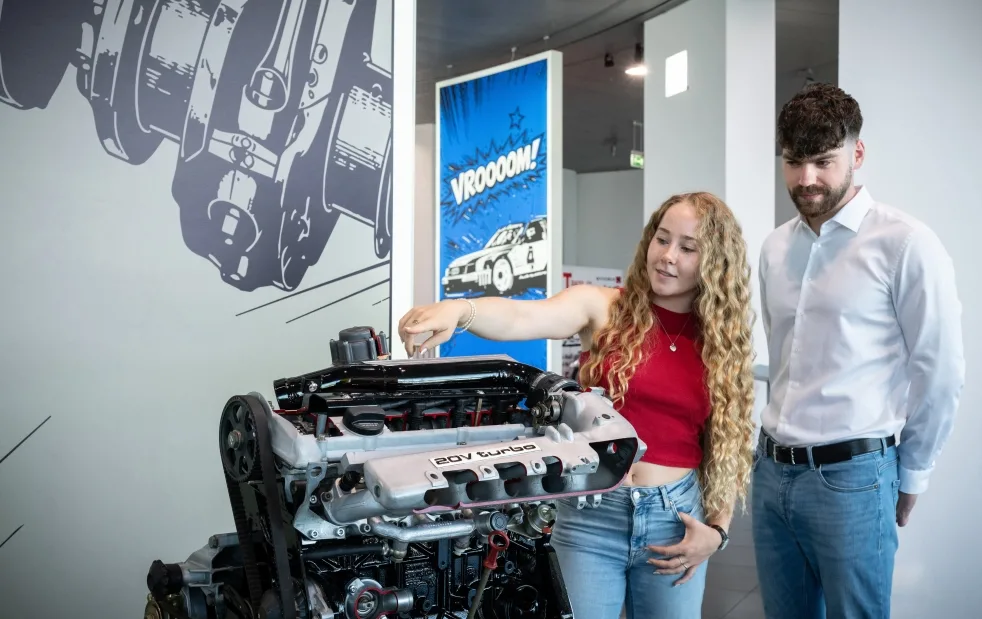
Paired with intercooling and permanent all-wheel drive, that combination carried Audi to two manufacturers’ and two drivers’ World Rally Championship titles, cementing the engine’s reputation. Later Group B rally versions with four-valve heads exceeded 500 PS, and the five-cylinder used in Audi’s IMSA GTO racer reached 530 kW (720 PS) by 1989.
A Production Peak, Then a Quiet Exit
On the road, the five-cylinder reached its high point in the 1994 Avant RS2, which squeezed 232 kW (315 PS) from just 2.2 liters and briefly stood as the most powerful production station wagon in the world — a launchpad for Audi’s RS lineup.
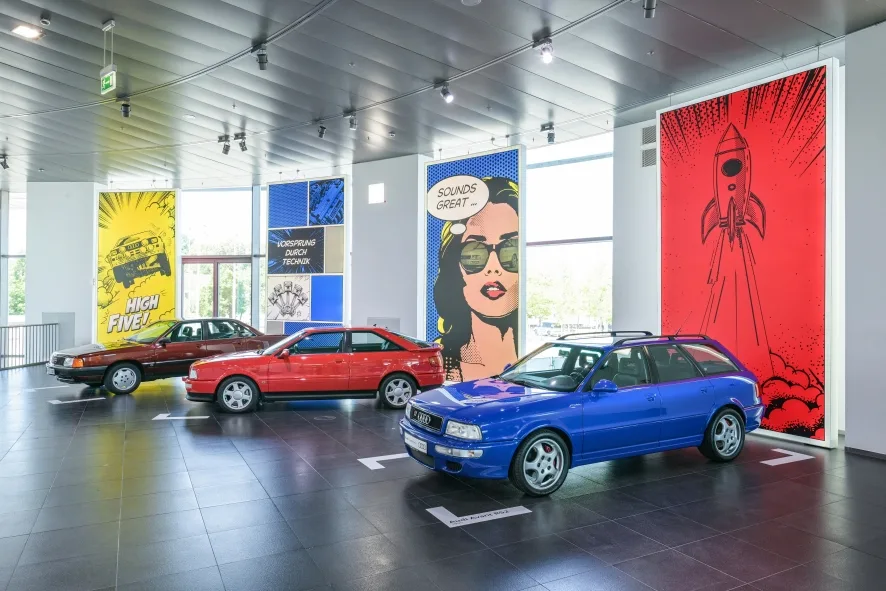
Around the same time, the arrival of the Audi A4 (B5) phased the five-cylinder out of Audi’s B-segment cars in favor of new V6 engines, and by 1997 the last original five-cylinder units — a 2.5 TDI in the A6 and a 20V turbo in the S6 — had been discontinued.
Unique Audi Sound That Came Back
The five-cylinder returned in 2009 in the Audi TT RS, using a transversely mounted 2.5-liter TFSI engine built on the EA 855 platform and producing 250 kW (340 PS). Since then, the engine has reappeared across Audi Sport’s RS lineup, earning “Engine of the Year” honors nine years running.
Visitors to the new exhibition can dig deeper into individual exhibits through the free Audi Tradition app, which offers text, audio guides and 360-degree views alongside links to Audi Tradition’s online shop and social channels.