
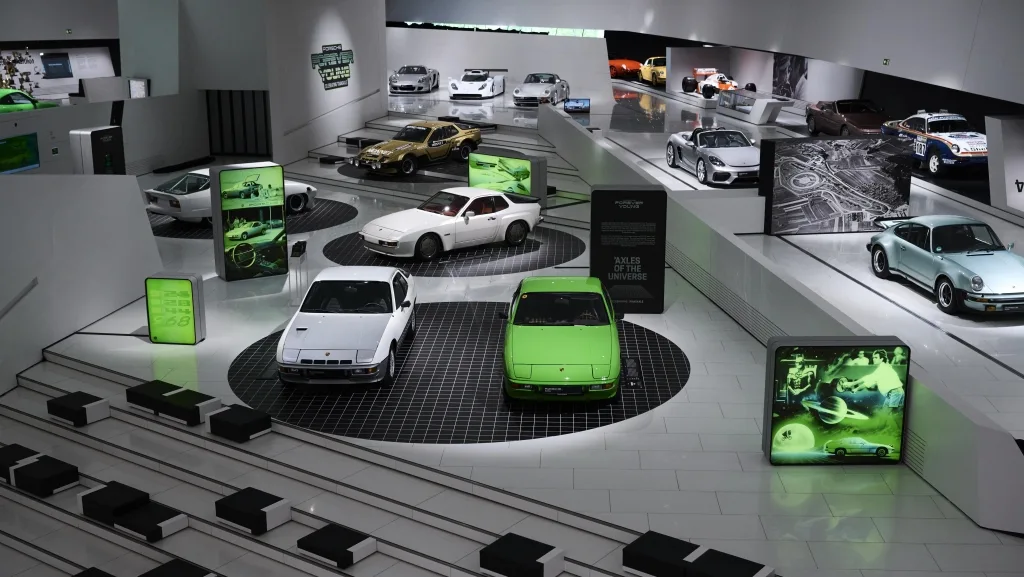
Under the title ‘Forever Young. Celebrating Transaxle’, the Porsche Heritage and Museum team commemorates the 50th anniversary of Transaxle through a series of rotating pop-ups and varied perspectives. The focus falls on the spirit of the 1980s and the interplay of technology, design, and motorsport that defined the era.
Half a century has passed since Porsche brought this distinctive sports car architecture into series production. In 2026, the brand looks back on 50 years covering an entire era in which almost 400,000 vehicles were sold. From 1976 to 1995, four model lines—the 924, 928, 944, and 968—shaped this chapter.
The themed year deliberately departs from the traditional special exhibition format. Iris Haker, curator at the Porsche Museum, stated a series of pop-ups is planned throughout the year: compact, flexible, and offering constantly evolving perspectives on technology, design, motorsport, and the spirit of the times—not only in Zuffenhausen but at selected locations beyond. The opening presentation runs until June 7, 2026.
The 1980s Cultural Peak
The Transaxle story begins in the 1970s before reaching its defining phase in the following decade. During the 1980s, the concept gained visibility and commercial success, achieving its greatest convergence technologically, stylistically, and in public perception.
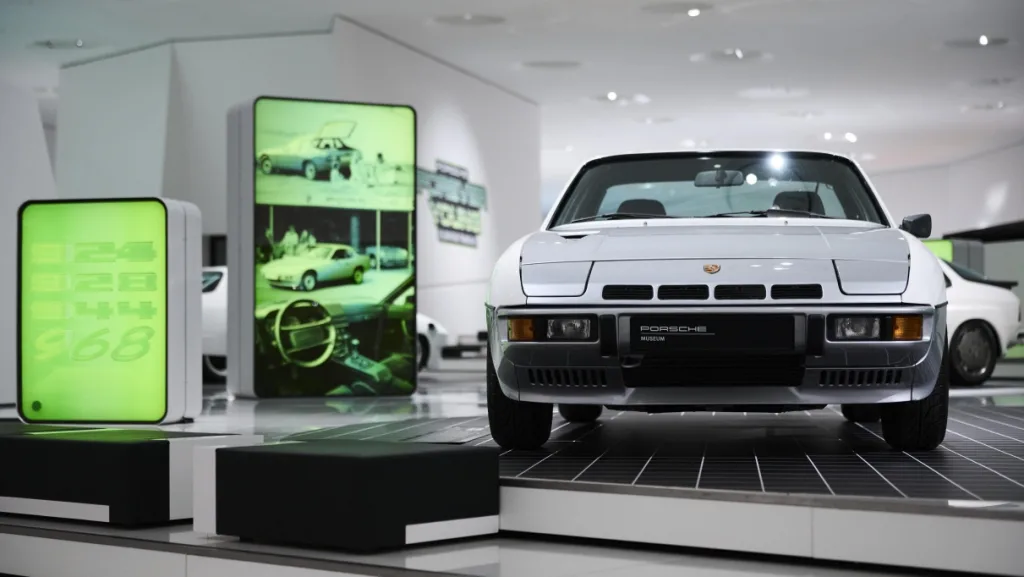
The 944 proved highly popular with customers, and the family expanded, evolving Transaxle beyond a purely technical solution into the Porsche experience for an entire generation.
The cultural context aligned closely with these models. The decade was marked by technological optimism and strong visual contrasts, with pop culture and film elevating sports cars to lifestyle icons amid the rise of video games and digital media. This atmosphere of neon light, momentum, and individuality forms the stage for the pop-up installations.
Engineered for Balance
At Porsche, “Transaxle” refers to a layout designed for balanced driving dynamics: the engine sits at the front while the transmission is located at the rear axle. Both are connected by a driveshaft within a rigid torque tube, transmitting power efficiently. Many drivers appreciate the resulting stability and precise handling, combining sportiness with everyday usability.
Four Model Lines Across Two Decades
The era also marked Porsche’s entry into a new customer segment. Its origins trace to the EA 425 development project in 1972; when Volkswagen discontinued the programme in 1974, Porsche adopted the concept and introduced it as its own sports car in 1976. The 924, produced in Neckarsulm, remained in the line-up until 1988.
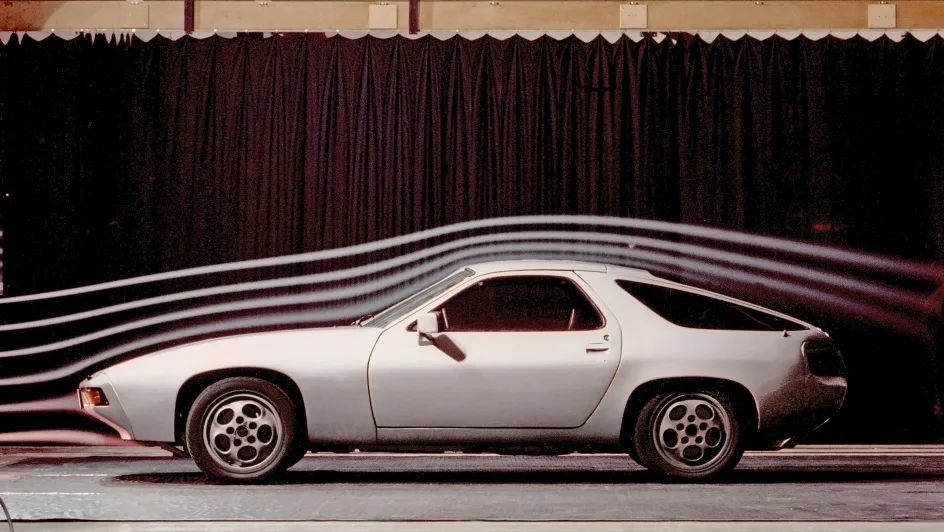
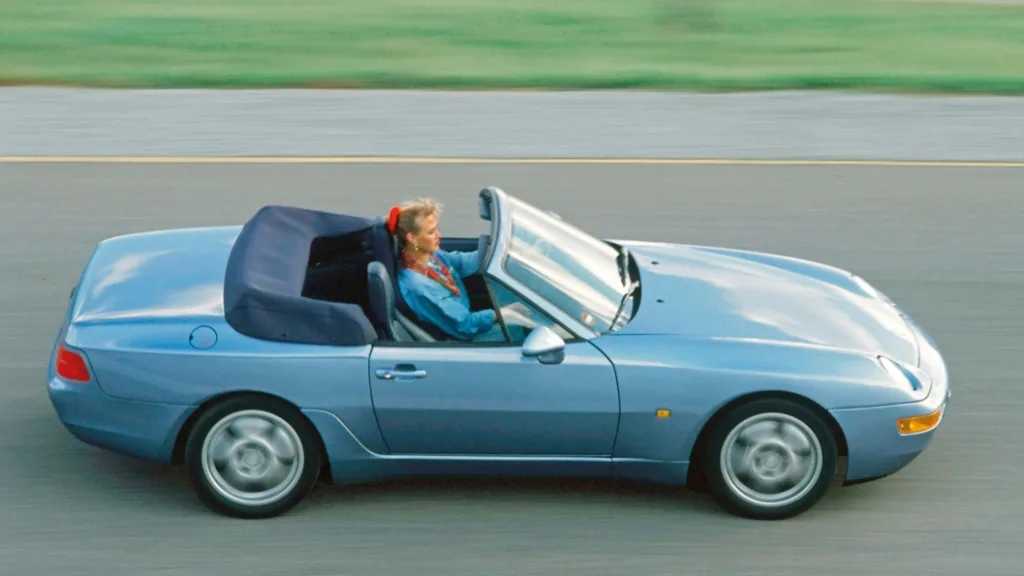
The 928 premiered in Geneva in 1977 as a comfortable grand tourer, combining a water-cooled V8 light-alloy engine, aluminium chassis, and the Weissach rear axle for high-speed, long-distance capability. During the 1980s, the 944 became the family’s most prominent model, closing the gap between entry-level models and the classic sports car segment. Produced from 1991 to 1995, the 968 marked the culmination of nearly two decades of development, its 3.0-litre four-cylinder engine delivering 240 PS and 305 Nm.
Design and Motorsport Heritage
The Transaxle models were developed under Anatole Lapine, supported by Harm Lagaaji, Wolfgang Moebius, and Peter Reisinger. Flat front sections, pop-up headlights, large tailgates, and clear lines defined the early vehicles, with interiors reflecting a functional, ergonomic, driver-oriented philosophy that still allowed personalisation.
Motorsport proved the concept’s robustness. From 1979, Transaxle models competed in events including the Monte Carlo Rally, Safari Rally, and Australian rallies. In 1980, the 924 secured the SCCA championship in the United States, while the 924 GTP demonstrated reliability at Le Mans in 1980 and 1981. From 1981, customer teams competed with the 924 Carrera GTS and GTR, and Walter Roehrl campaigned a special rally derivative in the German Rally Championship.
A Themed Year in Motion
With its contemporary pop-up concept, Porsche Heritage and Museum revisits this past from a present-day perspective, drawing on 1980s cultural context to bring the era to life.
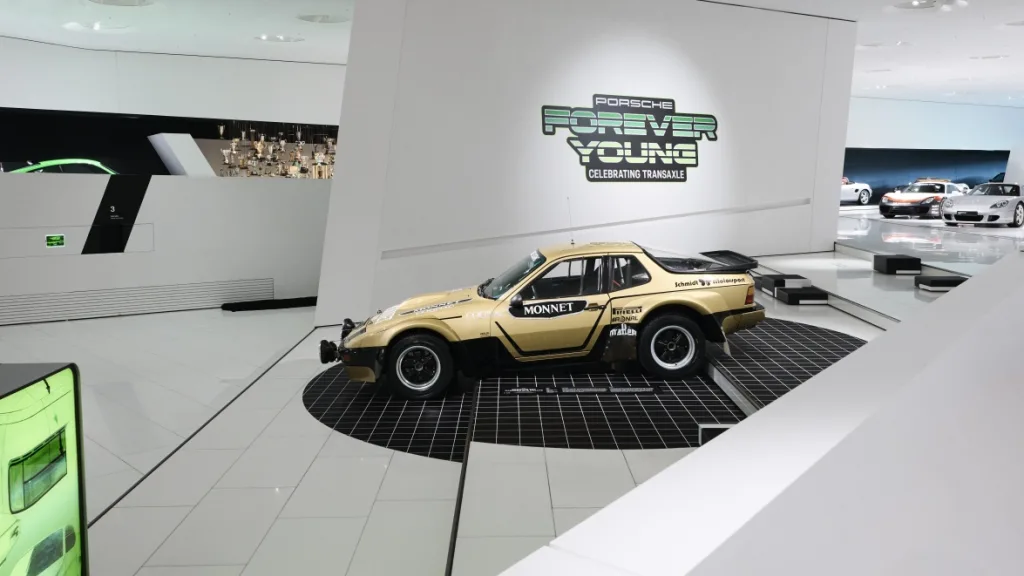
Details on the pop-up tour and “Transaxle Meet” themed weekends are available on the Porsche Museum website and via Instagram @porsche.museum. The first weekend, “Transaxle Meet – Spring Edition,” takes place May 23-24, 2026, alongside curator talks, a graffiti-art photo spot, a quick-draw artist, and a 924 Carrera GT and 924 GTP “Le Mans” on the forecourt. Admission is free for Porsche Club members.
The pop-up presentation of the 944 and 968 runs August 25 to October 4, 2026, with the “Transaxle Meet – Fall Edition” on October 3-4. The 928 presentation follows from November 24, 2026 to January 17, 2027, with the “Winter Edition” on December 12-13.