
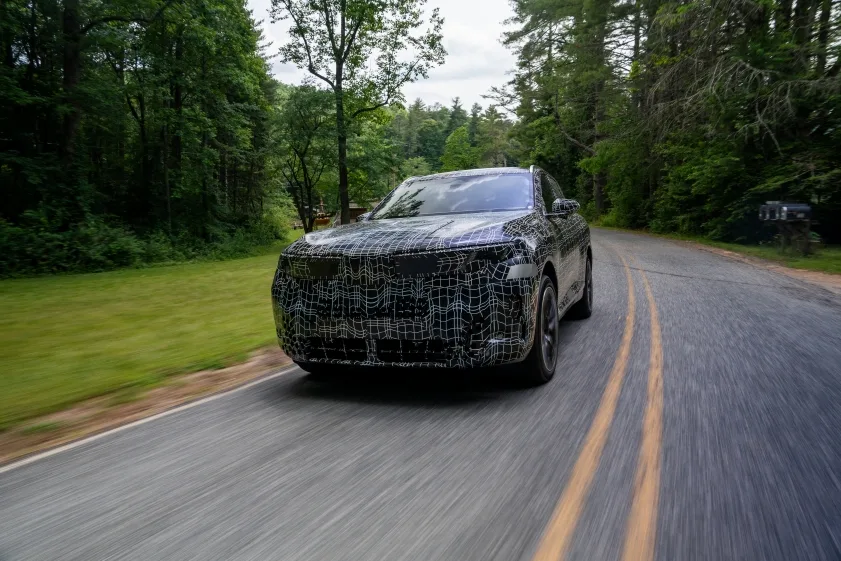
The new BMW X5 has entered the finishing straight in its development programme. The fifth generation of the Sports Activity Vehicle is now completing final calibration drives around its production base at BMW Group Plant Spartanburg in the USA.
The new BMW X5 will be the first BMW production model to be introduced onto the market with a choice of five different drive system technologies.
The first fully electric BMW iX5 will be making its debut, followed in 2028 by the arrival of the first ever hydrogen-powered BMW to go into series production—the BMW iX5 Hydrogen. Also available will be petrol and diesel variants with 48V mild hybrid technology, and plug-in hybrid models.
Media representatives from various countries sampled the BMW X5 40 xDrive (294 kW/400 hp), BMW X5 50e xDrive plug-in hybrid (360 kW/490 hp), and BMW iX5 60 xDrive (425 kW/578 hp) in concluding test drives before start of production.
Fully Electric iX5 with Gen6 eDrive Technology
The first battery-electric BMW iX5 is based on the sixth generation of BMW eDrive technology, featuring a new high-voltage battery concept with cylindrical cells and 800V technology.
With usable energy content of 144 kWh in the USA and 141 kWh in the EU (net), the BMW iX5 60 xDrive boasts the largest high-voltage battery to be fitted in an all-electric BMW model to date. Propulsive power is provided by one electric motor at the front axle and another at the rear, working in tandem with BMW xDrive electric all-wheel drive.
Hydrogen Production Model with Flat Storage System
The first ever hydrogen-powered BMW production model, the BMW iX5 Hydrogen, will hit the roads in 2028. Its powertrain comprises a fuel cell system, the new BMW Hydrogen Flat Storage system, and an innovative high-voltage battery. The third generation of the fuel cell system forms the basis for a particularly compact design as well as high power and efficiency.
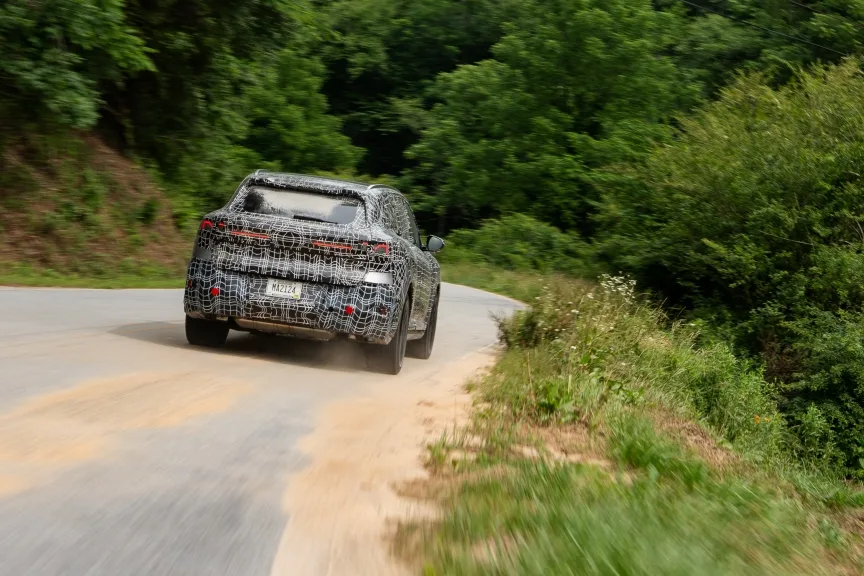
The flat tank system consists of seven high-pressure tanks made of carbon-fibre reinforced composite, connected with one another in parallel and integrated into a robust metal frame. This layout makes exceptionally efficient use of the space the system takes up in the vehicle, with no room lost inside the cabin. Models with fuel cell technology can be built on the same production line as other drive system types.
Heart of Joy Control System
The new BMW X5 will offer a new-dimension driving experience courtesy of technology from the Neue Klasse—the Heart of Joy featuring the BMW Dynamic Performance Control driving stack developed fully in-house.
This high-performance control unit acts ten times faster than previous systems, making adjustments to the powertrain, brakes, steering sub-functions, charging, and recuperation in a matter of milliseconds. The result is remarkable agility, poise, and precision.
In the BMW iX5 and BMW iX5 Hydrogen, this technology also impresses with extremely smooth stopping manoeuvres while increasing efficiency by recovering more energy under deceleration with regenerative braking.
In combustion-engined or plug-in hybrid models, the latest digital and highly interconnected driving dynamics systems ensure the car always makes optimum use of available traction. These systems include the standard-fitted tenth-generation transverse dynamics management system and near-actuator wheel slip limitation.
Chassis and Suspension Configuration
The wheels—larger rims with diameters of up to 23 inches can now be specified—and the standard mixed-size tyres further enhance comfort, stability, and dynamism.
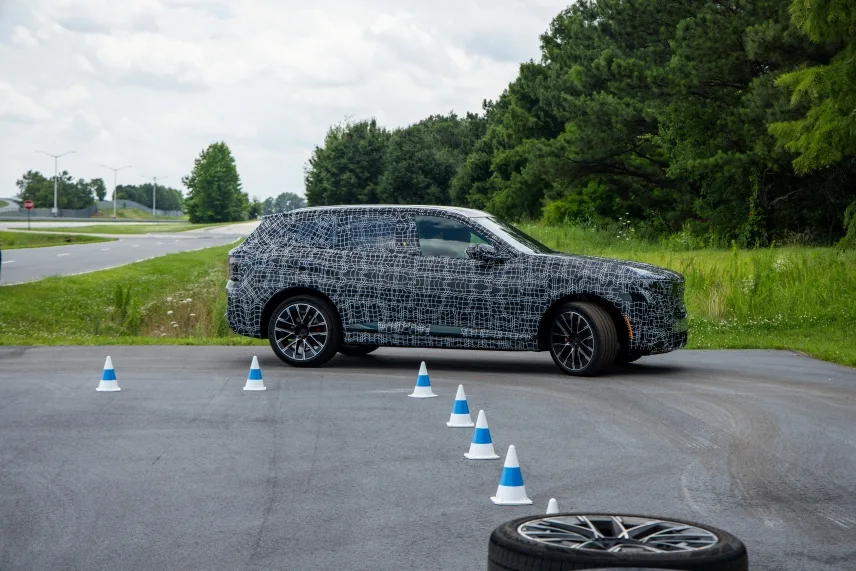
The new BMW X5 comes as standard with adaptive suspension whose dampers are controlled electronically for each individual wheel, plus almost 50:50 weight distribution. The dampers can be continuously adjusted, enabling everything from a very comfortable ride through to sporty, dynamic handling.
Adaptive Chassis Control Professional, available as an option for the all-electric BMW iX5 and plug-in hybrid models, maximises dynamic prowess. It includes two-axle air suspension with electronically controlled dampers, Integral Active Steering, and active roll stabilisation.
Next-Generation Driver Assistance Systems
The new BMW X5 features innovative SAE Level 2 driver assistance systems and active safety functions from the Neue Klasse technology clusters. Customers can look forward to significant upgrades and extended functionality, as well as BMW Symbiotic Drive. One example is the optional Motorway and City Assistant, which includes Entry-2-Exit assistance on motorways and Address-2-Address assistance in urban areas.
The advanced Level 2 driver assistance systems are designed for seamless interaction between assistance tech and human driving habits. The aim is not to attain the highest possible level of automation in every situation, but to provide a safe driver assistance experience that offers maximum benefit and remains controllable at all times.
The driver always stays involved as human and artificial intelligence interact. With driver assistance systems active, the driver can accelerate, steer, and brake as required without instantly deactivating the assistance system.
Active Safety Functions
The symbiotic interaction between driver and vehicle can also be experienced with active safety functions that work unobtrusively in the background.
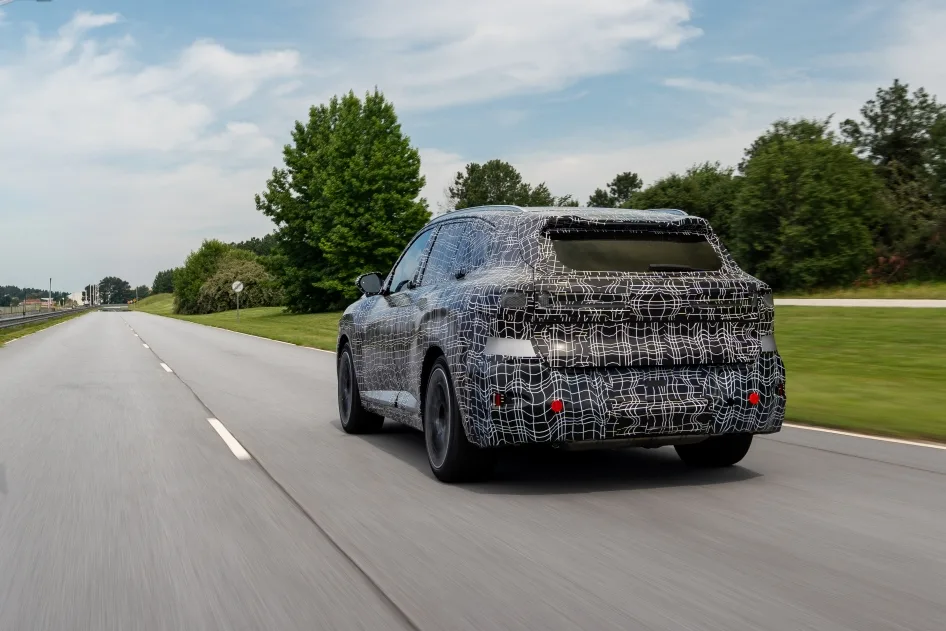
A good example is the Lane Keeping Assistant, which detects the driver’s intention based on steering behaviour and where they are looking. The system only assists with warnings and steering inputs when the driver really is drifting out of their lane unintentionally or an impending collision is detected.
Other safety functions include automated evasive manoeuvring within the car’s own lane, Lane Change Warning, Side Collision Warning with steering intervention when there is a risk of lateral collision, plus Crossing Traffic Warning and automatic braking when turning into a road or exiting a parking space.