
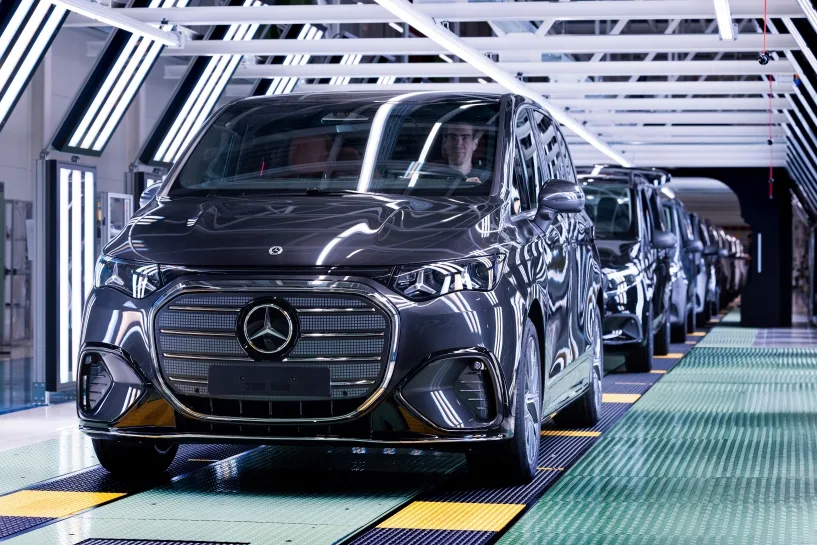
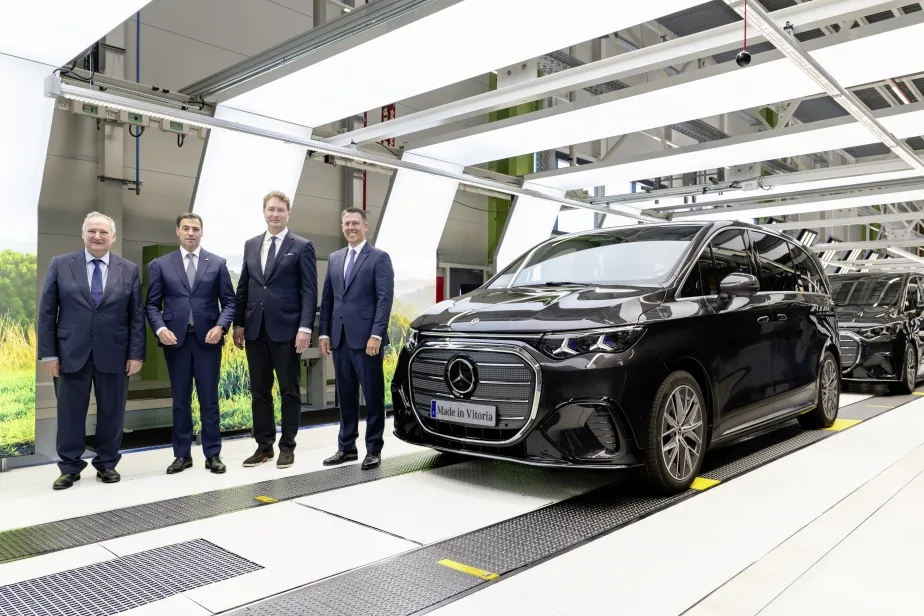
Mercedes-Benz celebrates the start of series production of the Mercedes-Benz VLE at its Vitoria plant in Spain with a special event.
In addition to Thomas Klein, Head of Mercedes-Benz Vans, and Ola Källenius, Chairman of the Board of Management of Mercedes-Benz Group AG, the ceremony was attended by Jordi Hereu, Spain’s Minister of Industry and Tourism, and Imanol Pradales, President of the Basque Autonomous Community.
Mercedes-Benz is underlining the industrial, strategic, and regional significance of the production site, making the transformation of the Vitoria plant one of Mercedes-Benz Vans’ most significant industrial future projects in Europe.
The start of production marks an important milestone and the beginning of a new phase for Mercedes-Benz Vans in Vitoria. With the VLE, the Vitoria site is, for the first time, manufacturing a vehicle based on the newly developed, modular and scalable Van Architecture. In future, this architecture will form the technological basis for the entire Mercedes-Benz Vans product portfolio in both private and commercial sectors.
The Vitoria plant is therefore the first site in Mercedes-Benz’s global production network to build the new VLE in series. The Fuzhou plant in China will follow at end of year, producing vehicles specifically for the Chinese market.
Grand Limousine Combines Comfort with Versatility
The Mercedes-Benz VLE, which celebrated its world premiere in March, combines the best of two worlds: ride comfort and driving dynamics of a limousine with spaciousness, versatility, and flexibility of an MPV.
Thanks to high efficiency, new 800-volt technology, and ultra-fast charging, the redefined Grand Limousine is suitable for a wide range of applications, setting new standards with up to eight seats and range of more than 700 kilometers (WLTP).
The Mercedes-Benz VLE 300 electric records preliminary combined energy consumption of 20.7–18.4 kWh/100 km with zero CO₂ emissions. In addition, the intelligent Mercedes-Benz Operating System (MB.OS) takes the Mercedes-Benz experience to an entirely new level, controlling all areas from assistance and infotainment through to driving performance.
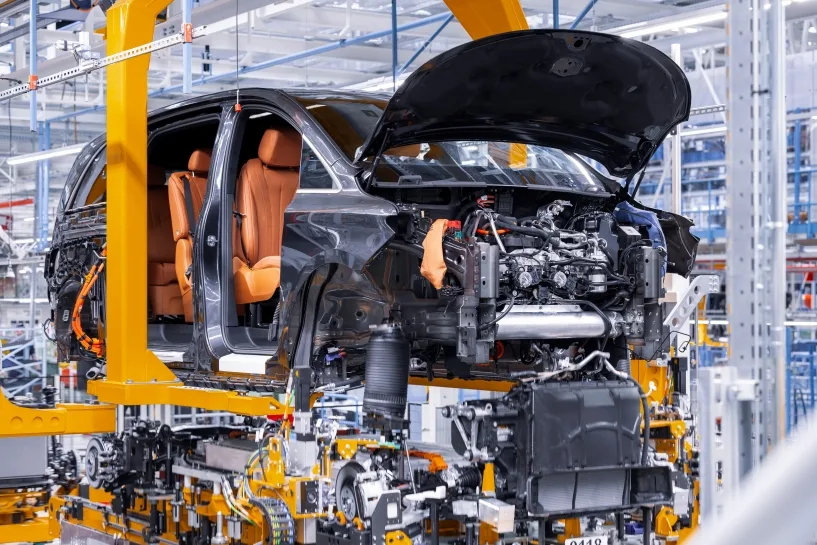
Ola Källenius, Chairman of the Board of Management, Mercedes-Benz Group AG, stated the VLE shows how they drive innovation at Mercedes-Benz: fast, focused, and with highest quality ambition. They developed this vehicle in very short time, enabled by digital development approach, strong cross-functional international teams, and the Vitoria plant, which turns the Mercedes promise into reality on the road.
Comprehensive Plant Transformation
The start of series production of the VLE is an important step in the comprehensive transformation of the Vitoria plant—one of Mercedes-Benz Vans’ largest industrial future projects in Europe.
Extensive investments in new body shop, paint shop, and assembly areas, as well as modernized logistics and IT structures, now enable highly flexible, multi-powertrain production on one line—digital, efficient, and future-oriented. The comprehensive transformation of the site took place while existing models, including V-Class, Vito, and eVito, continued to be produced.
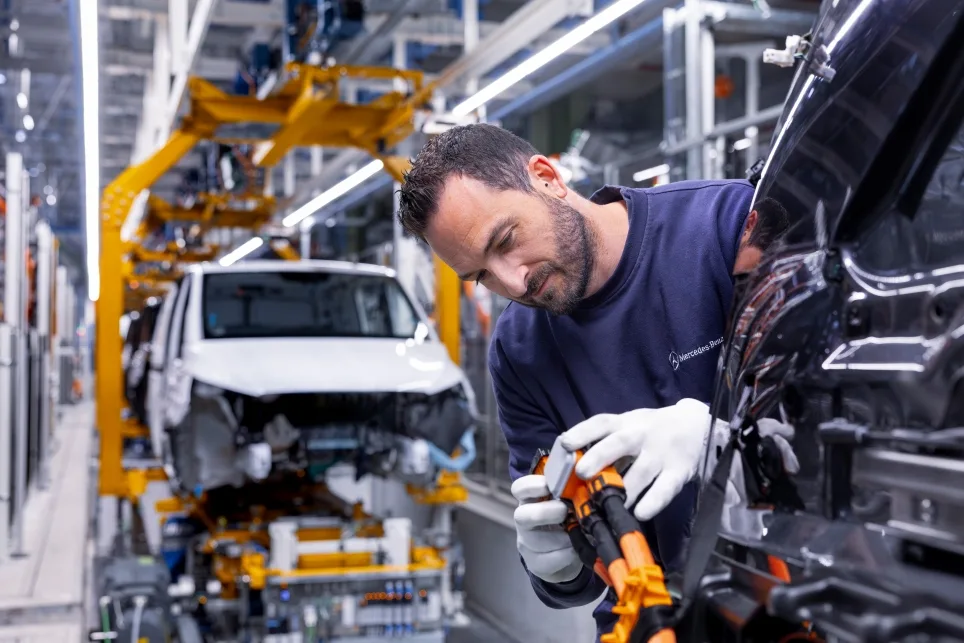
The site is playing key strategic role within Mercedes-Benz Vans’ global production network. In addition to the all-new electric VLE, further models based on the new architecture will also be produced here in future. The start of series production strengthens long-term competitiveness and future viability of the Vitoria site and underlines Mercedes-Benz’s commitment to the region.
Thomas Klein, Head of Mercedes-Benz Vans, stated as a Grand Limousine, the new VLE is a perfect companion for wide range of use cases—from flexible vehicle for families and leisure-oriented customers to exclusive shuttle services. With the start of production in Vitoria, they are entering a new era. The team is highly motivated to do genuine pioneering work with the VLE.
Workforce Training and Qualification
The successful transformation of the site is due in no small part to high degree of flexibility and commitment shown by its workforce of approximately 5,000 direct employees. This commitment forms the foundation for successful ramp-up of the VLE.
Through more than 160 training programs, employees were prepared for new technologies, materials, IT standards, and processes. National and international qualification and training measures are ensuring quality, stability, and an excellent start to series production.
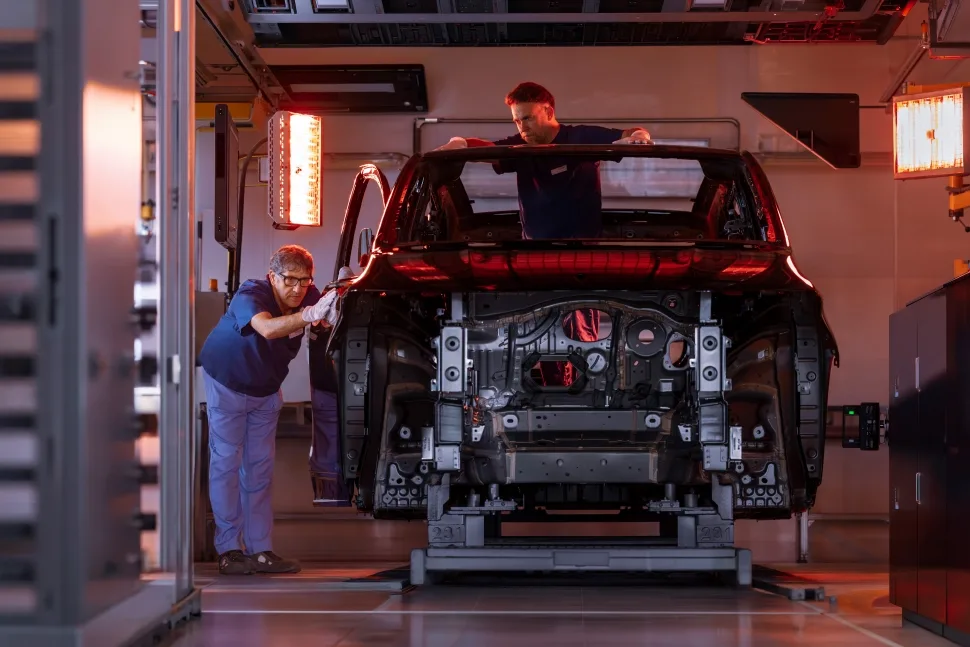
Bernd Krottmayer, Plant Manager, Mercedes-Benz Vitoria, stated the start of series production fills him with great pride, especially when looking at the team. The successful transformation of the plant and series ramp-up are the result of daily commitment of employees, who handle demanding tasks with high level of expertise, flexibility, and passion.
Sustainable Production Approach
In addition to digitalization and qualification, sustainability in production also plays a central role. The Mercedes-Benz VLE and its production in Vitoria are designed to support a resource-conserving and low-emission production approach.
The Vitoria plant has already been carbon-neutral on balance since 2022. Electricity from renewable energy sources, geothermal energy, and waste heat from body construction and paint shop are used. All new buildings at the site comply with Zero-Emission Building Standard (ZEB). A photovoltaic system has been installed, contributing to the site’s own supply of renewable electricity.
A further step is the largely electrically operated and flexibly designed paint shop, which will begin operations in autumn 2026. It will operate with lower direct CO₂ emissions than conventional paint processes—both the entire building operation and production process are covered exclusively by electrical energy from renewable sources, with fossil energy sources dispensed with entirely. Optimized processes and technological innovations, including in battery production, help reduce the CO₂ footprint.